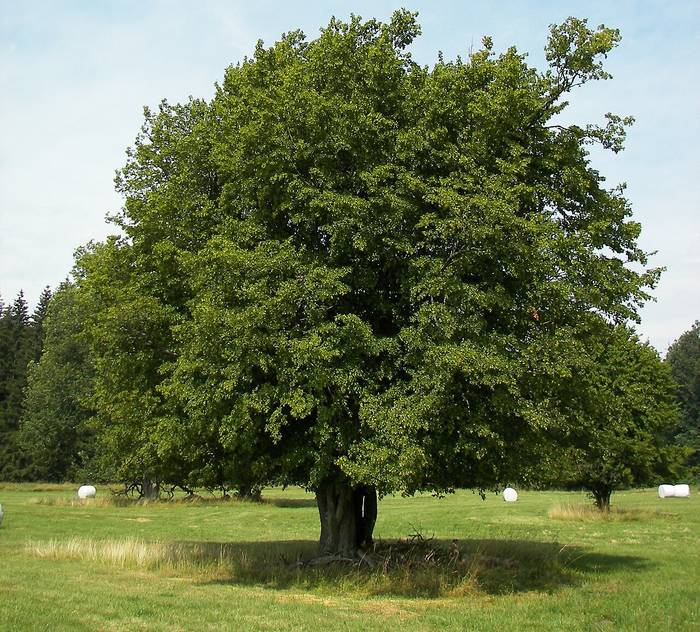
Willow · CC BY 2.5
Avnbøg
Træ·Carpinus betulus
Skygge til fuld sol
Sol
Tør til våd jord
Vand
Ikke registreret
Dræning
Zoner 4–8
Hårdførhed
Dækning · 112 felter
Ingen åbenlyse uoverensstemmelser fundet.
Vækst og størrelse11 felter
Plantetype
Løvfældende træ“Carpinus betulus is a deciduous Tree growing to 25 m (82ft) by 20 m (65ft) at a medium rate.”
Højde
2.500 cm · kilden giver 1.500–2.500 cm“It is a deciduous small to medium-size tree reaching heights of 15–25 metres (49–82 ft), rarely 30 m (98 ft), and often has a fluted and crooked trunk.”PFAF“Carpinus betulus is a deciduous Tree growing to 25 m (82ft) by 20 m (65ft) at a medium rate.”
Bredde
2.000 cm“Carpinus betulus is a deciduous Tree growing to 25 m (82ft) by 20 m (65ft) at a medium rate.”
Højde ved alder
—
tomt
Størrelse efter plantning
3 år: 5 m høj, 1 m krone · 12 år: 7 m høj, 3 m krone · 16 år: 7 m høj, 4 m krone · 35 år: 11 m høj, 6 m krone · 68 år: 17 m høj, 10 m krone“Berlin tree register: 16168 trees of this species measured with years since planting, height and crown diameter; median crown 10.0 m and height 17.0 m at 60–100 years after planting (1647 trees).”Median af 16.168 målte træer i Berlin. Årene tælles fra udplantning af planteskoletræer, så et lille træ når hver størrelse senere.
Planteafstand
1.000 cm (mindst 500 cm)
AI-estimat55 % enig
Vækstrate
Middel“Carpinus betulus is a deciduous Tree growing to 25 m (82ft) by 20 m (65ft) at a medium rate.”
Skovhavelag
Kronelag
AI-estimat90 % enig
Levetid
~150 år
AI-estimatikke målt endnu
Rødder6 felter
Rodform
Fladrodet (skiverod)“It has a shallow, wide-spreading root system and is marked by the production of stump sprouts when cut back.”
Wikipediadelvist
Lagerorgan
Intet
AI-estimat100 % enig
Breder sig sideværts i cm
—
tomt
Roddybde i cm
—
tomt
Mykorrhiza
Ektomykorrhiza (EcM)
AI-estimatikke målt endnu
Lys, vand og jord9 felter
Sol
Fuld sol, let skygge, halvskygge, skygge · bedst: fuld sol“It can grow in full shade (deep woodland) semi-shade (light woodland) or no shade.”
Timer sol
6 t
AI-estimatikke målt endnu
Vand
Tør, fugtig, våd · bedst: fugtig · Middel“It prefers moist soil.”JRC skovtræ-atlas“It favours deep moist and well-drained soils from sub-acid to calcareous, although it can tolerate wet heavy clay to light dry sandy soils, but never acid.”
Tørketålende
—
tomt
Tåler vandlidende jord
—
tomt
Jordtype
Sand, muld, ler · bedst: muld“Prefers a deep open loam and does well on damp clays.”PFAF“Suitable for: light (sandy), medium (loamy) and heavy (clay) soils and can grow in heavy clay soil.”
pH
3,6–7,6 · bedst 5–7“In England, trees appear to prefer soils with a pH from 3.6 to 4.6 but tolerate up to 7.6.”PFAF“Suitable pH: mildly acid, neutral and basic (mildly alkaline) soils and can grow in very alkaline soils.”
Dræning
Moist and well-drained“It favours deep moist and well-drained soils from sub-acid to calcareous, although it can tolerate wet heavy clay to light dry sandy soils, but never acid.”
Komprimeret jord
Tåler det nogenlunde
AI-estimatikke målt endnu
Klima5 felter
Hårdførhed
Zone 4–8
AI-estimatikke målt endnu
Dræbende frost
0 °C“Killing temp. early growth: 0”EcoCrops tal er frost under tidlig vækst (forårsfrost på nye skud), ikke vinterkulde.
Vækst-temperatur
6–35 °C · optimal 10–20 °C“Temperature absolute min: 6 · Temperature absolute max: 35 · Temperature optimal min: 10 · Temperature optimal max: 20”
Kuldetimer
800 t
AI-estimatikke målt endnu
Hjemsted
AD, AL, AM, AT, AZ, BA, BE, BG, BY, CH, CZ, DE, DK, EE, FR, GB, GE, GG, GI, GR, HR, HU, IR, IT, JE, LI, LT, LU, MC, MD, ME, MK, NL, PL, RO, RS, RU, SE, SI, SK, SM, TR, UA, VA, XK
Pleje (bliver til opgaver i Manage)3 felter
Beskæring
August“Plants can be grown as a medium to tall hedge, they retain their dead leaves throughout the winter if clipped at least once a year in late summer.”
Såning
Efter forrige fase
AI-estimatikke målt endnu
Jorddække
Marts · varer 30 dage
AI-estimatikke målt endnu
Året rundt5 felter
Spring ud
Efter sidste frost“Leaves do not drop in winter, but only in spring when the new green leaves are starting to come out (marcescence).”
JRC skovtræ-atlasdelvist
Blomstring
April · varer 61 dage“It is in flower from April to May, and the seeds ripen in November.”
Går i dvale
Efter første frost“The autumn colour ranges from yellowish-green to golden yellow.”
Dvale
Efter første frost“In winter it is recognisable for its brown leaves which stay attached, dropping only in spring when the new green leaves are starting to come out.”
Spiselige dele og bestøvning3 felter
Bladene
Tilberedt · april–maj
AI-estimatikke målt endnu
Bestøvning
Selvbestøvende · enbo“The species is monoecious (individual flowers are either male or female, but both sexes can be found on the same plant) and is pollinated by Wind.”
Bestøves af
Vind“The species is monoecious (individual flowers are either male or female, but both sexes can be found on the same plant) and is pollinated by Wind.”
Økologi5 felter
Skadedyr
Sommerfuglelarver, frostmåler, asiatisk citrustræbuk, løvskovsnonne, egeprocessionsspinder“Hornbeam can be also a minor host of non-specialised invasive insects: e.g. polyphagous defoliators, such as the brown-tail moth Euproctis chrysorrhoea, the winter moth Operophtera brumata, or wood miners, such as the long-horned beetle Anoplophora chinensis.”JRC skovtræ-atlas“As other species in the genus Carpinus, the common hornbeam may be attacked by the gypsy moth (Lymantria dispar).”JRC skovtræ-atlas“It is also a susceptible host for the processionary moth (Thaumetopoea processionea).”
Sygdomme
Kræft, honningsvamp“Infections of generalist fungi of the genus Nectria, causing cankers, or of the genus Armillaria, causing root rot, are reported, as hornbeam can be a susceptible host alongside more valuable trees nearby.”
Optager
—
tomt
Fikserer kvælstof
Nej
AI-estimatikke målt endnu
Formering og navne4 felter
Metoder
Frø, root suckers“Seed - best sown in an outdoors seedbed as soon as it is ripe.”CLO-PLA (klonvækst)“It spreads by suckers: new shoots from buds on its roots.”
Sværhedsgrad
2 / 5
AI-estimatikke målt endnu
Frø
4 weeks warm and 12 weeks cold“Pre-treat stored seed with 4 weeks warm and 12 weeks cold stratification and sow in a cold frame.”
Ikke sorteret endnu61 felter
Felter som parseren gemmer, men som siden ikke har en række til endnu. De vises her automatisk, så intet er skjult.
forage.DK.local_name
Avnbøg
AI-estimatikke målt endnu
forage.DK.prep_cautions
Death-cap mushroom (Amanita phalloides) is associated with hornbeam and grows around the trunk; it is poisonous.“This tree has been associated with the poisonous mushroom Amanita phalloides, better known as the death-cap mushroom, which grow around the trunk after hornbeams mature.”
forage.DK.edibility_basis
inferred
AI-estimatikke målt endnu
forage.DK.foraging_months.notes
Young leaves are best in spring.
AI-estimatikke målt endnu
forage.DK.foraging_months.months
4, 5
AI-estimatikke målt endnu
forage.DK.foraging_months.year_round
false
AI-estimatikke målt endnu
forage.DK.habitat_affinity
woodland, hedgerow“Woodlands and hedgerows on sandy or clay loams, preferring heavier soils.”
forage.US.edible_parts
[{"part":"leaves","caution":"Best when young and tender.","preparation":"cooked","season_months":[4,5]}]
AI-estimatikke målt endnu
forage.US.edibility_basis
inferred
AI-estimatikke målt endnu
forage.US.foraging_months.notes
Young leaves are best in spring.
AI-estimatikke målt endnu
forage.US.foraging_months.months
4, 5
AI-estimatikke målt endnu
forage.US.foraging_months.year_round
false
AI-estimatikke målt endnu
forage.US.habitat_affinity
woodland, hedgerow
AI-estimatikke målt endnu
forage.TROPICAL.edibility_basis
inferred
AI-estimatikke målt endnu
forage.TROPICAL.foraging_months.year_round
false
AI-estimatikke målt endnu
ornamental.basis
documented
AI-estimatikke målt endnu
ornamental.fragrance.source
none
AI-estimat100 % enig
ornamental.fragrance.intensity
subtle
AI-estimatikke målt endnu
ornamental.confidence
high
AI-estimatikke målt endnu
ornamental.fall_interest
true“The autumn colour ranges from yellowish-green to golden yellow.”
ornamental.evidence_quote
Carpinus betulus has green foliage that turns yellow-green in autumn. Its flowers are insignificant catkins. The persistent fruit (nutlets in hop-like bracts) and architectural form provide winter interest.
AI-estimatikke målt endnu
ornamental.foliage_colour
green“The leaves are alternate, simple, obovate, with serrated margins, 8-10 cm long, opaque to dull green, with prominent parallel veins.”
ornamental.foliage_texture
medium
AI-estimatikke målt endnu
ornamental.winter_structure
persistent_fruit, architectural_skeleton
AI-estimatikke målt endnu
ornamental.autumn_foliage_colour
yellow_green“The autumn colour ranges from yellowish-green to golden yellow.”
care_regime
light“Plants can be grown as a medium to tall hedge, they retain their dead leaves throughout the winter if clipped at least once a year in late summer.”
PFAFdelvist
propagation.self_seeding
light“In mixed forests it can be a dangerous invader, regenerating better and faster than valuable timber species, such as oaks, ash (Fraxinus excelsior) or Scots pine (Pinus sylvestris).”
JRC skovtræ-atlasdelvist
propagation.establishment_years
2“Grow the plants on for two years in the seedbed and then plant them out into their permanent positions in the winter.”
size_at_age.v
1
AI-estimatikke målt endnu
size_at_age.basis
years_after_planting
AI-estimatikke målt endnu
spatial_profile.canopy_density
dense“Because it stands up well to cutting back and has dense foliage, it has been much used in landscape gardening, mainly as tall hedges and for topiary.”
forage_proposals.DK.edibility_tier.tier
edible
AI-estimatikke målt endnu
forage_proposals.DK.edibility_tier.confidence
medium
AI-estimatikke målt endnu
forage_proposals.DK.edibility_tier.evidence_quote
Young leaves can be cooked and eaten as a vegetable.
AI-estimatikke målt endnu
forage_proposals.US.edibility_tier.tier
edible
AI-estimatikke målt endnu
forage_proposals.US.edibility_tier.confidence
medium
AI-estimatikke målt endnu
forage_proposals.US.edibility_tier.evidence_quote
The young leaves of hornbeam are reported to be edible when cooked.
AI-estimatikke målt endnu
forage_proposals.TROPICAL.edibility_tier.confidence
low
AI-estimatikke målt endnu
function_profile.biomass_return.confidence
high
AI-estimatikke målt endnu
function_profile.nutrient_flows.consumes
[{"basis":"taxonomic","demand":"moderate","nutrient":"nitrogen","confidence":"high"},{"basis":"taxonomic","demand":"moderate","nutrient":"phosphorus","confidence":"high"},{"basis":"taxonomic","demand":"moderate","nutr…
AI-estimatikke målt endnu
function_profile.nutrient_flows.provides
[{"basis":"inferred","nutrient":"calcium","mechanism":"biomass_return","confidence":"medium"},{"basis":"inferred","nutrient":"potassium","mechanism":"biomass_return","confidence":"medium"}]
AI-estimatikke målt endnu
function_profile.biotic_interactions
[{"taxa":["wildlife"],"basis":"documented","valence":"beneficial","relation":"attracts","confidence":"high","evidence_quote":"It is noted for attracting wildlife.","organism_group":"wildlife"},{"taxa":["insects (28 as…“It is noted for attracting wildlife.”PFAF“The hornbeam has 28 species of associated insects.”JRC skovtræ-atlas“Infections of generalist fungi of the genus Nectria, causing cankers, or of the genus Armillaria, causing root rot, are reported, as hornbeam can be a susceptible host alongside more valuable trees nearby.”Wikipedia“The leaves provide food for some animals, including Lepidoptera such as the case-bearer moth Coleophora anatipennella.”JRC skovtræ-atlas“Hornbeam can be also a minor host of non-specialised invasive insects: e.g. polyphagous defoliators, such as the brown-tail moth Euproctis chrysorrhoea, the winter moth Operophtera brumata, or wood miners, such as the long-horned beetle Anoplophora chinensis.”JRC skovtræ-atlas“As other species in the genus Carpinus, the common hornbeam may be attacked by the gypsy moth (Lymantria dispar).”JRC skovtræ-atlas“It is also a susceptible host for the processionary moth (Thaumetopoea processionea).”
function_profile.aromatic_pest_effect.value
false
AI-estimat80 % enig
function_profile.aromatic_pest_effect.confidence
high
AI-estimatikke målt endnu
function_profile.structural_interfaces.provides_shelter.basis
documented“The trees cast a deep shade.”
function_profile.structural_interfaces.provides_shelter.kinds
shade“The trees cast a deep shade.”
function_profile.structural_interfaces.provides_shelter.confidence
high“The trees cast a deep shade.”
function_profile.structural_interfaces.provides_shelter.evidence_quote
The trees cast a deep shade.“The trees cast a deep shade.”
function_profile.structural_interfaces.requires_shelter.basis
taxonomic
AI-estimatikke målt endnu
function_profile.structural_interfaces.requires_shelter.confidence
high
AI-estimatikke målt endnu
function_profile.structural_interfaces.provides_physical_support.form
trunk
AI-estimatikke målt endnu
function_profile.structural_interfaces.provides_physical_support.basis
taxonomic
AI-estimatikke målt endnu
function_profile.structural_interfaces.provides_physical_support.confidence
high
AI-estimatikke målt endnu
function_profile.structural_interfaces.requires_physical_support.basis
taxonomic
AI-estimatikke målt endnu
function_profile.structural_interfaces.requires_physical_support.confidence
high
AI-estimatikke målt endnu
climate_tolerance.photoperiod_response
day_neutral
AI-estimatikke målt endnu
soil_interactions.organic_matter_contribution
high
AI-estimatikke målt endnu
component_metadata.growth_cycle
perennial
AI-estimat100 % enig
resource_interfaces.inputs
[{"resource":"light","quantity_description":"full sun or partial shade"},{"resource":"water","quantity_description":"fairly abundant moisture"}]“Carpinus betulus likes full sun or partial shade, moderate soil fertility and moisture.”JRC skovtræ-atlas“It is a typical temperate climate species along with deciduous oaks, requiring fairly abundant moisture and tolerant of a range of soil types.”
resource_interfaces.outputs
[{"resource":"shade","quantity_description":"deep shade cast by the trees"},{"resource":"habitat","quantity_description":"attracts wildlife"},{"resource":"habitat","quantity_description":"28 species of associated inse…“The trees cast a deep shade.”PFAF“It is noted for attracting wildlife.”PFAF“The hornbeam has 28 species of associated insects.”JRC skovtræ-atlas“Leaves do not drop in winter, but only in spring when the new green leaves are starting to come out (marcescence).”Wikipedia“The wood is heavy and hard, and is used for tools and building constructions.”Wikipedia“The fruit is a small 7–8 mm (0.28–0.31 in) long nut, partially surrounded by a three-pointed leafy involucre 3–4 cm (1.2–1.6 in) long; it matures in autumn.”