Berberis
Busk·Berberis vulgaris
Fuld sol
Sol
Mellem
Vand
Veldrænet jord
Dræning
Zoner 4–8
Hårdførhed
Dækning · 117 felter
Vækst og størrelse10 felter
Højde
400 cm“It is a deciduous shrub growing up to 4 metres (13 feet) high.”
Højden (400 cm) afviger fra PFAF (3 m).
Bredde
300 cm
AI-estimat58 % enig
Højde ved alder
—
tomt
Planteafstand
200 cm (mindst 150 cm)
AI-estimat55 % enig
Vækstform
Bredt udbredt
AI-estimat50 % enig
Roddybde
Middel
AI-estimat63 % enig
Skovhavelag
Busklag
AI-estimat90 % enig
Levetid
~20 år
AI-estimatikke målt endnu
Rødder6 felter
Rodform
—
tomt
Lagerorgan
—
tomt
Breder sig sideværts i cm
—
tomt
Roddybde i cm
—
tomt
Mykorrhiza
Arbuskulær (AM)
AI-estimatikke målt endnu
Lys, vand og jord9 felter
Timer sol
6–12 t
AI-estimatikke målt endnu
Vand
Middel · 2–4 l/dag
AI-estimat74 % enig
Tørketålende
—
tomt
Tåler vandlidende jord
—
tomt
Dræning
Veldrænet
AI-estimatikke målt endnu
Komprimeret jord
Tåler det nogenlunde
AI-estimatikke målt endnu
Klima5 felter
Hårdførhed
Zone 4–8
AI-estimatikke målt endnu
Dræbende frost
-25 °C
AI-estimatikke målt endnu
Vækst-temperatur
5–30 °C · optimal 15–25 °C
AI-estimatikke målt endnu
Kuldetimer
800 t
AI-estimatikke målt endnu
Hjemsted
AD, AL, AM, AT, AZ, BA, BE, BG, BY, CH, CZ, DE, DK, DZ, EE, ES, FR, GE, GG, GI, GR, HR, HU, IR, IT, JE, LI, LT, LU, MA, MC, MD, ME, MK, MT, PL, RO, RS, RU, SI, SK, SM, TR, UZ, VA, XK
Pleje (bliver til opgaver i Manage)3 felter
Beskæring
Januar · varer 30 dage · dead, damaged, or crossing branches
AI-estimatikke målt endnu
Jorddække
Marts · varer 30 dage
AI-estimatikke målt endnu
Vanding
Efter regn · varer 90 dage
AI-estimatikke målt endnu
Året rundt6 felter
Blomstring
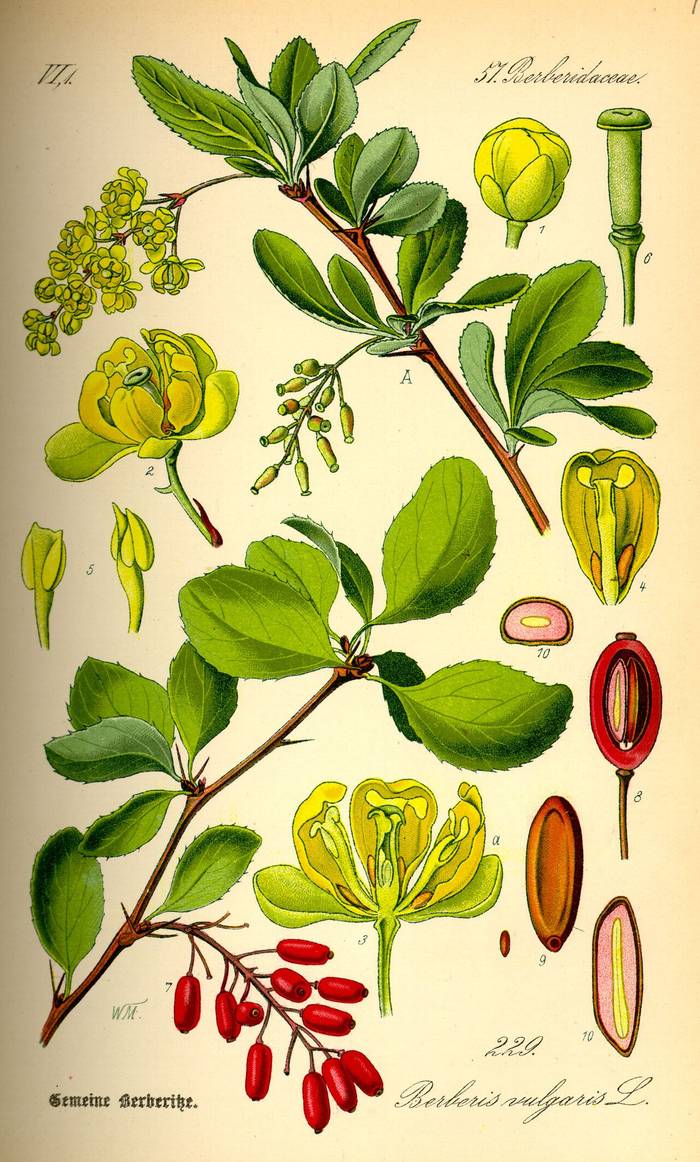
Efter sidste frost · varer 21 dage“The flowers are yellow, 4–6 mm (1⁄8–1⁄4 in) across, produced on 3–6 cm (1+1⁄8–2+3⁄8 in) long panicles in late spring.”
Wikipediadelvist
Frugt
Efter første frost · varer 29.2 dage“Its fruit persists for an average of 29.2 days, and bears an average of 1.3 seeds per fruit.”Wikipediadelvist“The fruit is an oblong red berry 7–10 mm (1⁄4–3⁄8 in) long and 3–5 mm (1⁄8–3⁄16 in) broad, ripening in late summer or autumn.”
Dvale
Efter første frost · varer 150 dage“It is a deciduous shrub growing up to 4 metres (13 feet) high.”
Wikipediadelvist
Går i dvale
Efter første frost
AI-estimatikke målt endnu
Spring ud
Efter sidste frost · varer 30 dage
AI-estimatikke målt endnu
Første høst
2–3 år efter plantningwillowrisegardens.com is a fruit/edible-plant nursery site, not a university extension or RHS source. Counted from planting a nursery plant (matches the field's own convention), not from seed.
Spiselige dele og bestøvning3 felter
Bærrene
Eaten fresh as a tart fruit, or made into jam · august–november“The edible berries, though rich in vitamin C, have a very sharp or sour flavour and are not widely consumed because the thorny shrubs make them difficult to harvest.”Wikipediadelvist“It produces edible but sharply acidic berries, which people in many countries eat as a tart and refreshing fruit.”Wikipediadelvist“The fruit is an oblong red berry 7–10 mm (1⁄4–3⁄8 in) long and 3–5 mm (1⁄8–3⁄16 in) broad, ripening in late summer or autumn.”
Bestøves af
—
tomt
Økologi5 felter
Tiltrækker
Small birds, insects (pollinators)“The berries are an important food for many small birds, which disperse the seeds in their droppings.”
Skadedyr
Bladlus, målere
AI-estimatikke målt endnu
Sygdomme
Sortrust“B. vulgaris is the alternate host species of the wheat stem rust fungus (Puccinia graminis f. sp. tritici), a grass-infecting rust fungus that is a serious fungal disease of wheat and related grains.”
Optager
Kalium, calcium
AI-estimatikke målt endnu
Fikserer kvælstof
Nej
AI-estimatikke målt endnu
Formering og navne4 felter
Metoder
Root suckers, frø“It spreads by suckers: new shoots from buds on its roots.”
Sværhedsgrad
2 / 5
AI-estimatikke målt endnu
Frø
cold_moist
AI-estimatikke målt endnu
Ikke sorteret endnu66 felter
Felter som parseren gemmer, men som siden ikke har en række til endnu. De vises her automatisk, så intet er skjult.
forage.DK.local_name
Almindelig Berberis
AI-estimatikke målt endnu
forage.DK.prep_cautions
Very sharp or sour flavour; the thorny shrub makes the berries difficult to harvest.
AI-estimatikke målt endnu
forage.DK.edibility_basis
inferred
AI-estimatikke målt endnu
forage.DK.foraging_months.notes
Berries ripen in late summer or autumn.
AI-estimatikke målt endnu
forage.DK.foraging_months.months
4, 5, 6, 8, 9, 10“The fruit is an oblong red berry 7–10 mm (1⁄4–3⁄8 in) long and 3–5 mm (1⁄8–3⁄16 in) broad, ripening in late summer or autumn.”
Wikipediadelvist
forage.DK.foraging_months.year_round
false
AI-estimatikke målt endnu
forage.DK.habitat_affinity
hedgerow, woodland, verge
AI-estimatikke målt endnu
forage.US.local_name
Common Barberry
AI-estimatikke målt endnu
forage.US.edible_parts
[{"part":"berries","caution":"very sharp or sour flavour; the thorny shrub makes harvest difficult. Cultivation prohibited in Canada and some US areas (Connecticut, Massachusetts, Michigan, New Hampshire)","preparatio…“The edible berries, though rich in vitamin C, have a very sharp or sour flavour and are not widely consumed because the thorny shrubs make them difficult to harvest.”Wikipediadelvist“It produces edible but sharply acidic berries, which people in many countries eat as a tart and refreshing fruit.”Wikipediadelvist“The fruit is an oblong red berry 7–10 mm (1⁄4–3⁄8 in) long and 3–5 mm (1⁄8–3⁄16 in) broad, ripening in late summer or autumn.”
forage.US.prep_cautions
Very sharp or sour flavour; the thorny shrub makes the berries difficult to harvest.
AI-estimatikke målt endnu
forage.US.edibility_basis
inferred
AI-estimatikke målt endnu
forage.US.foraging_months.notes
Berries ripen in late summer or autumn.
AI-estimatikke målt endnu
forage.US.foraging_months.months
4, 5, 6, 8, 9, 10“The fruit is an oblong red berry 7–10 mm (1⁄4–3⁄8 in) long and 3–5 mm (1⁄8–3⁄16 in) broad, ripening in late summer or autumn.”
Wikipediadelvist
forage.US.foraging_months.year_round
false
AI-estimatikke målt endnu
forage.US.habitat_affinity
hedgerow, woodland, verge
AI-estimatikke målt endnu
forage.TROPICAL.edible_parts
[{"part":"fruit","caution":"sour, remove seeds","preparation":"raw, cooked","season_months":[8,9,10]},{"part":"leaves","caution":"sour","preparation":"cooked","season_months":[4,5,6]}]
AI-estimatikke målt endnu
forage.TROPICAL.prep_cautions
remove seeds from fruit, leaves are sour and best cooked
AI-estimatikke målt endnu
forage.TROPICAL.edibility_basis
inferred
AI-estimatikke målt endnu
forage.TROPICAL.foraging_months.notes
Not typically found in tropical regions.
AI-estimatikke målt endnu
forage.TROPICAL.foraging_months.months
4, 5, 6, 8, 9, 10
AI-estimatikke målt endnu
forage.TROPICAL.foraging_months.year_round
false
AI-estimatikke målt endnu
forage.TROPICAL.habitat_affinity
woodland, disturbed_ground
AI-estimatikke målt endnu
ornamental.basis
documented
AI-estimatikke målt endnu
ornamental.fragrance.source
flower
AI-estimat100 % enig
ornamental.fragrance.intensity
subtle
AI-estimatikke målt endnu
ornamental.confidence
high
AI-estimatikke målt endnu
ornamental.fall_interest
true“The fruit is an oblong red berry 7–10 mm (1⁄4–3⁄8 in) long and 3–5 mm (1⁄8–3⁄16 in) broad, ripening in late summer or autumn.”
Wikipediadelvist
ornamental.flower_colour
yellow“The flowers are yellow, 4–6 mm (1⁄8–1⁄4 in) across, produced on 3–6 cm (1+1⁄8–2+3⁄8 in) long panicles in late spring.”
ornamental.evidence_quote
Berberis vulgaris, commonly known as common barberry, produces small yellow flowers in spring, followed by red berries in autumn. Its green foliage turns a vibrant red in the fall. The berries often persist into winter, providing some ornamental interest.
AI-estimatikke målt endnu
ornamental.foliage_colour
green
AI-estimat82 % enig
ornamental.foliage_texture
medium
AI-estimatikke målt endnu
ornamental.winter_structure
persistent_fruit
AI-estimatikke målt endnu
ornamental.autumn_foliage_colour
red
AI-estimatikke målt endnu
care_regime
none
AI-estimatikke målt endnu
propagation.self_seeding
moderate
AI-estimat20 % enig
propagation.division_season
spring_or_autumn
AI-estimatikke målt endnu
propagation.establishment_years
2
AI-estimat40 % enig
forage_proposals.DK.edibility_tier.tier
edible“It produces edible but sharply acidic berries, which people in many countries eat as a tart and refreshing fruit.”
forage_proposals.DK.edibility_tier.confidence
high
AI-estimatikke målt endnu
forage_proposals.DK.edibility_tier.evidence_quote
The berries are edible, though very tart, and are often used in jams, jellies, and sauces.
AI-estimatikke målt endnu
forage_proposals.US.edibility_tier.tier
edible“It produces edible but sharply acidic berries, which people in many countries eat as a tart and refreshing fruit.”
forage_proposals.US.edibility_tier.confidence
high
AI-estimatikke målt endnu
forage_proposals.US.edibility_tier.evidence_quote
The tart berries of Berberis vulgaris are commonly used in culinary applications, particularly in Middle Eastern cuisine.
AI-estimatikke målt endnu
forage_proposals.TROPICAL.edibility_tier.confidence
low
AI-estimatikke målt endnu
function_profile.biomass_return.confidence
medium
AI-estimatikke målt endnu
function_profile.nutrient_flows.consumes
[{"basis":"inferred","demand":"moderate","nutrient":"nitrogen","confidence":"medium"},{"basis":"inferred","demand":"moderate","nutrient":"phosphorus","confidence":"medium"},{"basis":"inferred","demand":"moderate","nut…
AI-estimatikke målt endnu
function_profile.nutrient_flows.provides
[{"basis":"inferred","nutrient":"potassium","mechanism":"biomass_return","confidence":"medium"},{"basis":"inferred","nutrient":"calcium","mechanism":"biomass_return","confidence":"medium"}]
AI-estimatikke målt endnu
function_profile.biotic_interactions
[{"taxa":["small birds"],"basis":"documented","valence":"beneficial","relation":"attracts","confidence":"high","evidence_quote":"The berries are an important food for many small birds, which disperse the seeds in thei…“The berries are an important food for many small birds, which disperse the seeds in their droppings.”Wikipedia“B. vulgaris is the alternate host species of the wheat stem rust fungus (Puccinia graminis f. sp. tritici), a grass-infecting rust fungus that is a serious fungal disease of wheat and related grains.”
function_profile.aromatic_pest_effect.value
false
AI-estimat80 % enig
function_profile.aromatic_pest_effect.confidence
low
AI-estimatikke målt endnu
function_profile.structural_interfaces.provides_shelter.basis
documented
AI-estimatikke målt endnu
function_profile.structural_interfaces.provides_shelter.kinds
wind
AI-estimatikke målt endnu
function_profile.structural_interfaces.provides_shelter.confidence
high
AI-estimatikke målt endnu
function_profile.structural_interfaces.provides_shelter.evidence_quote
The dense growth habit and thorns of barberry provide good wind shelter and shade.
AI-estimatikke målt endnu
function_profile.structural_interfaces.requires_shelter.basis
inferred
AI-estimatikke målt endnu
function_profile.structural_interfaces.requires_shelter.confidence
low
AI-estimatikke målt endnu
function_profile.structural_interfaces.provides_physical_support.form
dense_thicket
AI-estimatikke målt endnu
function_profile.structural_interfaces.provides_physical_support.basis
documented
AI-estimatikke målt endnu
function_profile.structural_interfaces.provides_physical_support.confidence
high
AI-estimatikke målt endnu
function_profile.structural_interfaces.requires_physical_support.basis
inferred
AI-estimatikke målt endnu
function_profile.structural_interfaces.requires_physical_support.confidence
low
AI-estimatikke målt endnu
climate_tolerance.photoperiod_response
day_neutral
AI-estimatikke målt endnu
soil_interactions.organic_matter_contribution
medium
AI-estimatikke målt endnu
component_metadata.growth_cycle
perennial
AI-estimat100 % enig
resource_interfaces.inputs
[{"resource":"light","quantity_description":"full sun to partial shade"},{"resource":"water","quantity_description":"low to medium"}]
AI-estimatikke målt endnu
resource_interfaces.outputs
[{"resource":"fruit","quantity_description":"oblong red berry 7–10 mm long and 3–5 mm broad, ripening in late summer or autumn"},{"resource":"leaf_litter","quantity_description":"leaves shed each autumn as a deciduous…“The fruit is an oblong red berry 7–10 mm (1⁄4–3⁄8 in) long and 3–5 mm (1⁄8–3⁄16 in) broad, ripening in late summer or autumn.”