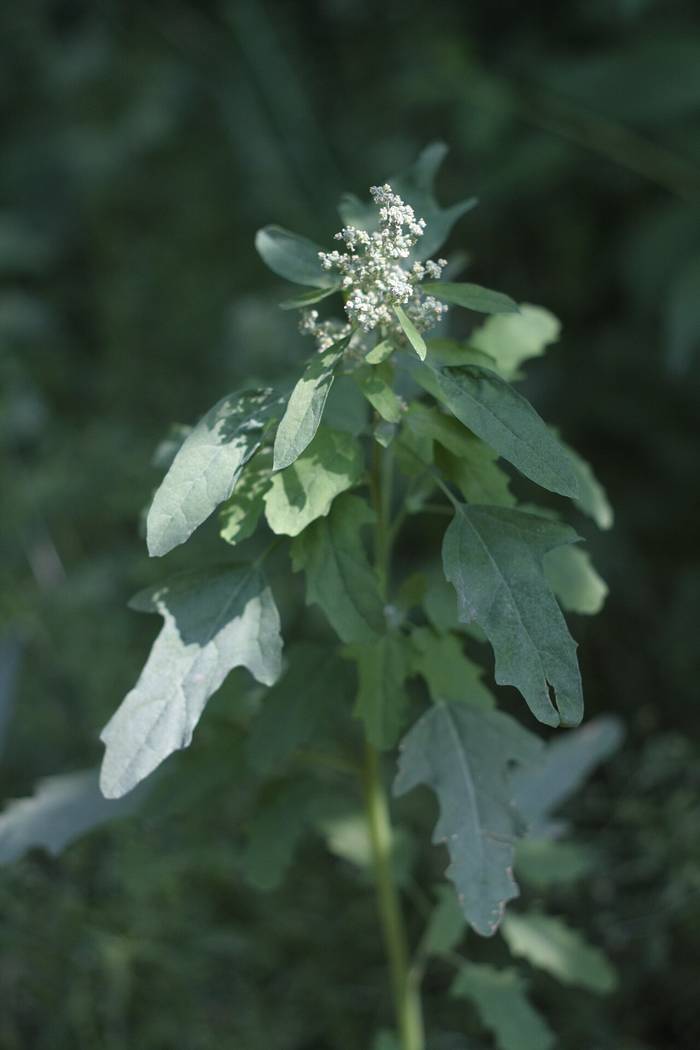
Dalgial · CC BY-SA 3.0
Figenbladet gåsefod
Plante·Chenopodium ficifolium
Fuld sol
Sol
Fugtig jord
Vand
Ikke registreret
Dræning
Zoner 3–10
Hårdførhed
Dækning · 101 felter
Ingen åbenlyse uoverensstemmelser fundet.
Vækst og størrelse10 felter
Plantetype
Plante
AI-estimat100 % enig
Bredde
60 cm
AI-estimat58 % enig
Højde ved alder
—
tomt
Planteafstand
30 cm (mindst 15 cm)
AI-estimat55 % enig
Vækstrate
—
tomt
Vækstform
Tueformet
AI-estimat50 % enig
Roddybde
Lav
AI-estimat63 % enig
Skovhavelag
Urtelag
AI-estimat90 % enig
Levetid
—
tomt
Rødder6 felter
Rodform
Trævlerødder
AI-estimat43 % enig
Lagerorgan
Intet“It does not multiply vegetatively: it has no rhizomes, runners, suckers or offspring bulbs or tubers.”
Breder sig
Nej“It does not multiply vegetatively: it has no rhizomes, runners, suckers or offspring bulbs or tubers.”
Breder sig sideværts i cm
—
tomt
Roddybde i cm
—
tomt
Mykorrhiza
Ingen mykorrhiza
AI-estimatikke målt endnu
Lys, vand og jord9 felter
Timer sol
6–12 t
AI-estimatikke målt endnu
Tørketålende
—
tomt
Tåler vandlidende jord
—
tomt
Komprimeret jord
Tåler det nogenlunde
AI-estimatikke målt endnu
Klima5 felter
Hårdførhed
Zone 3–10
AI-estimatikke målt endnu
Dræbende frost
-5 °C
AI-estimatikke målt endnu
Vækst-temperatur
5–30 °C · optimal 15–25 °C
AI-estimatikke målt endnu
Kuldetimer
0 t
AI-estimatikke målt endnu
Hjemsted
AD, AF, AT, BA, BE, BG, BT, CH, CN, DE, EG, ES, FR, GI, GR, HK, HR, HU, IL, IN, IQ, IR, IT, JO, KP, KR, KZ, LA, LI, LU, MC, MD, ME, MK, MM, MO, NL, NP, PK, PL, RO, RS, RU, SA, SI, SM, TH, TJ, TM, TR, TW, UZ, VA, VN, XK
Året rundt3 felter
Blomstring
Juli · varer 92 dage“It is in flower from July to September, and the seeds ripen from August to October.”
Frugt
August · varer 92 dage“It is in flower from July to September, and the seeds ripen from August to October.”
Spring ud
Efter sidste frost · varer 7 dage
AI-estimatikke målt endnu
Spiselige dele og bestøvning5 felter
Bladene
Flower buds
Cooked, used like spinach or added to soups · juli–september“Leaves and flower buds - cooked.”PFAF“Leaves and flower buds - cooked. Used like spinach or added to soups etc.”
Frøene
Bestøvning
Selvbestøvende · tvekønnet“The species is hermaphrodite (has both male and female organs) and is pollinated by Wind.”PFAF“is pollinated by Wind”
Økologi5 felter
Tiltrækker
—
tomt
Skadedyr
—
tomt
Sygdomme
—
tomt
Optager
Kvælstof, kalium
AI-estimatikke målt endnu
Fikserer kvælstof
Nej
AI-estimatikke målt endnu
Formering og navne4 felter
Frø
—
tomt
Ikke sorteret endnu54 felter
Felter som parseren gemmer, men som siden ikke har en række til endnu. De vises her automatisk, så intet er skjult.
forage.DK.local_name
Figenbladet gåsefod
AI-estimatikke målt endnu
forage.DK.prep_cautions
Oxalic acid in large quantities can lock up nutrients in food; cooking reduces it., People with a tendency to rheumatism, arthritis, gout, kidney stones or hyperacidity should take especial caution if including this plant in their diet since it can aggravate their condition., Saponins are broken down to a large extent in the cooking process.“The plants also contain some oxalic acid, which in large quantities can lock up some of the nutrients in the food.”PFAF“People with a tendency to rheumatism, arthritis, gout, kidney stones or hyperacidity should take especial caution if including this plant in their diet since it can aggravate their condition.”PFAF“They are also broken down to a large extent in the cooking process.”
forage.DK.edibility_basis
inferred
AI-estimatikke målt endnu
forage.DK.foraging_months.notes
Leaves are best when young and tender. Seeds mature later in the season.“It is in flower from July to September, and the seeds ripen from August to October.”
PFAFdelvist
forage.DK.foraging_months.months
8, 9, 10
AI-estimatikke målt endnu
forage.DK.foraging_months.year_round
false
AI-estimatikke målt endnu
forage.DK.habitat_affinity
disturbed_ground“Waste ground and arable land, especially on rich soils and near compost heaps.”
forage.US.local_name
Figleaf goosefoot
AI-estimatikke målt endnu
forage.US.edible_parts
[{"part":"leaves","caution":"Raw leaves should only be eaten in small quantities.","preparation":"cooked, used like spinach or added to soups","season_months":[]},{"part":"flower buds","caution":null,"preparation":"co…“Edible Parts: Leaves Seed”PFAF“Leaves and flower buds - cooked.”PFAF“The raw leaves should only be eaten in small quantities, see the notes above on toxicity.”PFAF“Leaves and flower buds - cooked. Used like spinach or added to soups etc.”PFAFdelvist“Seed - roasted and used as a condiment.”PFAFdelvist“It is in flower from July to September, and the seeds ripen from August to October.”
forage.US.prep_cautions
Oxalic acid in large quantities can lock up nutrients in food; cooking reduces it., People with a tendency to rheumatism, arthritis, gout, kidney stones or hyperacidity should take especial caution if including this plant in their diet since it can aggravate their condition., Saponins are broken down to a large extent in the cooking process.“The plants also contain some oxalic acid, which in large quantities can lock up some of the nutrients in the food.”PFAF“People with a tendency to rheumatism, arthritis, gout, kidney stones or hyperacidity should take especial caution if including this plant in their diet since it can aggravate their condition.”PFAF“They are also broken down to a large extent in the cooking process.”
forage.US.edibility_basis
inferred
AI-estimatikke målt endnu
forage.US.foraging_months.notes
Leaves are best when young and tender. Seeds mature later in the season.“It is in flower from July to September, and the seeds ripen from August to October.”
PFAFdelvist
forage.US.foraging_months.months
5, 6, 7, 8, 9, 10
AI-estimatikke målt endnu
forage.US.foraging_months.year_round
false
AI-estimatikke målt endnu
forage.US.habitat_affinity
disturbed_ground“Waste ground and arable land, especially on rich soils and near compost heaps.”
forage.TROPICAL.edible_parts
[{"part":"leaves","caution":null,"preparation":"cooked","season_months":[1,2,3,4,5,6,7,8,9,10,11,12]},{"part":"seeds","caution":"Must be thoroughly cooked and soaked to remove saponins.","preparation":"cooked","season…
AI-estimatikke målt endnu
forage.TROPICAL.prep_cautions
Contains saponins, requires thorough cooking and soaking.
AI-estimatikke målt endnu
forage.TROPICAL.edibility_basis
inferred
AI-estimatikke målt endnu
forage.TROPICAL.foraging_months.notes
Year-round in suitable tropical climates.
AI-estimatikke målt endnu
forage.TROPICAL.foraging_months.year_round
true
AI-estimatikke målt endnu
forage.TROPICAL.habitat_affinity
disturbed_ground
AI-estimatikke målt endnu
ornamental.basis
documented
AI-estimatikke målt endnu
ornamental.fragrance.source
none
AI-estimat100 % enig
ornamental.confidence
high
AI-estimatikke målt endnu
ornamental.fall_interest
false
AI-estimatikke målt endnu
ornamental.flower_colour
green, insignificant
AI-estimat67 % enig
ornamental.evidence_quote
Chenopodium ficifolium, commonly known as Fig-leaved goosefoot, has inconspicuous green flowers and green foliage. It is an annual plant, so it does not have autumn foliage color or winter structure.
AI-estimatikke målt endnu
ornamental.foliage_colour
green
AI-estimat82 % enig
ornamental.foliage_texture
medium
AI-estimatikke målt endnu
ornamental.winter_structure
none
AI-estimatikke målt endnu
ornamental.autumn_foliage_colour
none
AI-estimatikke målt endnu
care_regime
none
AI-estimatikke målt endnu
propagation.self_seeding
aggressive
AI-estimat20 % enig
propagation.establishment_years
1
AI-estimat40 % enig
forage_proposals.DK.edibility_tier.tier
edible
AI-estimatikke målt endnu
forage_proposals.DK.edibility_tier.confidence
high
AI-estimatikke målt endnu
forage_proposals.DK.edibility_tier.evidence_quote
The leaves and seeds of Chenopodium ficifolium are edible. Leaves are used as a potherb, and seeds can be ground into flour. Cooking is recommended for leaves to reduce oxalic acid, and seeds should be thoroughly washed to remove saponins.
AI-estimatikke målt endnu
forage_proposals.US.edibility_tier.tier
edible
AI-estimatikke målt endnu
forage_proposals.US.edibility_tier.confidence
high
AI-estimatikke målt endnu
forage_proposals.US.edibility_tier.evidence_quote
Chenopodium ficifolium is considered edible, with young leaves used as a cooked green and seeds processed for flour. Caution is advised regarding oxalic acid in leaves and saponins in seeds, requiring proper preparation.
AI-estimatikke målt endnu
forage_proposals.TROPICAL.edibility_tier.tier
edible
AI-estimatikke målt endnu
forage_proposals.TROPICAL.edibility_tier.confidence
low
AI-estimatikke målt endnu
forage_proposals.TROPICAL.edibility_tier.evidence_quote
In many regions, Chenopodium species, including C. ficifolium, are consumed for their nutritious leaves and seeds.
AI-estimatikke målt endnu
function_profile.biomass_return.confidence
medium
AI-estimatikke målt endnu
function_profile.nutrient_flows.consumes
[{"basis":"documented","demand":"moderate","nutrient":"nitrogen","confidence":"high"},{"basis":"inferred","demand":"moderate","nutrient":"phosphorus","confidence":"medium"},{"basis":"documented","demand":"moderate","n…
AI-estimatikke målt endnu
function_profile.nutrient_flows.provides
[{"basis":"inferred","nutrient":"nitrogen","mechanism":"biomass_return","confidence":"medium"},{"basis":"inferred","nutrient":"potassium","mechanism":"biomass_return","confidence":"medium"}]
AI-estimatikke målt endnu
function_profile.biotic_interactions
[{"taxa":["finches","sparrows"],"basis":"documented","valence":"beneficial","relation":"attracts","confidence":"high","evidence_quote":"The seeds of Chenopodium species are a food source for various granivorous birds.…
AI-estimatikke målt endnu
function_profile.aromatic_pest_effect.value
false
AI-estimat80 % enig
function_profile.aromatic_pest_effect.confidence
low
AI-estimatikke målt endnu
climate_tolerance.photoperiod_response
short_day
AI-estimatikke målt endnu
soil_interactions.organic_matter_contribution
medium
AI-estimatikke målt endnu
component_metadata.growth_cycle
annual“Chenopodium ficifolium is a ANNUAL growing to 0.9 m (3ft).”
resource_interfaces.inputs
[{"resource":"light","quantity_description":"cannot grow in the shade"},{"resource":"water","quantity_description":"prefers moist soil"}]“It cannot grow in the shade.”PFAF“It prefers moist soil.”
resource_interfaces.outputs
[{"resource":"seeds","quantity_description":"seeds ripen from August to October"}]“It is in flower from July to September, and the seeds ripen from August to October.”