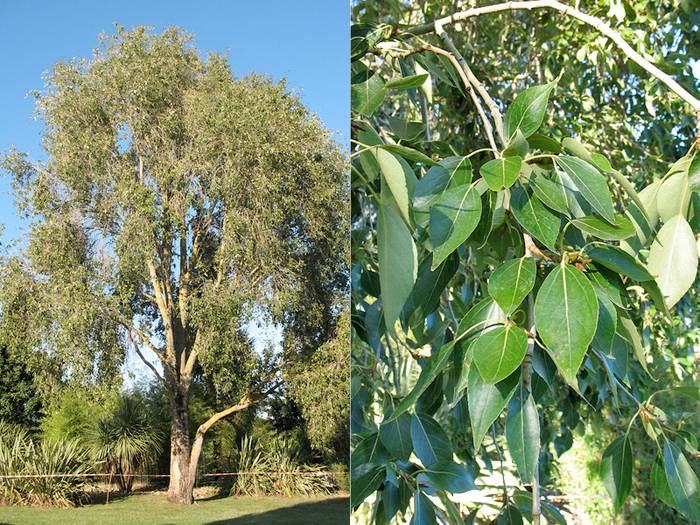
Kinesisk poppel
Træ·Populus simonii
Fuld sol
Sol
Fugtig jord
Vand
Veldrænet jord
Dræning
Zoner 2–7
Hårdførhed
Dækning · 108 felter
Ingen åbenlyse uoverensstemmelser fundet.
Vækst og størrelse11 felter
Plantetype
Løvfældende træ“Populus simonii is a deciduous Tree growing to 30 m (98ft 5in) at a fast rate.”
Bredde
1.200 cm
AI-estimat58 % enig
Højde ved alder
—
tomt
Størrelse efter plantning
26 år: 15 m høj, 7 m krone · 36 år: 17 m høj, 9 m krone · 62 år: 20 m høj, 9 m krone“Berlin tree register: 2304 trees of this species measured with years since planting, height and crown diameter; median crown 9.0 m and height 20.0 m at 60–100 years after planting (560 trees).”Median af 2.304 målte træer i Berlin. Årene tælles fra udplantning af planteskoletræer, så et lille træ når hver størrelse senere.
Planteafstand
800 cm (mindst 500 cm)
AI-estimat55 % enig
Vækstform
Søjleformet
AI-estimat50 % enig
Roddybde
Dyb
AI-estimat63 % enig
Skovhavelag
Kronelag
AI-estimat90 % enig
Levetid
~50 år
AI-estimatikke målt endnu
Rødder6 felter
Rodform
—
tomt
Lagerorgan
Intet
AI-estimat100 % enig
Breder sig sideværts i cm
—
tomt
Roddybde i cm
—
tomt
Mykorrhiza
Ektomykorrhiza (EcM)
AI-estimatikke målt endnu
Lys, vand og jord9 felter
Timer sol
6 t
AI-estimatikke målt endnu
Tørketålende
—
tomt
Tåler vandlidende jord
—
tomt
Jordtype
Sand, muld, ler“Suitable for: light (sandy), medium (loamy) and heavy (clay) soils and prefers well-drained soil.”
Dræning
Veldrænet“Prefers a deep rich well-drained circumneutral soil, growing best in the south and east of Britain.”
Komprimeret jord
Tåler det nogenlunde
AI-estimatikke målt endnu
Klima5 felter
Hårdførhed
Zone 2–7
AI-estimatikke målt endnu
Dræbende frost
-1 °C“Killing temp. early growth: -1”EcoCrops tal er frost under tidlig vækst (forårsfrost på nye skud), ikke vinterkulde.
Vækst-temperatur
5–40 °C · optimal 15–25 °C“Temperature absolute min: 5 · Temperature absolute max: 40 · Temperature optimal min: 15 · Temperature optimal max: 25”
Kuldetimer
800 t
AI-estimatikke målt endnu
Pleje (bliver til opgaver i Manage)1 felter
Beskæring
November · varer 60 dage · dead, diseased, or crossing branches
AI-estimatikke målt endnu
Året rundt5 felter
Blomstring
April · varer 91 dage“It is in flower from April to June, and the seeds ripen from May to July.”
Frugt
Maj · varer 92 dage“It is in flower from April to June, and the seeds ripen from May to July.”
Spring ud
Efter sidste frost · varer 30 dage“The leaf buds, as they swell in the spring, and the young leaves have a pleasing fragrance of balsam.”
PFAFdelvist
Går i dvale
Efter første frost · varer 30 dage“Populus simonii is a deciduous Tree growing to 30 m (98ft 5in) at a fast rate.”
PFAFdelvist
Dvale
Efter første frost · 30 dage efter · varer 150 dage
AI-estimatikke målt endnu
Spiselige dele og bestøvning3 felter
Bestøvning
Kræver en partner · en hanplante · tvebo“The species is dioecious (individual flowers are either male or female, but only one sex is to be found on any one plant so both male and female plants must be grown if seed is required).”PFAF“and is pollinated by Wind.”PFAF“The plant is not self-fertile.”PFAF“Dioecious. Male and female plants must be grown if seed is required.”
Økologi5 felter
Tiltrækker
—
tomt
Skadedyr
—
tomt
Optager
—
tomt
Fikserer kvælstof
Nej
AI-estimatikke målt endnu
Formering og navne4 felter
Metoder
Sværhedsgrad
2 / 5
AI-estimatikke målt endnu
Frø
cold stratification for 60-90 days
AI-estimatikke målt endnu
Ikke sorteret endnu59 felter
Felter som parseren gemmer, men som siden ikke har en række til endnu. De vises her automatisk, så intet er skjult.
forage.DK.local_name
Kinesisk poppel
AI-estimatikke målt endnu
forage.DK.prep_cautions
Young leaves are best, older leaves can be bitter.
AI-estimatikke målt endnu
forage.DK.edibility_basis
inferred
AI-estimatikke målt endnu
forage.DK.foraging_months.months
4, 5, 6
AI-estimatikke målt endnu
forage.DK.foraging_months.year_round
false
AI-estimatikke målt endnu
forage.US.edible_parts
[{"part":"leaves","caution":"Best eaten when young and tender.","preparation":"cooked","season_months":[4,5,6]}]
AI-estimatikke målt endnu
forage.US.prep_cautions
Young leaves are best, older leaves can be bitter.
AI-estimatikke målt endnu
forage.US.edibility_basis
inferred
AI-estimatikke målt endnu
forage.US.foraging_months.months
4, 5, 6
AI-estimatikke målt endnu
forage.US.foraging_months.year_round
false
AI-estimatikke målt endnu
forage.US.habitat_affinity
riverbank, woodland, disturbed_ground
AI-estimatikke målt endnu
forage.TROPICAL.edibility_basis
inferred
AI-estimatikke målt endnu
forage.TROPICAL.foraging_months.year_round
false
AI-estimatikke målt endnu
ornamental.basis
documented
AI-estimatikke målt endnu
ornamental.fragrance.source
foliage“The leaf buds, as they swell in the spring, and the young leaves have a pleasing fragrance of balsam.”
ornamental.fragrance.intensity
subtle
AI-estimatikke målt endnu
ornamental.confidence
high
AI-estimatikke målt endnu
ornamental.fall_interest
true
AI-estimatikke målt endnu
ornamental.evidence_quote
Populus simonii has green foliage that turns yellow-green in autumn, providing fall interest. The flowers are insignificant. The bark can be ornamental, and the tree provides architectural structure in winter.
AI-estimatikke målt endnu
ornamental.foliage_colour
green
AI-estimat82 % enig
ornamental.foliage_texture
medium
AI-estimatikke målt endnu
ornamental.winter_structure
ornamental_bark, architectural_skeleton
AI-estimatikke målt endnu
ornamental.autumn_foliage_colour
yellow_green
AI-estimatikke målt endnu
care_regime
none
AI-estimatikke målt endnu
propagation.self_seeding
moderate
AI-estimat20 % enig
propagation.division_season
spring
AI-estimatikke målt endnu
propagation.establishment_years
1
AI-estimat40 % enig
size_at_age.v
1
AI-estimatikke målt endnu
size_at_age.basis
years_after_planting
AI-estimatikke målt endnu
forage_proposals.DK.edibility_tier.tier
edible
AI-estimatikke målt endnu
forage_proposals.DK.edibility_tier.confidence
medium
AI-estimatikke målt endnu
forage_proposals.DK.edibility_tier.evidence_quote
The young leaves of Populus simonii are edible when cooked.
AI-estimatikke målt endnu
forage_proposals.US.edibility_tier.tier
edible
AI-estimatikke målt endnu
forage_proposals.US.edibility_tier.confidence
medium
AI-estimatikke målt endnu
forage_proposals.US.edibility_tier.evidence_quote
The young leaves of Populus simonii are edible when cooked.
AI-estimatikke målt endnu
forage_proposals.TROPICAL.edibility_tier.confidence
low
AI-estimatikke målt endnu
function_profile.biomass_return.confidence
high
AI-estimatikke målt endnu
function_profile.nutrient_flows.consumes
[{"basis":"inferred","demand":"high","nutrient":"nitrogen","confidence":"medium"},{"basis":"inferred","demand":"moderate","nutrient":"phosphorus","confidence":"medium"},{"basis":"inferred","demand":"high","nutrient":"…
AI-estimatikke målt endnu
function_profile.nutrient_flows.provides
[{"basis":"inferred","nutrient":"potassium","mechanism":"biomass_return","confidence":"medium"},{"basis":"inferred","nutrient":"calcium","mechanism":"biomass_return","confidence":"medium"}]
AI-estimatikke målt endnu
function_profile.biotic_interactions
[{"taxa":["bacterial canker"],"basis":"documented","valence":"harmful","relation":"hosts","confidence":"high","evidence_quote":"Plants are susceptible to bacterial canker.","organism_group":"pathogen","ecological_func…“Plants are susceptible to bacterial canker.”
function_profile.aromatic_pest_effect.value
false
AI-estimat80 % enig
function_profile.aromatic_pest_effect.confidence
low
AI-estimatikke målt endnu
function_profile.structural_interfaces.provides_shelter.basis
taxonomic
AI-estimatikke målt endnu
function_profile.structural_interfaces.provides_shelter.kinds
wind, shade
AI-estimatikke målt endnu
function_profile.structural_interfaces.provides_shelter.confidence
high
AI-estimatikke målt endnu
function_profile.structural_interfaces.requires_shelter.basis
documented“It does not do well in exposed upland sites.”
function_profile.structural_interfaces.requires_shelter.kinds
wind“It does not do well in exposed upland sites.”
function_profile.structural_interfaces.requires_shelter.confidence
medium“It does not do well in exposed upland sites.”
function_profile.structural_interfaces.requires_shelter.evidence_quote
It does not do well in exposed upland sites.“It does not do well in exposed upland sites.”
function_profile.structural_interfaces.provides_physical_support.form
trunk
AI-estimatikke målt endnu
function_profile.structural_interfaces.provides_physical_support.basis
taxonomic
AI-estimatikke målt endnu
function_profile.structural_interfaces.provides_physical_support.confidence
high
AI-estimatikke målt endnu
climate_tolerance.photoperiod_response
long_day
AI-estimatikke målt endnu
soil_interactions.organic_matter_contribution
high
AI-estimatikke målt endnu
component_metadata.growth_cycle
perennial
AI-estimat100 % enig
resource_interfaces.inputs
[{"resource":"light","quantity_description":"cannot grow in shade; needs open sun"},{"resource":"water","quantity_description":"prefers moist soil"}]“It cannot grow in the shade.”PFAF“It prefers moist soil.”
resource_interfaces.outputs
[{"resource":"aromatic_compounds","quantity_description":"fragrant leaf buds and young leaves (balsam scent)"},{"resource":"timber","quantity_description":"planted for timber, especially in central Europe"},{"resource…“The leaf buds, as they swell in the spring, and the young leaves have a pleasing fragrance of balsam.”PFAF“This species is often planted for timber in central Europe and occasionally elsewhere in Europe.”PFAF“It is in flower from April to June, and the seeds ripen from May to July.”PFAF“Populus simonii is a deciduous Tree growing to 30 m (98ft 5in) at a fast rate.”