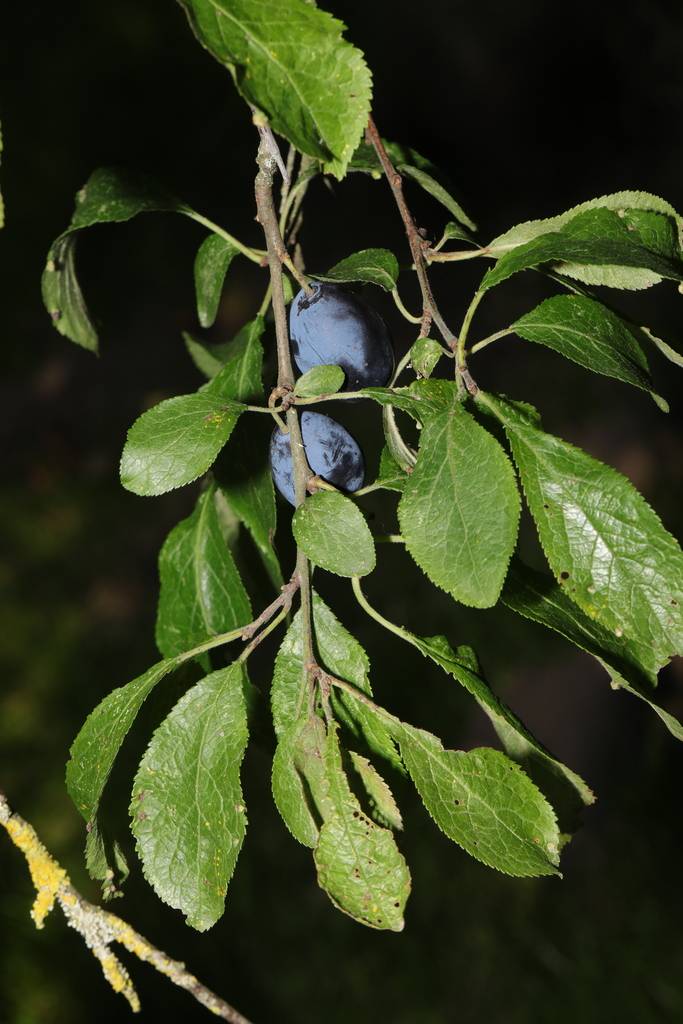
Kræge
Træ·Prunus insititia
Halvskygge til fuld sol
Sol
Fugtig jord
Vand
Ikke registreret
Dræning
Zoner 4–8
Hårdførhed
Dækning · 116 felter
- Parser-flag (climate_tolerance_low_confidence): Climate tolerance values are LLM-extracted (no authoritative EcoCrop match found). EcoCrop covers ~2,568 food-crop taxa; ornamental/native/medicinal species rely on LLM extraction.
Vækst og størrelse10 felter
Plantetype
Løvfældende træ“Prunus insititia is a deciduous Tree growing to 6 m (19ft) by 5 m (16ft) at a medium rate.”
Højde
600 cm“Prunus insititia is a deciduous Tree growing to 6 m (19ft) by 5 m (16ft) at a medium rate.”
Bredde
500 cm“Prunus insititia is a deciduous Tree growing to 6 m (19ft) by 5 m (16ft) at a medium rate.”
Højde ved alder
—
tomt
Planteafstand
300 cm (mindst 250 cm)
AI-estimat55 % enig
Vækstrate
Middel“Prunus insititia is a deciduous Tree growing to 6 m (19ft) by 5 m (16ft) at a medium rate.”
Vækstform
Bredt udbredt
AI-estimat50 % enig
Roddybde
Lav
AI-estimat63 % enig
Skovhavelag
Lavt trælag
AI-estimat90 % enig
Levetid
~50 år
AI-estimatikke målt endnu
Rødder6 felter
Rodform
Fladrodet (skiverod)
AI-estimat43 % enig
Lagerorgan
Intet“No clonal growth organ is recorded: it does not spread vegetatively (no suckers, no rhizomes).”
Breder sig
Nej“No clonal growth organ is recorded: it does not spread vegetatively (no suckers, no rhizomes).”
Breder sig sideværts i cm
—
tomt
Roddybde i cm
—
tomt
Mykorrhiza
Arbuskulær (AM)
AI-estimatikke målt endnu
Lys, vand og jord9 felter
Sol
Fuld sol, let skygge, halvskygge · bedst: fuld sol“It can grow in semi-shade (light woodland) or no shade.”
Timer sol
6 t
AI-estimatikke målt endnu
Tørketålende
—
tomt
Tåler vandlidende jord
—
tomt
Jordtype
Komprimeret jord
Tåler det nogenlunde
AI-estimatikke målt endnu
Klima5 felter
Hårdførhed
Zone 4–8
AI-estimatikke målt endnu
Dræbende frost
-25 °C
AI-estimatikke målt endnu
Vækst-temperatur
5–30 °C · optimal 15–25 °C
AI-estimatikke målt endnu
Kuldetimer
800 t
AI-estimatikke målt endnu
Hjemsted
—
tomt
Pleje (bliver til opgaver i Manage)5 felter
Såning
Efter forrige fase · varer 1 dage“Seed - requires 2 - 3 months cold stratification and is best sown in a cold frame as soon as it is ripe.”
PFAFdelvist
Beskæring
Februar · varer 28 dage · new growth that will bear fruit · dead, diseased, or crossing branches
AI-estimatikke målt endnu
Jorddække
Marts · varer 30 dage
AI-estimatikke målt endnu
Gødning
Marts · varer 30 dage · a balanced granular fertiliser
AI-estimatikke målt endnu
Året rundt6 felter
Høst
Juli · varer 92 dage“plums and peaches are usually harvested from July to September (Northern Hemisphere)”
Går i dvale
Efter første frost · varer 30 dage
AI-estimatikke målt endnu
Dvale
Efter første frost · 14 dage efter · varer 150 dage
AI-estimatikke målt endnu
Spring ud
Efter sidste frost · varer 30 dage
AI-estimatikke målt endnu
Spiselige dele og bestøvning4 felter
Frugterne
Frøene
Økologi5 felter
Tiltrækker
Bier, sommerfugle, other pollinators, dyreliv, fugle, mammals“Prunus species are known for their showy flowers that produce both nectar and pollen, attracting bees, butterflies, and other pollinators.”PFAF“It is noted for attracting wildlife.”PFAF“The fruits are an important food source for birds and mammals, and the trees provide shelter through their dense foliage.”
Skadedyr
Bladlus, snudebiller, æblevikler
AI-estimatikke målt endnu
Optager
Kalium, calcium
AI-estimatikke målt endnu
Fikserer kvælstof
Nej
AI-estimatikke målt endnu
Formering og navne4 felter
Metoder
Frø, podning, okulering, half-ripe cuttings, grønne stiklinger, aflægning“Seed - requires 2 - 3 months cold stratification and is best sown in a cold frame as soon as it is ripe.”PFAF“Plums are propagated by grafting or budding as named cultivars will not come true from seed.”PFAF“Cuttings of half-ripe wood with a heel, July/August in a frame.”PFAF“Softwood cuttings from strongly growing plants in spring to early summer in a frame.”PFAF“Layering in spring.”
Sværhedsgrad
2 / 5
AI-estimatikke målt endnu
Frø
2-3 months cold stratification“Seed - requires 2 - 3 months cold stratification and is best sown in a cold frame as soon as it is ripe.”
Ikke sorteret endnu62 felter
Felter som parseren gemmer, men som siden ikke har en række til endnu. De vises her automatisk, så intet er skjult.
forage.DK.local_name
Damsonsveske
AI-estimatikke målt endnu
forage.DK.warnings_da
Spis ikke bitre kerner.
AI-estimatikke målt endnu
forage.DK.warnings_en
Don't eat bitter kernels.
AI-estimatikke målt endnu
forage.DK.prep_cautions
Do not eat the seed if it is too bitter., Any very bitter seed or fruit should not be eaten., Seeds are edible, but if they are bitter, eat them in strict moderation.“Do not eat the seed if it is too bitter - see the notes above on toxicity.”PFAF“any very bitter seed or fruit should not be eaten.”PFAF“Seeds are edible, but if they are bitter, eat them in strict moderation.”
forage.DK.edibility_basis
inferred
AI-estimatikke målt endnu
forage.DK.foraging_months.notes
Fruits ripen in late summer to early autumn.
AI-estimatikke målt endnu
forage.DK.foraging_months.months
7, 8, 9, 10“For instance, plums and peaches are usually harvested from July to September (Northern Hemisphere), while almonds are harvested in August to September (Northern Hemisphere).”
PFAFdelvist
forage.DK.foraging_months.year_round
false
AI-estimatikke målt endnu
forage.US.local_name
Damson plum
AI-estimatikke målt endnu
forage.US.edible_parts
[{"part":"fruit","caution":null,"preparation":"raw or cooked","season_months":[7,8,9]},{"part":"seed","caution":"Do not eat the seed if it is too bitter","preparation":"raw or cooked","season_months":[10]}]
AI-estimatikke målt endnu
forage.US.prep_cautions
very bitter seed or fruit should not be eaten
AI-estimatikke målt endnu
forage.US.edibility_basis
inferred
AI-estimatikke målt endnu
forage.US.foraging_months.notes
Fruits ripen in late summer to early autumn.
AI-estimatikke målt endnu
forage.US.foraging_months.months
7, 8, 9, 10
AI-estimatikke målt endnu
forage.US.foraging_months.year_round
false
AI-estimatikke målt endnu
forage.US.habitat_affinity
hedgerow, woodland
AI-estimatikke målt endnu
forage.TROPICAL.edibility_basis
inferred
AI-estimatikke målt endnu
forage.TROPICAL.foraging_months.notes
Not typically found in tropical climates.
AI-estimatikke målt endnu
forage.TROPICAL.foraging_months.year_round
false
AI-estimatikke målt endnu
ornamental.basis
documented
AI-estimatikke målt endnu
ornamental.fragrance.source
flower“While Prunus species are fragrant when blooming, they are not known for emitting strong pest-repelling scents.”
ornamental.fragrance.intensity
subtle
AI-estimatikke målt endnu
ornamental.confidence
high
AI-estimatikke målt endnu
ornamental.fall_interest
true“The genus Prunus includes deciduous or evergreen shrubs and trees with showy spring flowers and good autumn leaf colour”
PFAFdelvist
ornamental.flower_colour
white
AI-estimat67 % enig
ornamental.evidence_quote
Prunus insititia, commonly known as Damson or Bullace, produces white flowers in spring, followed by small, plum-like fruits. The foliage is green, turning yellow-green in autumn, and the persistent fruit provides winter interest. The flowers have a subtle fragrance.
AI-estimatikke målt endnu
ornamental.foliage_colour
green
AI-estimat82 % enig
ornamental.foliage_texture
medium
AI-estimatikke målt endnu
ornamental.winter_structure
persistent_fruit
AI-estimatikke målt endnu
ornamental.autumn_foliage_colour
yellow_green
AI-estimatikke målt endnu
care_regime
routine
AI-estimatikke målt endnu
propagation.self_seeding
light
AI-estimat20 % enig
propagation.division_season
autumn
AI-estimatikke målt endnu
propagation.establishment_years
3“Growth rates vary among species, but generally, Prunus trees can grow moderately fast, often reaching full height in 3 to 5 years.”
sun_requirement.best
full_sun“Succeeds in light shade but fruits better in a sunny position.”
PFAFdelvist
forage_proposals.DK.edibility_tier.confidence
high
AI-estimatikke målt endnu
forage_proposals.DK.edibility_tier.evidence_quote
The fruit of Prunus insititia, commonly known as Damson or Bullace, is widely consumed raw or cooked in various culinary applications such as jams, jellies, and pies.
AI-estimatikke målt endnu
forage_proposals.US.edibility_tier.tier
edible
AI-estimatikke målt endnu
forage_proposals.US.edibility_tier.confidence
high
AI-estimatikke målt endnu
forage_proposals.US.edibility_tier.evidence_quote
The fruit of Prunus insititia, commonly known as Damson or Bullace, is widely consumed raw or cooked in various culinary applications such as jams, jellies, and pies.
AI-estimatikke målt endnu
forage_proposals.TROPICAL.edibility_tier.confidence
low
AI-estimatikke målt endnu
function_profile.biomass_return.confidence
medium
AI-estimatikke målt endnu
function_profile.nutrient_flows.consumes
[{"basis":"documented","demand":"moderate","nutrient":"nitrogen","confidence":"high"},{"basis":"documented","demand":"moderate","nutrient":"phosphorus","confidence":"high"},{"basis":"documented","demand":"high","nutri…
AI-estimatikke målt endnu
function_profile.nutrient_flows.provides
[{"basis":"inferred","nutrient":"potassium","mechanism":"biomass_return","confidence":"low"},{"basis":"inferred","nutrient":"calcium","mechanism":"biomass_return","confidence":"low"}]
AI-estimatikke målt endnu
function_profile.biotic_interactions
[{"taxa":["bees","butterflies"],"basis":"documented","valence":"beneficial","relation":"attracts","confidence":"high","evidence_quote":"Prunus species are known for their showy flowers that produce both nectar and pol…“Prunus species are known for their showy flowers that produce both nectar and pollen, attracting bees, butterflies, and other pollinators.”PFAF“The fruits are an important food source for birds and mammals, and the trees provide shelter through their dense foliage.”PFAF“They also support beneficial insects by providing overwintering sites.”PFAF“It is noted for attracting wildlife.”PFAF“Plants in this genus are notably susceptible to honey fungus.”
function_profile.aromatic_pest_effect.value
false“No – While Prunus species are fragrant when blooming, they are not known for emitting strong pest-repelling scents.”
function_profile.aromatic_pest_effect.confidence
high
AI-estimatikke målt endnu
function_profile.structural_interfaces.provides_shelter.basis
taxonomic
AI-estimatikke målt endnu
function_profile.structural_interfaces.provides_shelter.kinds
wind“Trees are fairly wind resistant and can be grown as a shelterbelt hedge.”
function_profile.structural_interfaces.provides_shelter.confidence
high
AI-estimatikke målt endnu
function_profile.structural_interfaces.provides_shelter.evidence_quote
Trees are fairly wind resistant and can be grown as a shelterbelt hedge.
AI-estimatikke målt endnu
function_profile.structural_interfaces.provides_physical_support.form
trunk
AI-estimatikke målt endnu
function_profile.structural_interfaces.provides_physical_support.basis
taxonomic
AI-estimatikke målt endnu
function_profile.structural_interfaces.provides_physical_support.confidence
high
AI-estimatikke målt endnu
climate_tolerance.photoperiod_response
day_neutral
AI-estimatikke målt endnu
soil_interactions.organic_matter_contribution
medium
AI-estimatikke målt endnu
component_metadata.growth_cycle
perennial
AI-estimat100 % enig
resource_interfaces.inputs
[{"resource":"light","quantity_description":"Tolerates light shade; fruits better in a sunny position"},{"resource":"water","quantity_description":"Prefers moist soil"},{"resource":"pollination","quantity_description"…“Succeeds in light shade but fruits better in a sunny position.”PFAF“It prefers moist soil.”PFAFdelvist“The species is hermaphrodite (has both male and female organs) and is pollinated by Bees, insects.”
resource_interfaces.outputs
[{"resource":"fruit","quantity_description":"Fruit about 3 cm in diameter with one large seed"},{"resource":"seeds","quantity_description":"Edible seed, raw or cooked"},{"resource":"nectar","quantity_description":"Sho…“The fruit is about 3cm in diameter and contains one large seed.”PFAF“Seed - raw or cooked.”PFAF“Prunus species are known for their showy flowers that produce both nectar and pollen, attracting bees, butterflies, and other pollinators.”PFAF“They also improve biodiversity by providing habitats for pollinators and other wildlife.”PFAF“Trees are fairly wind resistant and can be grown as a shelterbelt hedge.”PFAF“Prunus species offer shelter for invertebrates, particularly in their rough bark and leaf litter.”