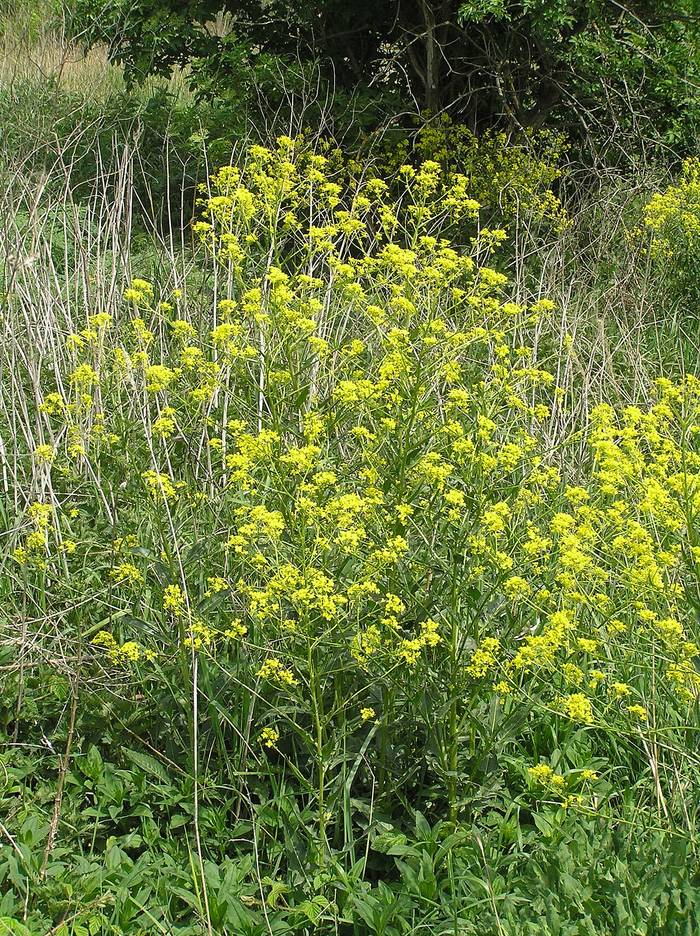
Petr Filippov · CC BY-SA 3.0
Orientalsk takkeklap
Plante·Bunias orientalis
Halvskygge til fuld sol
Sol
Fugtig jord
Vand
Ikke registreret
Dræning
Zoner 3–9
Hårdførhed
Dækning · 119 felter
Vækst og størrelse10 felter
Højde ved alder
—
tomt
Planteafstand
45 cm (mindst 30 cm)
AI-estimat55 % enig
Vækstrate
—
tomt
Vækstform
Tueformet
AI-estimat50 % enig
Roddybde
Pælerod
AI-estimat63 % enig
Skovhavelag
Urtelag
AI-estimat90 % enig
Levetid
~3 år
AI-estimatikke målt endnu
Rødder6 felter
Rodform
—
tomt
Lagerorgan
Intet“It does not multiply vegetatively: it has no rhizomes, runners, suckers or offspring bulbs or tubers.”
CLO-PLA (klonvækst)delvist
Breder sig
Nej“It does not multiply vegetatively: it has no rhizomes, runners, suckers or offspring bulbs or tubers.”
CLO-PLA (klonvækst)delvist
Breder sig sideværts i cm
—
tomt
Roddybde i cm
—
tomt
Mykorrhiza
Ingen mykorrhiza
AI-estimatikke målt endnu
Lys, vand og jord9 felter
Sol
Fuld sol, halvskygge, let skygge · bedst: fuld sol“A very easily grown plant, it succeeds in any soil in a sunny position.”PFAF“Plants have also been seen growing exceedingly well in the dappled shade of a woodland garden[K].”
Timer sol
6–12 t
AI-estimatikke målt endnu
Tørketålende
—
tomt
Tåler vandlidende jord
—
tomt
Komprimeret jord
Tåler det godt
AI-estimatikke målt endnu
Klima5 felter
Hårdførhed
Zone 3–9
Dræbende frost (-20 °C) passer ikke med hårdførhedszone 3, som tåler langt lavere temperaturer.
AI-estimatikke målt endnu
Dræbende frost
-20 °C
Dræbende frost (-20 °C) passer ikke med hårdførhedszone 3, som tåler langt lavere temperaturer.
AI-estimatikke målt endnu
Vækst-temperatur
0–30 °C · optimal 10–25 °C
AI-estimatikke målt endnu
Kuldetimer
0 t
AI-estimatikke målt endnu
Pleje (bliver til opgaver i Manage)6 felter
Såning
April · varer 30 dage
Såning står 2 gange med forskellig timing.
AI-estimatikke målt endnu
Udplantning
Efter forrige fase · 30 dage efter · varer 30 dage
AI-estimatikke målt endnu
Såning
Efter sidste frost · 30 dage efter · varer 60 dage
Såning står 2 gange med forskellig timing.
AI-estimatikke målt endnu
Deling
Efter sidste frost · varer 60 dage
AI-estimatikke målt endnu
Lugning
April · varer 30 dage
AI-estimatikke målt endnu
Beskæring
Efter forrige fase · 60 dage efter · varer 14 dage
AI-estimatikke målt endnu
Året rundt4 felter
Blomstring
Maj · varer 123 dage“It is in flower from May to August, and the seeds ripen from July to September.”
Frugt
Juli · varer 92 dage“It is in flower from May to August, and the seeds ripen from July to September.”
Høst
Marts · varer 275 dage
AI-estimatikke målt endnu
Spring ud
Februar · varer 30 dage
AI-estimatikke målt endnu
Spiselige dele og bestøvning4 felter
Leaves and young stems
Raw or cooked · marts–november“The leaves are available early in the year, usually towards the end of winter, and the plant will continue to produce leaves until late autumn”PFAFdelvist“Leaves and young stems - raw or cooked.”
Flower buds and flowering stems
Raw or cooked · maj–august“It is in flower from May to August”PFAFdelvist“Flower buds and flowering stems - raw or cooked.”
Økologi5 felter
Tiltrækker
Bier, flies“The species is hermaphrodite (has both male and female organs) and is pollinated by Bees, flies.”
Skadedyr
Snegle“The young spring growth can be quite badly damaged by slugs, though more mature plants grow away so quickly that this does not seem to be a problem[K].”
Sygdomme
—
tomt
Optager
Calcium, kalium, sulfur
AI-estimatikke målt endnu
Fikserer kvælstof
Nej
AI-estimatikke målt endnu
Formering og navne4 felter
Metoder
Sværhedsgrad
1 / 5
AI-estimatikke målt endnu
Frø
cold_moist_stratification_required
AI-estimatikke målt endnu
Ikke sorteret endnu66 felter
Felter som parseren gemmer, men som siden ikke har en række til endnu. De vises her automatisk, så intet er skjult.
forage.DK.local_name
Tyrkisk raket
AI-estimatikke målt endnu
forage.DK.prep_cautions
The leaves are a bit hairy so they are less pleasant eaten raw on their own, Some people find the leaves indigestible“The leaves are a bit hairy so we find them less than wonderful when eaten raw on their own”PFAF“though some people find them indigestible”
forage.DK.edibility_basis
inferred
AI-estimatikke målt endnu
forage.DK.foraging_months.notes
with a bit of a gap when the plant is in flower
AI-estimatikke målt endnu
forage.DK.foraging_months.months
3, 4, 5, 6, 7, 8, 9, 10, 11“The leaves are available early in the year, usually towards the end of winter, and the plant will continue to produce leaves until late autumn”
forage.DK.foraging_months.year_round
false
AI-estimatikke målt endnu
forage.US.local_name
Turkish rocket
AI-estimatikke målt endnu
forage.US.edible_parts
[{"part":"leaves and young stems","preparation":"raw or cooked","season_months":[3,4,5,6,7,8,9,10,11]},{"part":"flower buds and flowering stems","preparation":"raw or cooked","season_months":[5,6,7,8]}]“The leaves are available early in the year, usually towards the end of winter, and the plant will continue to produce leaves until late autumn”PFAF“It is in flower from May to August”PFAFdelvist“Leaves and young stems - raw or cooked.”PFAFdelvist“Flower buds and flowering stems - raw or cooked.”
forage.US.prep_cautions
The leaves are a bit hairy so they are less pleasant eaten raw on their own, Some people find the leaves indigestible“The leaves are a bit hairy so we find them less than wonderful when eaten raw on their own”PFAF“though some people find them indigestible”
forage.US.edibility_basis
inferred
AI-estimatikke målt endnu
forage.US.foraging_months.notes
with a bit of a gap when the plant is in flower
AI-estimatikke målt endnu
forage.US.foraging_months.months
3, 4, 5, 6, 7, 8, 9, 10, 11“The leaves are available early in the year, usually towards the end of winter, and the plant will continue to produce leaves until late autumn”
forage.US.foraging_months.year_round
false
AI-estimatikke målt endnu
forage.TROPICAL.edible_parts
[{"part":"leaves","caution":"some people find them indigestible","preparation":"raw","season_months":[1,2,3,4,5,6,7,8,9,10,11,12]},{"part":"leaves","preparation":"cooked","season_months":[1,2,3,4,5,6,7,8,9,10,11,12]},…
AI-estimatikke målt endnu
forage.TROPICAL.prep_cautions
Leaves can become very bitter in hot climates; blanching or multiple water changes may be necessary.
AI-estimatikke målt endnu
forage.TROPICAL.edibility_basis
inferred
AI-estimatikke målt endnu
forage.TROPICAL.foraging_months.notes
May grow year-round in cooler tropical highlands, but bitterness may be an issue.
AI-estimatikke målt endnu
forage.TROPICAL.foraging_months.months
1, 2, 3, 4, 5, 6, 7, 8, 9, 10, 11, 12
AI-estimatikke målt endnu
forage.TROPICAL.foraging_months.year_round
true
AI-estimatikke målt endnu
forage.TROPICAL.habitat_affinity
disturbed_ground
AI-estimatikke målt endnu
ornamental.basis
documented
AI-estimatikke målt endnu
ornamental.fragrance.source
none
AI-estimat100 % enig
ornamental.fragrance.intensity
subtle
AI-estimatikke målt endnu
ornamental.confidence
high
AI-estimatikke målt endnu
ornamental.fall_interest
false
AI-estimatikke målt endnu
ornamental.flower_colour
yellow
AI-estimat67 % enig
ornamental.evidence_quote
Bunias orientalis produces bright yellow flowers and green foliage. It is a herbaceous perennial that dies back in winter, leaving seed heads.
AI-estimatikke målt endnu
ornamental.foliage_colour
green
AI-estimat82 % enig
ornamental.foliage_texture
medium
AI-estimatikke målt endnu
ornamental.winter_structure
seed_heads
AI-estimatikke målt endnu
ornamental.autumn_foliage_colour
none
AI-estimatikke målt endnu
care_regime
none
AI-estimatikke målt endnu
propagation.self_seeding
aggressive
AI-estimat20 % enig
propagation.establishment_years
1
AI-estimat40 % enig
forage_proposals.DK.edibility_tier.tier
edible
AI-estimatikke målt endnu
forage_proposals.DK.edibility_tier.confidence
high
AI-estimatikke målt endnu
forage_proposals.DK.edibility_tier.evidence_quote
Bunias orientalis is widely consumed in Eastern Europe and parts of Asia, with young leaves, stems, and flower buds used as vegetables, and roots also eaten.
AI-estimatikke målt endnu
forage_proposals.US.edibility_tier.tier
edible
AI-estimatikke målt endnu
forage_proposals.US.edibility_tier.confidence
high
AI-estimatikke målt endnu
forage_proposals.US.edibility_tier.evidence_quote
Bunias orientalis is widely consumed in Eastern Europe and parts of Asia, with young leaves, stems, and flower buds used as vegetables, and roots also eaten.
AI-estimatikke målt endnu
forage_proposals.TROPICAL.edibility_tier.tier
edible
AI-estimatikke målt endnu
forage_proposals.TROPICAL.edibility_tier.confidence
low
AI-estimatikke målt endnu
forage_proposals.TROPICAL.edibility_tier.evidence_quote
Leaves and young stems - raw or cooked. The young leaves have a mild cabbage flavour that goes very well in a mixed salad, though some people find them indigestible[K]. The cooked leaves make an excellent vegetable[K]. Flower buds and flowering stems - raw or cooked. A pleasant mild flavour with a delicate sweetness and cabbage-like flavour, they make an excellent broccoli substitute though they are rather smaller[K].
AI-estimatikke målt endnu
function_profile.biomass_return.confidence
high
AI-estimatikke målt endnu
function_profile.nutrient_flows.consumes
[{"basis":"inferred","demand":"moderate","nutrient":"nitrogen","confidence":"medium"},{"basis":"inferred","demand":"moderate","nutrient":"phosphorus","confidence":"medium"},{"basis":"inferred","demand":"moderate","nut…
AI-estimatikke målt endnu
function_profile.nutrient_flows.provides
[{"basis":"inferred","nutrient":"calcium","mechanism":"biomass_return","confidence":"medium"},{"basis":"inferred","nutrient":"potassium","mechanism":"biomass_return","confidence":"medium"},{"basis":"inferred","nutrien…
AI-estimatikke målt endnu
function_profile.biotic_interactions
[{"taxa":["bees","flies"],"basis":"documented","valence":"beneficial","relation":"attracts","confidence":"high","evidence_quote":"The species is hermaphrodite (has both male and female organs) and is pollinated by Bee…“The species is hermaphrodite (has both male and female organs) and is pollinated by Bees, flies.”
function_profile.aromatic_pest_effect.value
false
AI-estimat80 % enig
function_profile.aromatic_pest_effect.confidence
low
AI-estimatikke målt endnu
function_profile.structural_interfaces.provides_shelter.basis
inferred
AI-estimatikke målt endnu
function_profile.structural_interfaces.provides_shelter.kinds
shade
AI-estimatikke målt endnu
function_profile.structural_interfaces.provides_shelter.confidence
medium
AI-estimatikke målt endnu
function_profile.structural_interfaces.requires_shelter.basis
inferred
AI-estimatikke målt endnu
function_profile.structural_interfaces.requires_shelter.confidence
low
AI-estimatikke målt endnu
function_profile.structural_interfaces.provides_physical_support.basis
inferred
AI-estimatikke målt endnu
function_profile.structural_interfaces.provides_physical_support.confidence
low
AI-estimatikke målt endnu
function_profile.structural_interfaces.requires_physical_support.basis
inferred
AI-estimatikke målt endnu
function_profile.structural_interfaces.requires_physical_support.confidence
low
AI-estimatikke målt endnu
climate_tolerance.photoperiod_response
long_day
AI-estimatikke målt endnu
soil_interactions.organic_matter_contribution
high
AI-estimatikke målt endnu
component_metadata.growth_cycle
perennial“Bunias orientalis is a PERENNIAL growing to 0.9 m (3ft) by 0.5 m (1ft 8in).”
resource_interfaces.inputs
[{"resource":"light","quantity_description":"a sunny position"},{"resource":"water","quantity_description":"moist soil"}]“A very easily grown plant, it succeeds in any soil in a sunny position.”PFAF“It prefers moist soil.”
resource_interfaces.outputs
[{"resource":"seeds","quantity_description":"seeds ripen from July to September"}]“It is in flower from May to August, and the seeds ripen from July to September.”