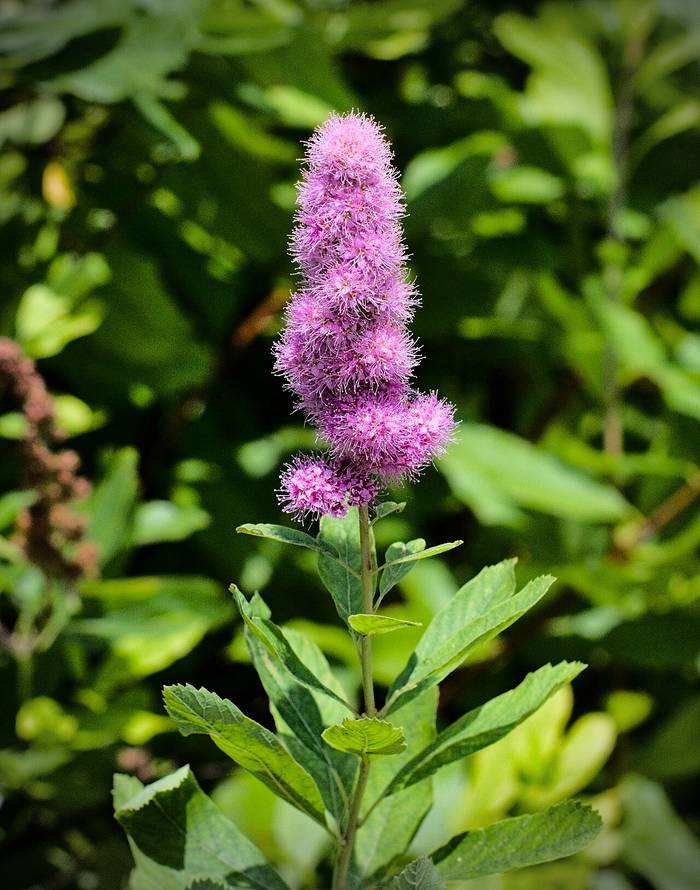
M0tty · CC BY-SA 3.0
Pilebladet spiræa
Busk·Spiraea salicifolia
Halvskygge til fuld sol
Sol
Fugtig til våd jord
Vand
Ikke registreret
Dræning
Zoner 3–8
Hårdførhed
Dækning · 106 felter
- Parser-flag (climate_tolerance_low_confidence): Climate tolerance values are LLM-extracted (no authoritative EcoCrop match found). EcoCrop covers ~2,568 food-crop taxa; ornamental/native/medicinal species rely on LLM extraction.
- Parser-flag (species_trait_mismatch): The ornamental section states 'flower_colour': ['pink'] and 'evidence_quote': 'Spiraea salicifolia, commonly known as bridal wreath spirea, features pink flowers...'. However, Spiraea salicifolia (Willowleaf Meadowsweet) is known for its white flowers, not pink. The common name 'Bridal Wreath Spirea' is often associated with Spiraea x vanhouttei, which has white flowers, but the specific epithet 'salicifolia' refers to the willowleaf species, which also has white flowers. This suggests a mismatch in flower color for the given scientific name.
Vækst og størrelse10 felter
Bredde
150 cm
AI-estimat58 % enig
Højde ved alder
—
tomt
Planteafstand
120 cm (mindst 90 cm)
AI-estimat55 % enig
Vækstrate
—
tomt
Vækstform
Bredt udbredt
AI-estimat50 % enig
Roddybde
Middel
AI-estimat63 % enig
Levetid
~20 år
AI-estimatikke målt endnu
Rødder6 felter
Rodform
Trævlerødder
AI-estimat43 % enig
Lagerorgan
Intet“No clonal growth organ is recorded: it does not spread vegetatively (no suckers, no rhizomes).”
Breder sig
Nej“No clonal growth organ is recorded: it does not spread vegetatively (no suckers, no rhizomes).”
Breder sig sideværts i cm
—
tomt
Roddybde i cm
—
tomt
Mykorrhiza
Arbuskulær (AM)
AI-estimatikke målt endnu
Lys, vand og jord9 felter
Sol
Fuld sol, let skygge, halvskygge · bedst: fuld sol“Tolerates most soils, but prefers a good loamy soil, abundant moisture and full sunlight.”PFAF“It can grow in semi-shade (light woodland) or no shade.”
Timer sol
6 t
AI-estimatikke målt endnu
Vand
Fugtig, våd · bedst: fugtig · Middel“It prefers moist soil.”PFAF“Wet boggy places in the mountains of N. Japan.”
Tørketålende
—
tomt
Tåler vandlidende jord
—
tomt
Jordtype
Sand, muld, ler · bedst: muld“Tolerates most soils, but prefers a good loamy soil, abundant moisture and full sunlight.”PFAF“Suitable for: light (sandy), medium (loamy) and heavy (clay) soils.”
Komprimeret jord
Tåler det nogenlunde
AI-estimatikke målt endnu
Klima5 felter
Hårdførhed
Zone 3–8
AI-estimatikke målt endnu
Vækst-temperatur
0–30 °C · optimal 15–25 °C
AI-estimatikke målt endnu
Kuldetimer
800 t
AI-estimatikke målt endnu
Pleje (bliver til opgaver i Manage)4 felter
Deling
Efter sidste frost“It is apt to get thin and poor unless divided up fairly regularly and replanted in fairly good soil.”
PFAFdelvist
Såning
Efter forrige fase“Seed - we have no information for this species but suggest sowing the seed as soon as it is ripe in a cold frame if possible.”
PFAFdelvist
Beskæring
Efter forrige fase · 14 dage efter · varer 30 dage · new growth for next year's flowers · oldest stems and spent flower heads
AI-estimatikke målt endnu
Jorddække
Marts · varer 30 dage
AI-estimatikke målt endnu
Året rundt5 felter
Spring ud
Efter sidste frost · Over 5 °C · varer 14 dage
AI-estimatikke målt endnu
Frugt
Efter forrige fase · 30 dage efter · varer 60 dage
AI-estimatikke målt endnu
Går i dvale
Efter første frost · Styret af daglængden · varer 30 dage
AI-estimatikke målt endnu
Dvale
Efter første frost · 30 dage efter · varer 150 dage
AI-estimatikke målt endnu
Spiselige dele og bestøvning4 felter
Bladene
Bestøvning
Selvbestøvende · tvekønnet“The species is hermaphrodite (has both male and female organs) and is pollinated by Insects.”
Bestøves af
Insekter“The species is hermaphrodite (has both male and female organs) and is pollinated by Insects.”
Økologi5 felter
Tiltrækker
Insects“The species is hermaphrodite (has both male and female organs) and is pollinated by Insects.”
Skadedyr
—
tomt
Sygdomme
—
tomt
Optager
Kalium, calcium
AI-estimatikke målt endnu
Fikserer kvælstof
Nej
AI-estimatikke målt endnu
Formering og navne4 felter
Metoder
Frø, half-ripe cuttings, stiklinger af modent ved, division of suckers“Seed - we have no information for this species but suggest sowing the seed as soon as it is ripe in a cold frame if possible.”PFAF“Cuttings of half-ripe wood, July/August in a light sandy soil a frame.”PFAF“Cuttings of mature wood of the current seasons growth, 15cm long, October/November in an outdoor frame.”PFAF“Division of suckers in early spring.”
Sværhedsgrad
2 / 5
AI-estimatikke målt endnu
Frø
likely required“It is likely to require stratification before it germinates, so stored seed should be sown in a cold frame as early in the year as you receive it.”
Ikke sorteret endnu54 felter
Felter som parseren gemmer, men som siden ikke har en række til endnu. De vises her automatisk, så intet er skjult.
forage.DK.local_name
Pilebladet spiræa
AI-estimatikke målt endnu
forage.DK.edibility_basis
inferred
AI-estimatikke målt endnu
forage.DK.foraging_months.notes
No documented foraging information for Spiraea salicifolia in Denmark.
AI-estimatikke målt endnu
forage.DK.foraging_months.year_round
false
AI-estimatikke målt endnu
forage.US.local_name
Willowleaf meadowsweet
AI-estimatikke målt endnu
forage.US.edible_parts
forage.US.edibility_basis
inferred
AI-estimatikke målt endnu
forage.US.foraging_months.notes
No documented foraging information for Spiraea salicifolia in the US.
AI-estimatikke målt endnu
forage.US.foraging_months.year_round
false
AI-estimatikke målt endnu
forage.TROPICAL.edibility_basis
inferred
AI-estimatikke målt endnu
forage.TROPICAL.foraging_months.notes
Spiraea salicifolia is not typically found or foraged in tropical regions.
AI-estimatikke målt endnu
forage.TROPICAL.foraging_months.year_round
false
AI-estimatikke målt endnu
ornamental.basis
documented
AI-estimatikke målt endnu
ornamental.fragrance.source
none
AI-estimat100 % enig
ornamental.confidence
high
AI-estimatikke målt endnu
ornamental.fall_interest
true
AI-estimatikke målt endnu
ornamental.flower_colour
pink
AI-estimat67 % enig
ornamental.evidence_quote
Spiraea salicifolia, commonly known as bridal wreath spirea, features pink flowers and green foliage that turns yellow-green in autumn. It has a medium foliage texture and provides winter interest through its architectural skeleton.
AI-estimatikke målt endnu
ornamental.foliage_colour
green
AI-estimat82 % enig
ornamental.foliage_texture
medium
AI-estimatikke målt endnu
ornamental.winter_structure
architectural_skeleton
AI-estimatikke målt endnu
ornamental.autumn_foliage_colour
yellow_green
AI-estimatikke målt endnu
care_regime
light
AI-estimatikke målt endnu
propagation.self_seeding
moderate
AI-estimat20 % enig
propagation.establishment_years
1
AI-estimat40 % enig
sun_requirement.best
full_sun“Tolerates most soils, but prefers a good loamy soil, abundant moisture and full sunlight.”
forage_proposals.DK.edibility_tier.tier
toxic
AI-estimatikke målt endnu
forage_proposals.DK.edibility_tier.confidence
medium
AI-estimatikke målt endnu
forage_proposals.DK.edibility_tier.evidence_quote
Spiraea salicifolia is generally considered to have low toxicity, but some sources suggest it may contain cyanogenic glycosides, which can release hydrogen cyanide upon ingestion. While not typically fatal, ingestion of large quantities could cause mild discomfort.
AI-estimatikke målt endnu
forage_proposals.US.edibility_tier.tier
toxic
AI-estimatikke målt endnu
forage_proposals.US.edibility_tier.confidence
medium
AI-estimatikke målt endnu
forage_proposals.US.edibility_tier.evidence_quote
Spiraea salicifolia is generally considered to have low toxicity, but some sources suggest it may contain cyanogenic glycosides, which can release hydrogen cyanide upon ingestion. While not typically fatal, ingestion of large quantities could cause mild discomfort.
AI-estimatikke målt endnu
forage_proposals.TROPICAL.edibility_tier.tier
toxic
AI-estimatikke målt endnu
forage_proposals.TROPICAL.edibility_tier.confidence
medium
AI-estimatikke målt endnu
forage_proposals.TROPICAL.edibility_tier.evidence_quote
Spiraea salicifolia is generally considered to have low toxicity, but some sources suggest it may contain cyanogenic glycosides, which can release hydrogen cyanide upon ingestion. While not typically fatal, ingestion of large quantities could cause mild discomfort.
AI-estimatikke målt endnu
function_profile.biomass_return.confidence
medium
AI-estimatikke målt endnu
function_profile.nutrient_flows.consumes
[{"basis":"inferred","demand":"moderate","nutrient":"nitrogen","confidence":"medium"},{"basis":"inferred","demand":"moderate","nutrient":"phosphorus","confidence":"medium"},{"basis":"inferred","demand":"moderate","nut…
AI-estimatikke målt endnu
function_profile.nutrient_flows.provides
[{"basis":"inferred","nutrient":"potassium","mechanism":"biomass_return","confidence":"medium"},{"basis":"inferred","nutrient":"calcium","mechanism":"biomass_return","confidence":"medium"}]
AI-estimatikke målt endnu
function_profile.biotic_interactions
[{"taxa":["insects"],"basis":"documented","valence":"beneficial","relation":"attracts","confidence":"medium","evidence_quote":"The species is hermaphrodite (has both male and female organs) and is pollinated by Insect…“The species is hermaphrodite (has both male and female organs) and is pollinated by Insects.”
function_profile.aromatic_pest_effect.value
false
AI-estimat80 % enig
function_profile.aromatic_pest_effect.confidence
low
AI-estimatikke målt endnu
function_profile.structural_interfaces.provides_shelter.basis
inferred
AI-estimatikke målt endnu
function_profile.structural_interfaces.provides_shelter.kinds
wind, shade
AI-estimatikke målt endnu
function_profile.structural_interfaces.provides_shelter.confidence
medium
AI-estimatikke målt endnu
function_profile.structural_interfaces.provides_physical_support.form
dense_thicket“A rampant suckering shrub, it quickly produces dense thickets.”
function_profile.structural_interfaces.provides_physical_support.basis
inferred
AI-estimatikke målt endnu
function_profile.structural_interfaces.provides_physical_support.confidence
medium
AI-estimatikke målt endnu
function_profile.structural_interfaces.provides_physical_support.evidence_quote
A rampant suckering shrub, it quickly produces dense thickets.
AI-estimatikke målt endnu
climate_tolerance.photoperiod_response
day_neutral
AI-estimatikke målt endnu
soil_interactions.organic_matter_contribution
medium
AI-estimatikke målt endnu
component_metadata.growth_cycle
perennial
AI-estimat100 % enig
resource_interfaces.inputs
[{"resource":"light","quantity_description":"prefers full sunlight"},{"resource":"shade","quantity_description":"tolerates semi-shade or no shade"},{"resource":"water","quantity_description":"prefers moist soil and ab…“Tolerates most soils, but prefers a good loamy soil, abundant moisture and full sunlight.”PFAF“It can grow in semi-shade (light woodland) or no shade.”PFAFdelvist“It prefers moist soil.”
resource_interfaces.outputs
[{"resource":"pollinator_services","quantity_description":"insect-pollinated flowers"}]“The species is hermaphrodite (has both male and female organs) and is pollinated by Insects.”