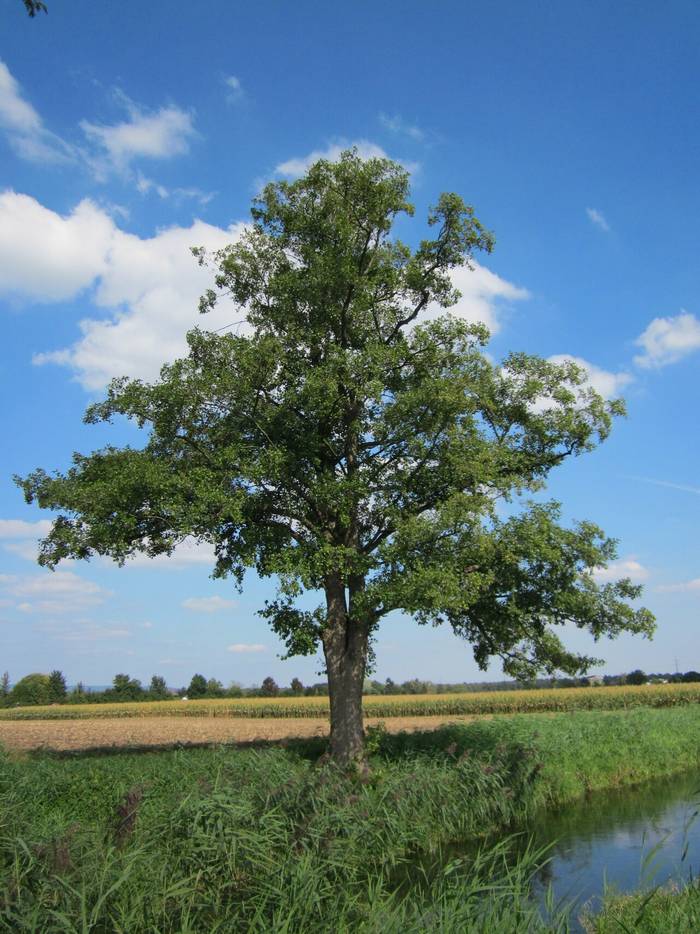
Rødel
Træ·Alnus glutinosa
Halvskygge til fuld sol
Sol
Tør til sumpet jord
Vand
Ikke registreret
Dræning
Zoner 3–7
Hårdførhed
Dækning · 111 felter
Ingen åbenlyse uoverensstemmelser fundet.
Vækst og størrelse11 felter
Plantetype
Løvfældende træ“Alnus glutinosa is a deciduous Tree growing to 25 m (82ft) by 10 m (32ft) at a fast rate.”
Højde
2.500 cm · kilden giver 1.000–2.500 cm · andre kilder: 3.000 cm“normally grow to between 10 and 25 m tall”PFAF“Alnus glutinosa is a deciduous Tree growing to 25 m (82ft) by 10 m (32ft) at a fast rate.”Wikipedia“It is a medium-sized, short-lived tree growing to a height of up to 30 metres (98 feet).”
Bredde
1.000 cm“Alnus glutinosa is a deciduous Tree growing to 25 m (82ft) by 10 m (32ft) at a fast rate.”
Størrelse efter plantning
7 år: 5,5 m høj, 2 m krone · 17 år: 10 m høj, 4 m krone · 34 år: 15 m høj, 6 m krone · 73 år: 22 m høj, 9 m krone“Berlin tree register: 3688 trees of this species measured with years since planting, height and crown diameter; median crown 9.0 m and height 22.0 m at 60–100 years after planting (1427 trees).”Median af 3.688 målte træer i Berlin. Årene tælles fra udplantning af planteskoletræer, så et lille træ når hver størrelse senere.
Planteafstand
600 cm (mindst 400 cm)
AI-estimat55 % enig
Vækstrate
Hurtig“Alnus glutinosa is a deciduous Tree growing to 25 m (82ft) by 10 m (32ft) at a fast rate.”
Vækstform
Søjleformet“Young trees have an upright habit of growth with a main axial stem but older trees develop an arched crown with crooked branches.”
Wikipediadelvist
Roddybde
Middel
AI-estimat63 % enig
Skovhavelag
Kronelag
AI-estimat90 % enig
Levetid
~60 år“individuals normally live to around 60 years (with a maximum of up to 160 depending on the region)”
Rødder6 felter
Rodform
Hjerterod“The root pattern is branching: a heart root, dividing from the crown into several primary roots going down and out”
Lagerorgan
Intet“No clonal growth organ is recorded: it does not spread vegetatively (no suckers, no rhizomes).”
Breder sig
Nej“No clonal growth organ is recorded: it does not spread vegetatively (no suckers, no rhizomes).”
Breder sig sideværts i cm
—
tomt
Roddybde i cm
—
tomt
Mykorrhiza
Ektomykorrhiza (EcM)
AI-estimatikke målt endnu
Lys, vand og jord9 felter
Sol
Timer sol
6–12 t
AI-estimatikke målt endnu
Vand
Tørketålende
—
tomt
Tåler vandlidende jord
Ja“tolerating prolonged submergence of its roots and periods with standing water to 30cm deep”
Jordtype
Sand, muld, ler · bedst: ler“Prefers a heavy soil and a damp situation”JRC skovtræ-atlas“even coarse sands and gravels if the moisture is adequate”PFAF“Suitable for: medium (loamy) and heavy (clay) soils and can grow in heavy clay and nutritionally poor soils.”
pH
5,5–8 · bedst 5,5–7,2“Alder is estimated to tolerate an annual precipitation of 40 to 200cm, an annual average temperature of 8 to 14°C and a pH of 6 to 8.”Wikipedia“It tolerates a range of soil types and grows best at a pH of between 5.5 and 7.2.”PFAF“Suitable pH: mildly acid, neutral and basic (mildly alkaline) soils.”
Komprimeret jord
Tåler det nogenlunde
AI-estimatikke målt endnu
Klima5 felter
Hårdførhed
Zone 3–7
AI-estimatikke målt endnu
Dræbende frost
-30 °C
AI-estimatikke målt endnu
Vækst-temperatur
0–30 °C · optimal 10–25 °C
AI-estimatikke målt endnu
Kuldetimer
1.000 t
AI-estimatikke målt endnu
Hjemsted
AD, AL, AM, AT, AZ, BA, BE, BG, BY, CH, CZ, DE, DK, DZ, EE, ES, FI, FR, GB, GE, GG, GI, GR, HR, HU, IE, IR, IT, JE, KZ, LI, LT, LU, LV, LY, MA, MC, MD, ME, MK, MT, NL, NO, PL, PT, RO, RS, RU, SE, SI, SK, SM, TN, TR, UA, VA, XK
Pleje (bliver til opgaver i Manage)2 felter
Beskæring
November · varer 60 dage · dead, damaged, or crossing branches
AI-estimatikke målt endnu
Vanding
Juli · varer 60 dage
AI-estimatikke målt endnu
Året rundt5 felter
Spring ud
Marts · varer 275 dage“It is in leaf from March to November, in flower from March to April, and the seeds ripen from September to November.”
Blomstring
Marts · varer 61 dage“It is in leaf from March to November, in flower from March to April, and the seeds ripen from September to November.”
Frugt
September · varer 91 dage“It is in leaf from March to November, in flower from March to April, and the seeds ripen from September to November.”
Går i dvale
November · varer 30 dage“The leaves often remain green on the tree until November, or even later on young seedlings.”
Dvale
Efter første frost · varer 120 dage“Both male and female catkins form in the autumn and remain dormant during the winter.”
Spiselige dele og bestøvning4 felter
Bladene
Tilberedt · april–juni
AI-estimatikke målt endnu
Raklerne
Tilberedt · februar–marts
AI-estimatikke målt endnu
Bestøvning
Kræver en partner · enbo“The species is monoecious (individual flowers are either male or female, but both sexes can be found on the same plant) and is pollinated by Wind.”Wikipedia“the flowers are wind-pollinated”
Økologi5 felter
Tiltrækker
Dyreliv, small birds“It is noted for attracting wildlife.”PFAF“Alders are an important food plant for the caterpillars of many butterfly and moth species and also for small birds in winter.”
Skadedyr
Rådyr, harer, kaniner, galmider, sommerfuglelarver“Deer, hares and rabbits feed on the tree”
Sygdomme
Ellesyge, svampesygdomme“The most damaging pathogen of alder is the pathogen Phytophthora alni, which has been observed in several countries since the 1990s and is likely to become more of a problem in the future.”Wikipedia“Taphrina alni is a fungal plant pathogen that causes alder tongue gall, a chemically induced distortion of female catkins.”
Optager
Kvælstof, calcium, magnesium
AI-estimatikke målt endnu
Formering og navne4 felter
Metoder
Frø, cuttings of mature wood“Seed - best sown in a cold frame as soon as it is ripe and only just covered.”PFAF“Cuttings of mature wood, taken as soon as the leaves fall in autumn, outdoors in sandy soil.”
Sværhedsgrad
2 / 5
AI-estimatikke målt endnu
Frø
requires cold stratification
AI-estimatikke målt endnu
Ikke sorteret endnu60 felter
Felter som parseren gemmer, men som siden ikke har en række til endnu. De vises her automatisk, så intet er skjult.
forage.DK.local_name
Sort-el
AI-estimatikke målt endnu
forage.DK.prep_cautions
Leaves are best when young, as they can become bitter with age.
AI-estimatikke målt endnu
forage.DK.edibility_basis
inferred
AI-estimatikke målt endnu
forage.DK.foraging_months.notes
Young leaves in spring, catkins in late winter/early spring.
AI-estimatikke målt endnu
forage.DK.foraging_months.months
2, 3, 4, 5, 6
AI-estimatikke målt endnu
forage.DK.foraging_months.year_round
false
AI-estimatikke målt endnu
forage.DK.habitat_affinity
riverbank, woodland“It needs a high availability of moisture to grow well, and can often be found along river banks, lake shores and in marshy locations.”PFAF“Wet ground in woods, near lakes and along the sides of streams, often formng pure woods n succession to marsh or fen.”
forage.US.local_name
Black alder
AI-estimatikke målt endnu
forage.US.edible_parts
[{"part":"leaves","caution":null,"preparation":"cooked","season_months":[4,5,6]},{"part":"catkins","caution":null,"preparation":"cooked","season_months":[2,3]}]
AI-estimatikke målt endnu
forage.US.prep_cautions
Leaves are best when young, as they can become bitter with age.
AI-estimatikke målt endnu
forage.US.edibility_basis
inferred
AI-estimatikke målt endnu
forage.US.foraging_months.notes
Young leaves in spring, catkins in late winter/early spring.
AI-estimatikke målt endnu
forage.US.foraging_months.months
2, 3, 4, 5, 6
AI-estimatikke målt endnu
forage.US.foraging_months.year_round
false
AI-estimatikke målt endnu
forage.US.habitat_affinity
riverbank, woodland, disturbed_ground
AI-estimatikke målt endnu
forage.TROPICAL.edibility_basis
inferred
AI-estimatikke målt endnu
forage.TROPICAL.foraging_months.notes
Not typically found in tropical regions.
AI-estimatikke målt endnu
forage.TROPICAL.foraging_months.year_round
false
AI-estimatikke målt endnu
ornamental.basis
documented
AI-estimatikke målt endnu
ornamental.fragrance.source
none
AI-estimat100 % enig
ornamental.fragrance.intensity
subtle
AI-estimatikke målt endnu
ornamental.confidence
high
AI-estimatikke målt endnu
ornamental.fall_interest
true
AI-estimatikke målt endnu
ornamental.evidence_quote
Alnus glutinosa has green foliage that turns yellow-green in autumn. It produces small, brown catkins (flowers) and persistent woody cones (seed heads) that provide winter interest. The bark is also ornamental.
AI-estimatikke målt endnu
ornamental.foliage_colour
dark_green, green“They have a glossy dark green upper surface and paler green underside with rusty-brown hairs in the angles of the veins.”
ornamental.foliage_texture
medium
AI-estimatikke målt endnu
ornamental.winter_structure
persistent_fruit“They last through the winter and the small winged seeds are mostly scattered the following spring.”
ornamental.autumn_foliage_colour
none“As with some other trees growing near water, the common alder keeps its leaves longer than do trees in drier situations, and the leaves remain green late into the autumn.”
care_regime
none
AI-estimatikke målt endnu
propagation.self_seeding
moderate
AI-estimat20 % enig
propagation.division_season
spring
AI-estimatikke målt endnu
propagation.establishment_years
2
AI-estimat40 % enig
size_at_age.v
1
AI-estimatikke målt endnu
size_at_age.basis
years_after_planting
AI-estimatikke målt endnu
forage_proposals.DK.edibility_tier.tier
edible
AI-estimatikke målt endnu
forage_proposals.DK.edibility_tier.confidence
high
AI-estimatikke målt endnu
forage_proposals.DK.edibility_tier.evidence_quote
The young leaves can be cooked and eaten, and the catkins are also edible.
AI-estimatikke målt endnu
forage_proposals.US.edibility_tier.tier
edible
AI-estimatikke målt endnu
forage_proposals.US.edibility_tier.confidence
high
AI-estimatikke målt endnu
forage_proposals.US.edibility_tier.evidence_quote
Young leaves and catkins are reported as edible after cooking.
AI-estimatikke målt endnu
forage_proposals.TROPICAL.edibility_tier.confidence
low
AI-estimatikke målt endnu
function_profile.biomass_return.confidence
high“The plants can be used as a source of biomass.”
PFAFdelvist
function_profile.nutrient_flows.consumes
[{"basis":"inferred","demand":"moderate","nutrient":"phosphorus","confidence":"medium"},{"basis":"inferred","demand":"moderate","nutrient":"potassium","confidence":"medium"}]“Because of its association with the nitrogen-fixing bacterium Frankia alni, it can grow in nutrient-poor soils where few other trees thrive.”
Wikipediadelvist
function_profile.nutrient_flows.provides
[{"basis":"documented","nutrient":"nitrogen","mechanism":"fixation","confidence":"high","evidence_quote":"This species has a symbiotic relationship with certain soil micro-organisms, these form nodules on the roots of…“This species has a symbiotic relationship with certain soil micro-organisms, these form nodules on the roots of the plants and fix atmospheric nitrogen.”Wikipedia“the nitrogen-rich leaves falling to the ground enrich the soil”
function_profile.biotic_interactions
[{"taxa":["wildlife"],"basis":"documented","valence":"beneficial","relation":"attracts","confidence":"high","evidence_quote":"It is noted for attracting wildlife.","organism_group":"wildlife","ecological_function":"ha…“It is noted for attracting wildlife.”Wikipedia“it provides shelter for pheasants”PFAF“Alders are an important food plant for the caterpillars of many butterfly and moth species and also for small birds in winter.”Wikipedia“Deer, hares and rabbits feed on the tree”Wikipedia“The common alder is the foodplant of the larvae of a number of different butterflies and moths and is associated with over 140 species of plant-eating insect.”Wikipedia“Another, also harmless, gall is caused by a midge, Eriophyes inangulis, which sucks sap from the leaves forming pustules.”JRC skovtræ-atlas“The most damaging pathogen of alder is the pathogen Phytophthora alni, which has been observed in several countries since the 1990s and is likely to become more of a problem in the future.”Wikipedia“Taphrina alni is a fungal plant pathogen that causes alder tongue gall, a chemically induced distortion of female catkins.”Wikipedia“this benefits fish which also find safety among its exposed roots in times of flood”Wikipedia“The common alder provides food and shelter for wildlife, with a number of insects, lichens and fungi being completely dependent on the tree.”
function_profile.aromatic_pest_effect.value
false
AI-estimat80 % enig
function_profile.aromatic_pest_effect.confidence
high
AI-estimatikke målt endnu
function_profile.structural_interfaces.provides_shelter.basis
taxonomic
AI-estimatikke målt endnu
function_profile.structural_interfaces.provides_shelter.kinds
wind, shade“Tolerant of clipping and maritime exposure, the alder can be grown in a windbreak or a hedge.”Wikipedia“It shades the water of rivers and streams, moderating the water temperature”
function_profile.structural_interfaces.provides_shelter.confidence
high
AI-estimatikke målt endnu
function_profile.structural_interfaces.provides_shelter.evidence_quote
Black alder is often used in shelterbelts and riparian plantings due to its dense canopy and tolerance for wet conditions.
AI-estimatikke målt endnu
function_profile.structural_interfaces.provides_physical_support.form
trunk
AI-estimatikke målt endnu
function_profile.structural_interfaces.provides_physical_support.basis
taxonomic
AI-estimatikke målt endnu
function_profile.structural_interfaces.provides_physical_support.confidence
high
AI-estimatikke målt endnu
climate_tolerance.photoperiod_response
day_neutral
AI-estimatikke målt endnu
soil_interactions.organic_matter_contribution
high“Alder trees also have a heavy leaf canopy and when the leaves fall in the autumn they help to build up the humus content of the soil.”
component_metadata.growth_cycle
perennial
AI-estimat100 % enig
resource_interfaces.inputs
[{"resource":"light","quantity_description":"semi-shade to full light; seedlings need light and do not compete under shade"},{"resource":"water","quantity_description":"high availability of moisture; prefers moist to …“It can grow in semi-shade (light woodland) or no shade.”JRC skovtræ-atlas“It needs a high availability of moisture to grow well”
resource_interfaces.outputs
[{"resource":"shade","quantity_description":"shades river and stream water, moderating its temperature"},{"resource":"wind_shelter","quantity_description":"windbreak or hedge use, tolerant of clipping and maritime exp…“It shades the water of rivers and streams, moderating the water temperature”PFAF“Tolerant of clipping and maritime exposure, the alder can be grown in a windbreak or a hedge.”Wikipedia“the nitrogen-rich leaves falling to the ground enrich the soil”PFAF“Alder trees also have a heavy leaf canopy and when the leaves fall in the autumn they help to build up the humus content of the soil.”Wikipedia“The common alder provides food and shelter for wildlife, with a number of insects, lichens and fungi being completely dependent on the tree.”Wikipedia“The common alder is used as a pioneer species and to stabilise river banks, to assist in flood control, to purify water in waterlogged soils and to moderate the temperature and nutrient status of water bodies.”Wikipedia“The common alder is important to wildlife all year round and the seeds are a useful winter food for birds.”PFAFdelvist“The plants can be used as a source of biomass.”PFAFdelvist“It is often used for situations where it has to remain underwater and is also used for furniture, pencils, bowls, woodcuts, clogs etc.”