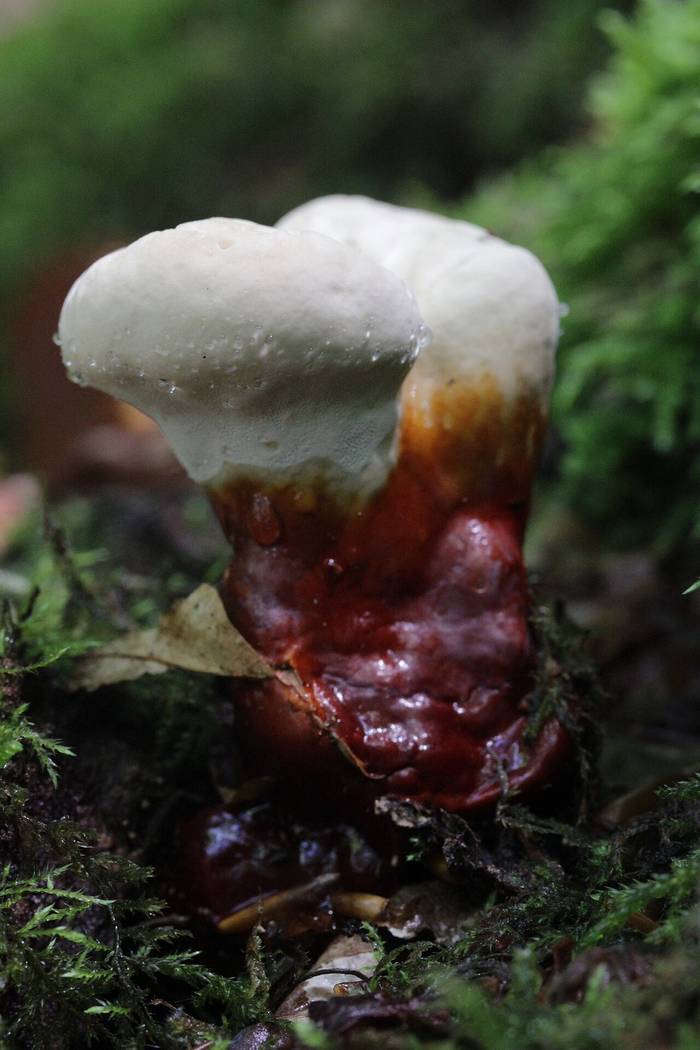
Björn S... · CC BY-SA 2.0
Skinnende lakporesvamp
Svampe·Ganoderma lucidum
Ikke registreret
Sol
Ikke registreret
Vand
Veldrænet jord
Dræning
Ikke registreret
Hårdførhed
Dækning · 101 felter
Ingen åbenlyse uoverensstemmelser fundet.
Vækst og størrelse10 felter
Plantetype
Svamp
AI-estimat100 % enig
Højde
50 cm
AI-estimat75 % enig
Højde ved alder
—
tomt
Planteafstand
15 cm (mindst 10 cm)
AI-estimat55 % enig
Vækstrate
—
tomt
Vækstform
—
tomt
Roddybde
Lav
AI-estimat63 % enig
Skovhavelag
Svampelag
AI-estimat90 % enig
Levetid
—
tomt
Rødder6 felter
Rodform
—
tomt
Lagerorgan
—
tomt
Breder sig
—
tomt
Breder sig sideværts i cm
—
tomt
Roddybde i cm
—
tomt
Mykorrhiza
—
tomt
Lys, vand og jord9 felter
Sol
—
tomt
Timer sol
—
tomt
Vand
—
tomt
Tørketålende
—
tomt
Tåler vandlidende jord
—
tomt
Jordtype
—
tomt
pH
4,5–7
AI-estimat78 % enig
Dræning
Veldrænet
AI-estimatikke målt endnu
Komprimeret jord
Tåler det nogenlunde
AI-estimatikke målt endnu
Klima5 felter
Hårdførhed
—
tomt
Dræbende frost
—
tomt
Vækst-temperatur
—
tomt
Kuldetimer
—
tomt
Spiselige dele og bestøvning3 felter
Fruiting body
Dried and steeped as tea, powdered for supplements · juli–oktober
AI-estimatikke målt endnu
Bestøvning
—
tomt
Bestøves af
—
tomt
Økologi6 felter
Tiltrækker
Megalodacne fasciata
AI-estimatikke målt endnu
Skadedyr
Svampebiller“This species is the favored food of the large North American pleasing fungus beetle Megalodacne fasciata.”
Sygdomme
—
tomt
Optager
—
tomt
Fikserer kvælstof
Nej
AI-estimatikke målt endnu
Mykorrhiza
Nej
AI-estimatikke målt endnu
Formering og navne4 felter
Metoder
Cultivation on side-streams and waste substrates, intensive cultivation technology“A 2020 study indicated ways to cultivate it in different types of side-streams and waste”Wikipedia“It is cultivated using intensive cultivation technology in Japan, Korea, and China”
Sværhedsgrad
3 / 5
AI-estimatikke målt endnu
Frø
not applicable
AI-estimatikke målt endnu
Ikke sorteret endnu58 felter
Felter som parseren gemmer, men som siden ikke har en række til endnu. De vises her automatisk, så intet er skjult.
forage.DK.local_name
Reishi
AI-estimatikke målt endnu
forage.DK.prep_cautions
bitter taste, typically not eaten fresh
AI-estimatikke målt endnu
forage.DK.edibility_basis
inferred
AI-estimatikke målt endnu
forage.DK.foraging_months.notes
Primarily late summer to autumn
AI-estimatikke målt endnu
forage.DK.foraging_months.months
7, 8, 9, 10
AI-estimatikke målt endnu
forage.DK.foraging_months.year_round
false
AI-estimatikke målt endnu
forage.DK.habitat_affinity
woodland
AI-estimatikke målt endnu
forage.US.local_name
Reishi
AI-estimatikke målt endnu
forage.US.edible_parts
[{"part":"fruiting body","caution":"bitter taste, best for medicinal use","preparation":"dried and steeped as tea, powdered for supplements","season_months":[7,8,9,10]}]
AI-estimatikke målt endnu
forage.US.prep_cautions
The species is inedible and rock-hard when dried, but is used to make a bitter-tasting tea., It has safety concerns and moderate interactions with certain medications and dietary supplements.
AI-estimatikke målt endnu
forage.US.edibility_basis
inferred
AI-estimatikke målt endnu
forage.US.foraging_months.notes
Primarily late summer to autumn
AI-estimatikke målt endnu
forage.US.foraging_months.months
7, 8, 9, 10
AI-estimatikke målt endnu
forage.US.foraging_months.year_round
false
AI-estimatikke målt endnu
forage.US.habitat_affinity
woodland
AI-estimatikke målt endnu
forage.TROPICAL.local_name
Reishi
AI-estimatikke målt endnu
forage.TROPICAL.edible_parts
[{"part":"fruiting body","caution":"inedible and rock-hard when dried","preparation":"steeped as a bitter-tasting tea","season_months":[]}]“The species is inedible and rock-hard when dried, but is used to make a bitter-tasting tea.”
forage.TROPICAL.prep_cautions
inedible and rock-hard when dried, safety concerns and moderate interactions with certain medications and dietary supplements“The species is inedible and rock-hard when dried, but is used to make a bitter-tasting tea.”Wikipedia“It has safety concerns and moderate interactions with certain medications and dietary supplements.”
forage.TROPICAL.edibility_basis
inferred
AI-estimatikke målt endnu
forage.TROPICAL.foraging_months.notes
Year-round in tropical climates.
AI-estimatikke målt endnu
forage.TROPICAL.foraging_months.year_round
true
AI-estimatikke målt endnu
forage.TROPICAL.habitat_affinity
tropical_forest“The species is widely distributed in tropical and subtropical rainforest regions in Asia, Africa, and the United States.”
Wikipediadelvist
ornamental.basis
documented
AI-estimatikke målt endnu
ornamental.fragrance.source
none
AI-estimat100 % enig
ornamental.confidence
high
AI-estimatikke målt endnu
ornamental.flower_colour
none
AI-estimat67 % enig
ornamental.evidence_quote
Ganoderma lucidum, commonly known as Reishi, is a bracket fungus. It does not have flowers or foliage in the traditional sense. Its fruiting body is typically reddish-brown to brownish-purple, often with a varnished appearance. It does not exhibit autumn foliage color changes or typical winter structure like plants. There is no documented fragrance.
AI-estimatikke målt endnu
ornamental.foliage_colour
none
AI-estimat82 % enig
ornamental.winter_structure
none
AI-estimatikke målt endnu
ornamental.autumn_foliage_colour
none
AI-estimatikke målt endnu
care_regime
none
AI-estimatikke målt endnu
cultivation.substrate
side-streams and waste, aspen wood, Pinus sylvestris wood“A 2020 study indicated ways to cultivate it in different types of side-streams and waste”Wikipedia“recent studies found that G. lucidum is still able to degrade Pinus sylvestris wood, causing a wood delignification but keeping proportion of carbohydrates high, opening new doors to softwoods in their utilization in G. lucidum cultivation.”Wikipediadelvist“this species does not usually produce fruiting bodies as well as in other woods, such as aspen”
cultivation.fruiting_temp_c.max
28
AI-estimatikke målt endnu
cultivation.fruiting_temp_c.min
20
AI-estimatikke målt endnu
cultivation.fruiting_trigger
fresh_air_exchange
AI-estimatikke målt endnu
cultivation.incubation_temp_c.max
28
AI-estimatikke målt endnu
cultivation.incubation_temp_c.min
20
AI-estimatikke målt endnu
propagation.self_seeding
moderate
AI-estimat20 % enig
propagation.division_season
not applicable
AI-estimatikke målt endnu
propagation.establishment_years
1
AI-estimat40 % enig
nutrition_mode
saprotroph
AI-estimatikke målt endnu
forage_proposals.DK.edibility_tier.tier
caution
AI-estimatikke målt endnu
forage_proposals.DK.edibility_tier.confidence
high
AI-estimatikke målt endnu
forage_proposals.DK.edibility_tier.evidence_quote
Ganoderma lucidum is not typically consumed as a culinary mushroom due to its tough, woody texture. It is primarily used for its medicinal properties, often prepared as teas, extracts, or powders. While generally considered safe, some individuals may experience mild digestive upset or allergic reactions.
AI-estimatikke målt endnu
forage_proposals.US.edibility_tier.tier
caution
AI-estimatikke målt endnu
forage_proposals.US.edibility_tier.confidence
high
AI-estimatikke målt endnu
forage_proposals.US.edibility_tier.evidence_quote
Reishi mushrooms (Ganoderma lucidum) are highly valued in traditional medicine but are not eaten fresh due to their woody texture. They are commonly prepared as hot water extracts, tinctures, or powdered supplements. Consult a healthcare professional before using for medicinal purposes, especially if on medication.
AI-estimatikke målt endnu
forage_proposals.TROPICAL.edibility_tier.tier
edible
AI-estimatikke målt endnu
forage_proposals.TROPICAL.edibility_tier.confidence
low
AI-estimatikke målt endnu
forage_proposals.TROPICAL.edibility_tier.evidence_quote
In tropical regions, Ganoderma lucidum is harvested for its medicinal properties and prepared as teas or extracts, not typically consumed as food due to its tough texture.
AI-estimatikke målt endnu
function_profile.biomass_return.confidence
high
AI-estimatikke målt endnu
function_profile.nutrient_flows.consumes
[{"basis":"inferred","demand":"moderate","nutrient":"nitrogen","confidence":"medium"},{"basis":"inferred","demand":"moderate","nutrient":"phosphorus","confidence":"medium"},{"basis":"inferred","demand":"moderate","nut…
AI-estimatikke målt endnu
function_profile.biotic_interactions
[{"taxa":["Megalodacne fasciata"],"basis":"documented","valence":"harmful","relation":"hosts","confidence":"medium","evidence_quote":"This species is the favored food of the large North American pleasing fungus beetle…“This species is the favored food of the large North American pleasing fungus beetle Megalodacne fasciata.”
function_profile.aromatic_pest_effect.value
false
AI-estimat80 % enig
function_profile.aromatic_pest_effect.confidence
low
AI-estimatikke målt endnu
soil_interactions.organic_matter_contribution
high
AI-estimatikke målt endnu
resource_interfaces.inputs
[{"resource":"organic_matter","quantity_description":"decaying hardwood trees, mainly stumps of plum or oak"}]“It grows on decaying tree stumps mainly of plum or oak.”
resource_interfaces.outputs
[{"resource":"spores","quantity_description":"basidiospores, 8.2–12.1 μm long and 4.8–8.9 μm wide"}]
AI-estimatikke målt endnu