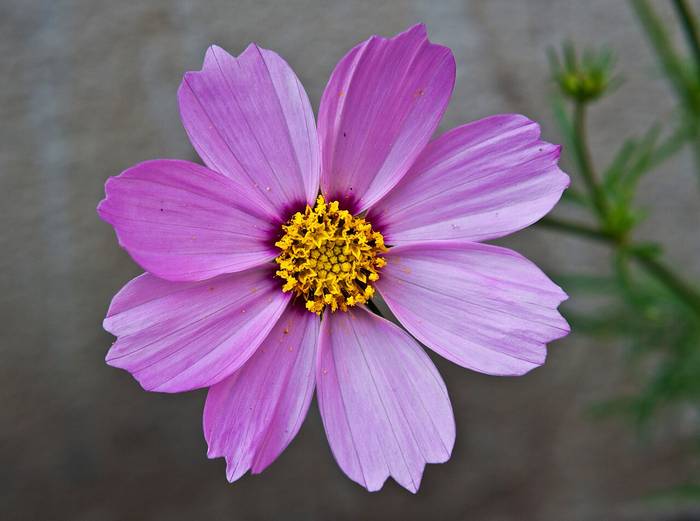
Joydeep · CC BY-SA 3.0
Stolt kavaler
Plante·Cosmos bipinnatus
Halvskygge til fuld sol
Sol
Tør til fugtig jord
Vand
Veldrænet jord
Dræning
Zoner 2–11
Hårdførhed
Dækning · 118 felter
- Parser-flag (climate_tolerance_low_confidence): Climate tolerance values are LLM-extracted (no authoritative EcoCrop match found). EcoCrop covers ~2,568 food-crop taxa; ornamental/native/medicinal species rely on LLM extraction.
- Kun ét land er registreret som hjemsted (MX).
- Såning står 2 gange med forskellig timing.
- Udplantning står 2 gange med forskellig timing.
Vækst og størrelse10 felter
Plantetype
Plante“Cosmos bipinnatus, commonly called the garden cosmos, Mexican aster or cosmea, is a medium-sized flowering herbaceous plant in the daisy family Asteraceae, native to the Americas.”
Højde
100 cm · kilden giver 61–122 cm“Successfully cultivated plants can mature 2 to 4 feet (0.61 to 1.22 m) x 12 to 18 inches (300 to 460 mm).”PFAF“Cosmos bipinnatus is a ANNUAL growing to 1 m (3ft 3in).”
Bredde
46 cm“Successfully cultivated plants can mature 2 to 4 feet (0.61 to 1.22 m) x 12 to 18 inches (300 to 460 mm).”
Wikipediadelvist
Højde ved alder
—
tomt
Planteafstand
30 cm (mindst 20 cm)
AI-estimat55 % enig
Vækstrate
—
tomt
Roddybde
Middel
AI-estimat63 % enig
Skovhavelag
Urtelag“Cosmos bipinnatus, commonly called the garden cosmos, Mexican aster or cosmea, is a medium-sized flowering herbaceous plant in the daisy family Asteraceae, native to the Americas.”
Levetid
~1 år
AI-estimatikke målt endnu
Rødder6 felter
Rodform
—
tomt
Lagerorgan
Intet
AI-estimat100 % enig
Breder sig
Nej
AI-estimat75 % enig
Breder sig sideværts i cm
—
tomt
Roddybde i cm
—
tomt
Mykorrhiza
Arbuskulær (AM)
AI-estimatikke målt endnu
Lys, vand og jord9 felter
Sol
Fuld sol, halvskygge, let skygge · bedst: fuld sol“Flowering is best in full sun, although partial shade is tolerated”Wikipedia“although partial shade is tolerated”
Timer sol
6–8 t
AI-estimatikke målt endnu
Tørketålende
—
tomt
Tåler vandlidende jord
—
tomt
Jordtype
Sand, muld · bedst: sand“Suitable for: light (sandy) and medium (loamy) soils, prefers well-drained soil and can grow in nutritionally poor soil.”PFAFdelvist“Succeeds in a sunny sheltered position in most soils but prefers one that is poor and light.”
pH
6–8,5“It prefers a soil pH between 6.0 and 8.5, reflecting its native habitat in the alkaline regions of Central America”PFAF“Suitable pH: mildly acid, neutral and basic (mildly alkaline) soils.”
Dræning
Veldrænet“Suitable for: light (sandy) and medium (loamy) soils, prefers well-drained soil and can grow in nutritionally poor soil.”
Komprimeret jord
Tåler det dårligt
AI-estimatikke målt endnu
Klima5 felter
Hårdførhed
Zone 2–11
AI-estimatikke målt endnu
Dræbende frost
-1 °C
AI-estimatikke målt endnu
Vækst-temperatur
10–30 °C · optimal 18–24 °C
AI-estimatikke målt endnu
Kuldetimer
0 t
AI-estimatikke målt endnu
Pleje (bliver til opgaver i Manage)8 felter
Såning
Maj“Especially in areas with hot summers, the seed can also be sown in situ in May.”
Såning står 2 gange med forskellig timing.
Udplantning
Juni“When they are large enough to handle, prick the seedlings out into individual pots and plant them out in early summer.”
Udplantning står 2 gange med forskellig timing.
Såning
Efter sidste frost · 14 dage efter · varer 14 dage
Såning står 2 gange med forskellig timing.
AI-estimatikke målt endnu
Tilvænning
Efter forrige fase · 30 dage efter · varer 7 dage
AI-estimatikke målt endnu
Udplantning
Efter sidste frost · 14 dage efter · varer 7 dage
Udplantning står 2 gange med forskellig timing.
AI-estimatikke målt endnu
Støtte
Efter forrige fase · -30 dage efter · varer 30 dage
AI-estimatikke målt endnu
Beskæring
Efter forrige fase · varer 120 dage
AI-estimatikke målt endnu
Året rundt3 felter
Spring ud
Efter sidste frost · varer 7 dage
AI-estimatikke målt endnu
Går i dvale
Efter første frost · varer 14 dage
AI-estimatikke målt endnu
Spiselige dele og bestøvning3 felter
Blomsterne
Raw in salads, garnish · juni–oktober
AI-estimatikke målt endnu
Bestøvning
Selvbestøvende · tvekønnet“The species is hermaphrodite (has both male and female organs) and is pollinated by Bees, Lepidoptera (Moths & Butterflies).”PFAF“is pollinated by Bees, Lepidoptera (Moths & Butterflies)”
Økologi5 felter
Tiltrækker
Bier, Lepidoptera (moths and butterflies), fugle, monarch butterfly“The species is hermaphrodite (has both male and female organs) and is pollinated by Bees, Lepidoptera (Moths & Butterflies).”Wikipedia“The flowers of Cosmos bipinnatus attract birds and butterflies, including the monarch butterfly.”
Skadedyr
Bladlus, snegle, snegle“Snails, slugs and aphids have a taste for Cosmos bipinnatus.”
Sygdomme
Meldug
AI-estimatikke målt endnu
Optager
—
tomt
Fikserer kvælstof
Nej
AI-estimatikke målt endnu
Formering og navne4 felter
Sværhedsgrad
1 / 5
AI-estimatikke målt endnu
Frø
—
tomt
Ikke sorteret endnu65 felter
Felter som parseren gemmer, men som siden ikke har en række til endnu. De vises her automatisk, så intet er skjult.
forage.DK.local_name
Cosmos
AI-estimatikke målt endnu
forage.DK.edibility_basis
inferred
AI-estimatikke målt endnu
forage.DK.foraging_months.notes
Not typically foraged in Denmark.
AI-estimatikke målt endnu
forage.DK.foraging_months.months
6, 7, 8, 9, 10
AI-estimatikke målt endnu
forage.DK.foraging_months.year_round
false
AI-estimatikke målt endnu
forage.DK.habitat_affinity
disturbed_ground
AI-estimatikke målt endnu
forage.US.local_name
Cosmos
AI-estimatikke målt endnu
forage.US.edible_parts
[{"part":"flowers","caution":null,"preparation":"raw in salads, garnish","season_months":[6,7,8,9,10]}]
AI-estimatikke målt endnu
forage.US.prep_cautions
Ensure flowers are free from pesticides and other contaminants.
AI-estimatikke målt endnu
forage.US.edibility_basis
inferred
AI-estimatikke målt endnu
forage.US.foraging_months.notes
Flowers are available during the growing season until the first frost.
AI-estimatikke målt endnu
forage.US.foraging_months.months
6, 7, 8, 9, 10
AI-estimatikke målt endnu
forage.US.foraging_months.year_round
false
AI-estimatikke målt endnu
forage.US.habitat_affinity
disturbed_ground
AI-estimatikke målt endnu
forage.TROPICAL.local_name
Cosmos
AI-estimatikke målt endnu
forage.TROPICAL.edible_parts
[{"part":"flowers","caution":null,"preparation":"raw in salads, garnish","season_months":[1,2,3,4,5,6,7,8,9,10,11,12]}]
AI-estimatikke målt endnu
forage.TROPICAL.prep_cautions
Ensure flowers are free from pesticides and other contaminants.
AI-estimatikke målt endnu
forage.TROPICAL.edibility_basis
inferred
AI-estimatikke målt endnu
forage.TROPICAL.foraging_months.notes
In tropical climates, Cosmos can bloom year-round if conditions are favorable.
AI-estimatikke målt endnu
forage.TROPICAL.foraging_months.months
1, 2, 3, 4, 5, 6, 7, 8, 9, 10, 11, 12
AI-estimatikke målt endnu
forage.TROPICAL.foraging_months.year_round
true
AI-estimatikke målt endnu
forage.TROPICAL.habitat_affinity
disturbed_ground
AI-estimatikke målt endnu
ornamental.basis
documented
AI-estimatikke målt endnu
ornamental.fragrance.source
none
AI-estimat100 % enig
ornamental.confidence
high
AI-estimatikke målt endnu
ornamental.flower_colour
pink, red, white, purple“Bloom Color: Pink, Red, White.”Wikipediadelvist“The mostly eight ray florets are pink to violet or white colored, at the base may show noticeable stains caused by anthocyanin.”
ornamental.evidence_quote
Cosmos bipinnatus, commonly known as cosmos, produces a profusion of daisy-like flowers in shades of pink, purple, red, white, yellow, and orange. Its foliage is finely textured and green, and it does not typically display autumn color. The spent flower heads can provide winter interest as seed heads.
AI-estimatikke målt endnu
ornamental.foliage_colour
green
AI-estimat82 % enig
ornamental.foliage_texture
fine“Its foliage appears as if finely cut into threadlike segments.”
ornamental.winter_structure
seed_heads
AI-estimatikke målt endnu
ornamental.autumn_foliage_colour
none
AI-estimatikke målt endnu
care_regime
light
AI-estimatikke målt endnu
propagation.self_seeding
moderate
AI-estimat20 % enig
propagation.establishment_years
0
AI-estimat40 % enig
spatial_profile.canopy_density
light
AI-estimatikke målt endnu
forage_proposals.DK.edibility_tier.tier
edible
AI-estimatikke målt endnu
forage_proposals.DK.edibility_tier.confidence
medium
AI-estimatikke målt endnu
forage_proposals.DK.edibility_tier.evidence_quote
While not traditionally foraged in Denmark, the flowers of Cosmos bipinnatus are generally considered edible and used as a garnish in other regions.
AI-estimatikke målt endnu
forage_proposals.US.edibility_tier.tier
edible
AI-estimatikke målt endnu
forage_proposals.US.edibility_tier.confidence
high
AI-estimatikke målt endnu
forage_proposals.US.edibility_tier.evidence_quote
The flowers of Cosmos bipinnatus are edible and commonly used as a garnish or in salads, offering a mild, slightly bitter taste.
AI-estimatikke målt endnu
forage_proposals.TROPICAL.edibility_tier.tier
edible
AI-estimatikke målt endnu
forage_proposals.TROPICAL.edibility_tier.confidence
high
AI-estimatikke målt endnu
forage_proposals.TROPICAL.edibility_tier.evidence_quote
In tropical regions, Cosmos bipinnatus flowers are consumed as a garnish or in salads, similar to their use in temperate climates.
AI-estimatikke målt endnu
function_profile.biomass_return.confidence
medium
AI-estimatikke målt endnu
function_profile.nutrient_flows.consumes
[{"basis":"documented","demand":"moderate","nutrient":"nitrogen","confidence":"high"},{"basis":"documented","demand":"moderate","nutrient":"phosphorus","confidence":"high"},{"basis":"documented","demand":"moderate","n…
AI-estimatikke målt endnu
function_profile.biotic_interactions
[{"taxa":["bees","Lepidoptera (moths and butterflies)","monarch butterfly"],"basis":"documented","valence":"beneficial","relation":"attracts","confidence":"high","evidence_quote":"The species is hermaphrodite (has bot…“Snails, slugs and aphids have a taste for Cosmos bipinnatus.”PFAFdelvist“The species is hermaphrodite (has both male and female organs) and is pollinated by Bees, Lepidoptera (Moths & Butterflies).”Wikipediadelvist“The flowers of Cosmos bipinnatus attract birds and butterflies, including the monarch butterfly.”
function_profile.aromatic_pest_effect.value
false
AI-estimat80 % enig
function_profile.aromatic_pest_effect.confidence
high
AI-estimatikke målt endnu
function_profile.structural_interfaces.provides_shelter.basis
inferred
AI-estimatikke målt endnu
function_profile.structural_interfaces.provides_shelter.kinds
shade
AI-estimatikke målt endnu
function_profile.structural_interfaces.provides_shelter.confidence
low
AI-estimatikke målt endnu
function_profile.structural_interfaces.provides_shelter.evidence_quote
Taller cosmos varieties can provide some light shade to smaller plants, though their foliage is not dense enough for significant shelter.
AI-estimatikke målt endnu
function_profile.structural_interfaces.requires_shelter.basis
documented
AI-estimatikke målt endnu
function_profile.structural_interfaces.requires_shelter.kinds
wind, frost“Cosmos bipinnatus can tolerate heat as long as adequate moisture is provided, however, it does not handle droughts, strong winds or cold temperatures well.”Wikipedia“They are not tolerant of frost, but can be grown outdoors in a temperate climate with a warm to hot summer and are therefore called half-hardy in British gardening literature.”
function_profile.structural_interfaces.requires_shelter.confidence
medium
AI-estimatikke målt endnu
function_profile.structural_interfaces.requires_shelter.evidence_quote
Cosmos bipinnatus can tolerate heat as long as adequate moisture is provided, however, it does not handle droughts, strong winds or cold temperatures well.
AI-estimatikke målt endnu
climate_tolerance.photoperiod_response
short_day
AI-estimatikke målt endnu
soil_interactions.organic_matter_contribution
medium
AI-estimatikke målt endnu
resource_interfaces.inputs
[{"resource":"light","quantity_description":"full sun is best for flowering; partial shade is tolerated"},{"resource":"water","quantity_description":"needs adequate moisture; does not handle drought well"},{"resource"…“Flowering is best in full sun, although partial shade is tolerated”Wikipedia“Cosmos bipinnatus can tolerate heat as long as adequate moisture is provided, however, it does not handle droughts, strong winds or cold temperatures well.”PFAF“The species is hermaphrodite (has both male and female organs) and is pollinated by Bees, Lepidoptera (Moths & Butterflies).”
resource_interfaces.outputs
[{"resource":"pollinator_services","quantity_description":"flowers are very attractive to bees and butterflies"},{"resource":"seeds","quantity_description":"may reappear via self-sowing for several years"}]“Cosmos bipinnatus is an annual that is often considered half-hardy, although plants may reappear via self-sowing for several years.”PFAFdelvist“A very ornamental plant, the flowers are very attractive to bees.”