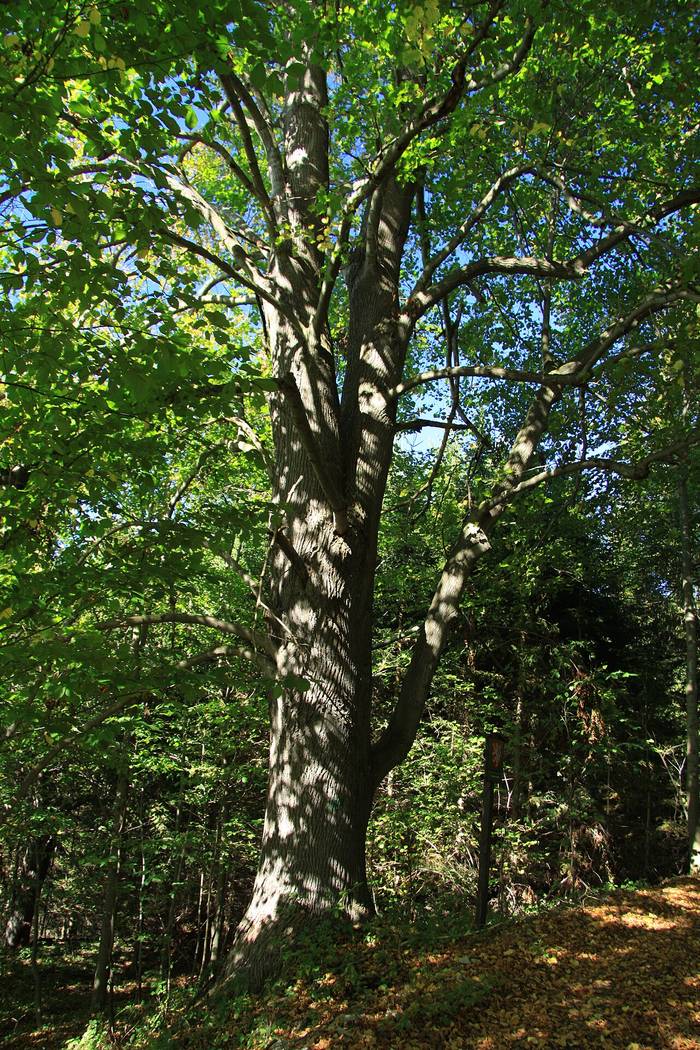
Chmee2 · CC BY-SA 3.0
Storbladet lind
Træ·Tilia platyphyllos
Halvskygge til fuld sol
Sol
Fugtig jord
Vand
Veldrænet jord
Dræning
Zoner 4–8
Hårdførhed
Dækning · 117 felter
Ingen åbenlyse uoverensstemmelser fundet.
Vækst og størrelse11 felter
Plantetype
Løvfældende træ“Tilia platyphyllos is a deciduous Tree growing to 30 m (98ft) by 20 m (65ft) at a medium rate.”
Højde
3.000 cm · kilden giver 3.000–4.000 cm · andre kilder: 4.000 cm“Both species can reach 30-40 m in height with straight trunks up to around 1 m in diameter which are largely free of suckers and epicormic growth, unlike their hybrid Tilia x europaea (common lime).”PFAF“Tilia platyphyllos is a deciduous Tree growing to 30 m (98ft) by 20 m (65ft) at a medium rate.”Wikipedia“Tilia platyphyllos is a narrowly domed tree with a moderate growth rate, and can eventually attain a height of 40 metres (130 ft), though more typically 20–25 m tall when open-grown away from other trees.”
Bredde
2.000 cm“Tilia platyphyllos is a deciduous Tree growing to 30 m (98ft) by 20 m (65ft) at a medium rate.”
Højde ved alder
—
tomt
Størrelse efter plantning
3 år: 5 m høj, 1 m krone · 12 år: 6,5 m høj, 3 m krone · 17 år: 10 m høj, 4 m krone · 35 år: 12 m høj, 6 m krone · 73 år: 18 m høj, 10 m krone“Berlin tree register: 12266 trees of this species measured with years since planting, height and crown diameter; median crown 10.0 m and height 18.0 m at 60–100 years after planting (5624 trees).”Median af 12.266 målte træer i Berlin. Årene tælles fra udplantning af planteskoletræer, så et lille træ når hver størrelse senere.
Planteafstand
1.500 cm (mindst 1.000 cm)
AI-estimat55 % enig
Vækstrate
Middel“Tilia platyphyllos is a deciduous Tree growing to 30 m (98ft) by 20 m (65ft) at a medium rate.”
Vækstform
Vaseformet
AI-estimat50 % enig
Roddybde
Dyb
AI-estimat63 % enig
Skovhavelag
Kronelag
AI-estimat90 % enig
Levetid
~1.000 år“They are long-lived, able to survive more than 1 000 years even if coppiced.”
Rødder6 felter
Rodform
—
tomt
Lagerorgan
Intet“No clonal growth organ is recorded: it does not spread vegetatively (no suckers, no rhizomes).”
Breder sig
Nej“No clonal growth organ is recorded: it does not spread vegetatively (no suckers, no rhizomes).”
Breder sig sideværts i cm
—
tomt
Roddybde i cm
—
tomt
Mykorrhiza
—
tomt
Lys, vand og jord9 felter
Sol
Fuld sol, let skygge, halvskygge · bedst: fuld sol“It can grow in semi-shade (light woodland) or no shade.”PFAF“Succeeds in sun or semi-shade.”
Timer sol
6–8 t
AI-estimatikke målt endnu
Tørketålende
—
tomt
Tåler vandlidende jord
—
tomt
Jordtype
Sand, muld, ler · bedst: muld“Prefers a good moist loamy alkaline to neutral soil but succeeds on slightly acid soils.”PFAF“Suitable for: light (sandy), medium (loamy) and heavy (clay) soils and prefers well-drained soil.”
Dræning
Veldrænet“Suitable for: light (sandy), medium (loamy) and heavy (clay) soils and prefers well-drained soil.”
Komprimeret jord
Tåler det nogenlunde
AI-estimatikke målt endnu
Klima5 felter
Hårdførhed
Zone 4–8
AI-estimatikke målt endnu
Dræbende frost
-25 °C
AI-estimatikke målt endnu
Vækst-temperatur
5–30 °C · optimal 10–25 °C
AI-estimatikke målt endnu
Kuldetimer
800 t
AI-estimatikke målt endnu
Hjemsted
AD, AL, AM, AT, AZ, BA, BE, BG, CH, CZ, DE, DK, ES, FR, GB, GE, GG, GI, GR, HR, HU, IR, IT, JE, LI, LU, MC, MD, ME, MK, MT, NL, NO, PL, RO, RS, RU, SE, SI, SK, SM, TR, UA, VA, XK
Pleje (bliver til opgaver i Manage)2 felter
Beskæring
November · varer 60 dage · healthy structural branches · dead, diseased, or crossing branches
AI-estimatikke målt endnu
Jorddække
April · varer 30 dage
AI-estimatikke målt endnu
Året rundt5 felter
Blomstring
Juni · varer 61 dage“It is in flower from June to July, and the seeds ripen in October.”
Frugt
Oktober · varer 31 dage“It is in flower from June to July, and the seeds ripen in October.”
Går i dvale
Efter første frost · varer 30 dage“The autumn foliage is yellow-green to yellow.”
Wikipediadelvist
Spring ud
Efter sidste frost · varer 30 dage
AI-estimatikke målt endnu
Dvale
Efter første frost · 30 dage efter · varer 150 dage
AI-estimatikke målt endnu
Spiselige dele og bestøvning6 felter
Young leaves
Raw, in salads and sandwiches“A delicious addition to salads and sandwiches, the young leaves are mild and tender with a somewhat mucilaginous texture[K].”PFAFdelvist“Edible Parts: Leaves Sap”
Blomsterne
Flowers and immature fruit
Ground into a paste as a chocolate substitute“A very acceptable chocolate substitute can be made from a paste of the ground-up flowers and immature fruit.”
Saften
Drunk as a drink or concentrated into a syrup · marts–maj“Sap - harvested in the spring, it is sweet and can be used as a drink or concentrated into a syrup.”
Bestøvning
Selvbestøvende · tvekønnet“The species is hermaphrodite (has both male and female organs) and is pollinated by Bees.”Wikipedia“The flowers are pollinated by bees and some butterflies, notably the White-letter Hairstreak attracted by the copious nectar the species produces, in contrast to T. cordata.”JRC skovtræ-atlasdelvist“The white or pale flowers, which are insect-pollinated, are fragrant and occur in clusters of 4 to 5.”
Bestøves af
Bier, butterflies, insekter“The species is hermaphrodite (has both male and female organs) and is pollinated by Bees.”Wikipedia“The flowers are pollinated by bees and some butterflies, notably the White-letter Hairstreak attracted by the copious nectar the species produces, in contrast to T. cordata.”JRC skovtræ-atlasdelvist“The white or pale flowers, which are insect-pollinated, are fragrant and occur in clusters of 4 to 5.”
Økologi6 felter
Tiltrækker
Bier, sommerfugle, dyreliv“The species is hermaphrodite (has both male and female organs) and is pollinated by Bees.”Wikipedia“The flowers are pollinated by bees and some butterflies, notably the White-letter Hairstreak attracted by the copious nectar the species produces, in contrast to T. cordata.”PFAF“It is noted for attracting wildlife.”
Skadedyr
Bladlus, løvskovsnonne, nonne, bladminerere, galmider, rødmus, kvæg“Trees are usually attacked by aphids which cover the ground and the leaves with a sticky honeydew.”JRC skovtræ-atlas“In common with several woody plants, limes are susceptible to be attacked by the gypsy moth (Lymantria dispar) and by the nun moth (Lymantria monacha).”JRC skovtræ-atlas“Invertebrates to which limes play host include Stigmella tiliae, a leaf-miner; the lime hawk-moth, Mimas tiliae; and Eriophyes tiliae, the lime nail gall.”JRC skovtræ-atlas“Natural regeneration of limes rarely persists long, as it is very palatable to small browsing mammals, such as bank voles.”JRC skovtræ-atlas“Mature trees may have their bark stripped by browsing cattle.”
Sygdomme
Phytophthora, phytophthora, sodskimmel“Bleeding stem cankers caused by Phytophthora cactorum and Phytophthora citricola have been recorded on limes.”JRC skovtræ-atlasdelvist“Aphids can be a problem, but to a much lesser extent with T. cordata and T. platyphyllos than with common lime: in severe infestations the honeydew dripping onto lower leaves allows sooty moulds to grow, blocking light from reaching the leaf surface.”
Optager
—
tomt
Fikserer kvælstof
Nej
AI-estimatikke målt endnu
Mykorrhiza
Ja
AI-estimatikke målt endnu
Formering og navne4 felter
Metoder
Seed - much of the seed produced in Britain is not viable, cut a few seedcases open to see if there is a seed inside., Layering in spring just before the leaves unfurl., Removing suckers with as much root as possible during the dormant season and replanting them immediately.“Seed - much of the seed produced in Britain is not viable, cut a few seedcases open to see if there is a seed inside.”PFAF“Layering in spring just before the leaves unfurl.”PFAF“Suckers, when formed, can be removed with as much root as possible during the dormant season and replanted immediately.”
Sværhedsgrad
3 / 5
AI-estimatikke målt endnu
Frø
One way of shortening this time is to stratify the seed for 5 months at high temperatures (10°c at night, up to 30°c by day) and then 5 months cold stratification.“One way of shortening this time is to stratify the seed for 5 months at high temperatures (10°c at night, up to 30°c by day) and then 5 months cold stratification.”
Ikke sorteret endnu63 felter
Felter som parseren gemmer, men som siden ikke har en række til endnu. De vises her automatisk, så intet er skjult.
forage.DK.local_name
Storbladet lind
AI-estimatikke målt endnu
forage.DK.prep_cautions
Use flowers for tea only while they are fresh, not old.“If the flowers used for making tea are too old, they may produce symptoms of narcotic intoxication.”
forage.DK.edibility_basis
inferred
AI-estimatikke målt endnu
forage.DK.foraging_months.notes
Young leaves in spring, flowers in early summer.
AI-estimatikke målt endnu
forage.DK.foraging_months.months
3, 4, 5, 6, 7“Sap - harvested in the spring, it is sweet and can be used as a drink or concentrated into a syrup.”PFAF“It is in flower from June to July, and the seeds ripen in October.”
forage.DK.foraging_months.year_round
false
AI-estimatikke målt endnu
forage.US.local_name
Largeleaf linden
AI-estimatikke målt endnu
forage.US.edible_parts
[{"part":"leaves","caution":null,"preparation":"raw or cooked","season_months":[4,5,6]},{"part":"flowers","caution":null,"preparation":"infused as tea, raw in salads","season_months":[6,7]}]
AI-estimatikke målt endnu
forage.US.edibility_basis
inferred
AI-estimatikke målt endnu
forage.US.foraging_months.notes
Young leaves in spring, flowers in early summer.
AI-estimatikke målt endnu
forage.US.foraging_months.months
4, 5, 6, 7
AI-estimatikke målt endnu
forage.US.foraging_months.year_round
false
AI-estimatikke målt endnu
forage.US.habitat_affinity
woodland, hedgerow
AI-estimatikke målt endnu
forage.TROPICAL.edibility_basis
inferred
AI-estimatikke målt endnu
forage.TROPICAL.foraging_months.year_round
false
AI-estimatikke målt endnu
ornamental.basis
documented
AI-estimatikke målt endnu
ornamental.fragrance.source
flower“The small, fragrant, yellowish-white flowers are arranged in drooping, cymose clusters in groups of 3 to 4.”
Wikipediadelvist
ornamental.fragrance.intensity
strong
AI-estimatikke målt endnu
ornamental.confidence
high
AI-estimatikke målt endnu
ornamental.evidence_quote
The large-leaved lime produces fragrant yellow flowers in early summer, followed by green leaves that turn yellow-green in autumn, offering good fall interest.
AI-estimatikke målt endnu
ornamental.foliage_colour
green, dark_green“They are ovate to cordate, mid to dark green above and below”
ornamental.foliage_texture
medium
AI-estimatikke målt endnu
ornamental.winter_structure
architectural_skeleton
AI-estimatikke målt endnu
ornamental.autumn_foliage_colour
yellow_green“The autumn foliage is yellow-green to yellow.”
care_regime
none
AI-estimatikke målt endnu
propagation.self_seeding
none
AI-estimat20 % enig
propagation.division_season
dormant season“Suckers, when formed, can be removed with as much root as possible during the dormant season and replanted immediately.”
propagation.establishment_years
3
AI-estimat40 % enig
size_at_age.v
1
AI-estimatikke målt endnu
size_at_age.basis
years_after_planting
AI-estimatikke målt endnu
forage_proposals.DK.edibility_tier.tier
caution“Some caution is advised, see notes above on toxicity.”
forage_proposals.DK.edibility_tier.confidence
high
AI-estimatikke målt endnu
forage_proposals.DK.edibility_tier.evidence_quote
The young leaves and flower buds can be eaten raw or cooked. The flowers are used to make a refreshing tea.
AI-estimatikke målt endnu
forage_proposals.US.edibility_tier.tier
edible
AI-estimatikke målt endnu
forage_proposals.US.edibility_tier.confidence
high
AI-estimatikke målt endnu
forage_proposals.US.edibility_tier.evidence_quote
Young leaves are palatable raw in salads or cooked as a potherb. The fragrant flowers are commonly used for herbal teas.
AI-estimatikke målt endnu
forage_proposals.TROPICAL.edibility_tier.confidence
low
AI-estimatikke målt endnu
function_profile.biomass_return.confidence
high
AI-estimatikke målt endnu
function_profile.nutrient_flows.consumes
[{"basis":"inferred","demand":"moderate","nutrient":"nitrogen","confidence":"medium"},{"basis":"inferred","demand":"moderate","nutrient":"phosphorus","confidence":"medium"},{"basis":"inferred","demand":"moderate","nut…
AI-estimatikke målt endnu
function_profile.nutrient_flows.provides
[{"basis":"inferred","nutrient":"calcium","mechanism":"mineral_extraction","confidence":"medium"},{"basis":"inferred","nutrient":"potassium","mechanism":"mineral_extraction","confidence":"medium"}]
AI-estimatikke målt endnu
function_profile.biotic_interactions
[{"taxa":["bees"],"basis":"documented","valence":"beneficial","relation":"attracts","confidence":"high","evidence_quote":"The species is hermaphrodite (has both male and female organs) and is pollinated by Bees.","org…“The species is hermaphrodite (has both male and female organs) and is pollinated by Bees.”Wikipedia“The flowers are pollinated by bees and some butterflies, notably the White-letter Hairstreak attracted by the copious nectar the species produces, in contrast to T. cordata.”PFAF“It is noted for attracting wildlife.”PFAF“Trees are usually attacked by aphids which cover the ground and the leaves with a sticky honeydew.”JRC skovtræ-atlas“In common with several woody plants, limes are susceptible to be attacked by the gypsy moth (Lymantria dispar) and by the nun moth (Lymantria monacha).”JRC skovtræ-atlas“Invertebrates to which limes play host include Stigmella tiliae, a leaf-miner; the lime hawk-moth, Mimas tiliae; and Eriophyes tiliae, the lime nail gall.”PFAF“A food plant for the caterpillars of many butterfly and moth species.”JRC skovtræ-atlas“Bleeding stem cankers caused by Phytophthora cactorum and Phytophthora citricola have been recorded on limes.”JRC skovtræ-atlas“Natural regeneration of limes rarely persists long, as it is very palatable to small browsing mammals, such as bank voles.”JRC skovtræ-atlas“Mature trees may have their bark stripped by browsing cattle.”JRC skovtræ-atlasdelvist“Aphids can be a problem, but to a much lesser extent with T. cordata and T. platyphyllos than with common lime: in severe infestations the honeydew dripping onto lower leaves allows sooty moulds to grow, blocking light from reaching the leaf surface.”
function_profile.aromatic_pest_effect.value
false
AI-estimat80 % enig
function_profile.aromatic_pest_effect.confidence
low
AI-estimatikke målt endnu
function_profile.structural_interfaces.provides_shelter.basis
taxonomic
AI-estimatikke målt endnu
function_profile.structural_interfaces.provides_shelter.kinds
shade, wind“Mature trees cast a dense shade.”Wikipediadelvist“Tilia spp. are also important for amenity use, shelterbelts and game plantings in the open landscape, in urban areas and recreational forestry.”
function_profile.structural_interfaces.provides_shelter.confidence
high
AI-estimatikke målt endnu
function_profile.structural_interfaces.provides_shelter.evidence_quote
Mature trees cast a dense shade.
AI-estimatikke målt endnu
function_profile.structural_interfaces.requires_shelter.basis
taxonomic
AI-estimatikke målt endnu
function_profile.structural_interfaces.requires_shelter.confidence
high
AI-estimatikke målt endnu
function_profile.structural_interfaces.provides_physical_support.form
trunk“Both species can reach 30-40 m in height with straight trunks up to around 1 m in diameter which are largely free of suckers and epicormic growth, unlike their hybrid Tilia x europaea (common lime).”
function_profile.structural_interfaces.provides_physical_support.basis
taxonomic
AI-estimatikke målt endnu
function_profile.structural_interfaces.provides_physical_support.confidence
high
AI-estimatikke målt endnu
function_profile.structural_interfaces.provides_physical_support.evidence_quote
Both species can reach 30-40 m in height with straight trunks up to around 1 m in diameter which are largely free of suckers and epicormic growth, unlike their hybrid Tilia x europaea (common lime).
AI-estimatikke målt endnu
function_profile.structural_interfaces.requires_physical_support.basis
taxonomic
AI-estimatikke målt endnu
function_profile.structural_interfaces.requires_physical_support.confidence
high
AI-estimatikke målt endnu
climate_tolerance.photoperiod_response
day_neutral
AI-estimatikke målt endnu
soil_interactions.organic_matter_contribution
high
AI-estimatikke målt endnu
component_metadata.growth_cycle
perennial
AI-estimat100 % enig
resource_interfaces.inputs
[{"resource":"light","quantity_description":"succeeds in sun or semi-shade"},{"resource":"water","quantity_description":"prefers moist soil"},{"resource":"shade","quantity_description":"young plants tolerate side shad…“Succeeds in sun or semi-shade.”PFAF“It prefers moist soil.”PFAF“Grows best in a woodland situation, young plants tolerate a reasonable level of side shade.”Wikipedia“The flowers are pollinated by bees and some butterflies, notably the White-letter Hairstreak attracted by the copious nectar the species produces, in contrast to T. cordata.”
resource_interfaces.outputs
[{"resource":"shade","quantity_description":"mature trees cast a dense shade"},{"resource":"nectar","quantity_description":"abundant nectar for bees"},{"resource":"habitat","quantity_description":"valuable for wildlif…“Mature trees cast a dense shade.”PFAF“A very valuable bee plant, producing an abundance of nectar.”PFAF“A valuable tree for wildlife, there are 31 species of insects associated with this tree.”JRC skovtræ-atlas“Seeds are first produced around 30 to 40 years of age, and every 2-3 years trees produce a reasonable crop of seeds.”PFAF“Wood - soft, white, easily carved.”