
Collard
Collard (Brassica oleracea var. viridis) is a plant. It grows best in full sun and has moderate water needs.
About Collard
Collard is a biennial plant that grows 1.8 m tall.[1][2] It is self-fertile, so you only need one.[2]
How to plant collard
Collard does best in full sun, but also copes with part shade.[2][3] It grows in sandy soil, loam and clay, as long as the soil is well drained.[2] It does best at a pH of 6–7.[2][3] In a forest garden it belongs in the herb layer.
Plant plants 45 cm apart, at least 30 cm. It struggles in compacted soil, so keep the soil loose. It can be propagated from seed or from cuttings.[2]
A year with Collard
Spring. Harvest falls in April–February.[2] The leaves can be eaten.[1] Recorded from the source text, not a safety check. Confirm with a trusted guide before eating anything. Sow seed in April.[2] Plant out in April. Feed it in April. Use a balanced fertiliser. Protect it from insects in May–September.
Summer. Water during dry spells in June–September.
Pests and diseases
Collard can be attacked by cabbage worms, aphids, flea beetles, cabbage loopers, harlequin bugs and sting nematode (belonolaimus gracilis).[1] Diseases include downy mildew and bacterial leaf blight (pseudomonas cannabina pv. alisalensis).[1][3]
Companions and wildlife
CollardThe family
Collard is a variety of Wild cabbage, in the genus Brassica. Open a species to see what lies under it.


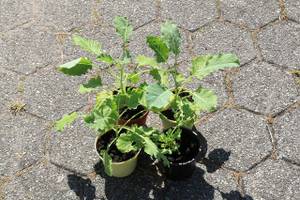


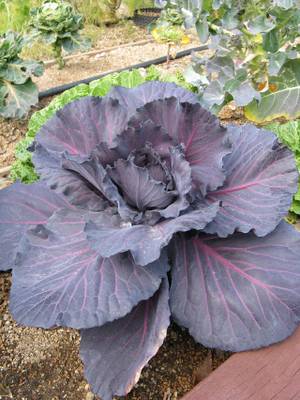
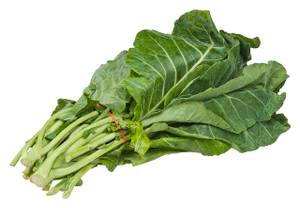 Collardvar. viridisThis page

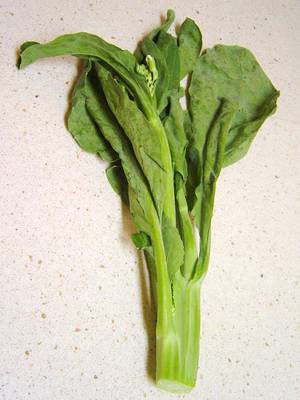

Sources
- Wikipedia — Collard (plant) · CC BY-SA 4.0
- Plants For A Future — Brassica oleracea var. viridis · CC BY 4.0
- Wikipedia — Brassica oleracea · CC BY-SA 4.0
- CLO-PLA (clonal growth) · Klimešová et al. 2017
Added to the wiki 27 August 2026
Plan your garden with perma
Open app