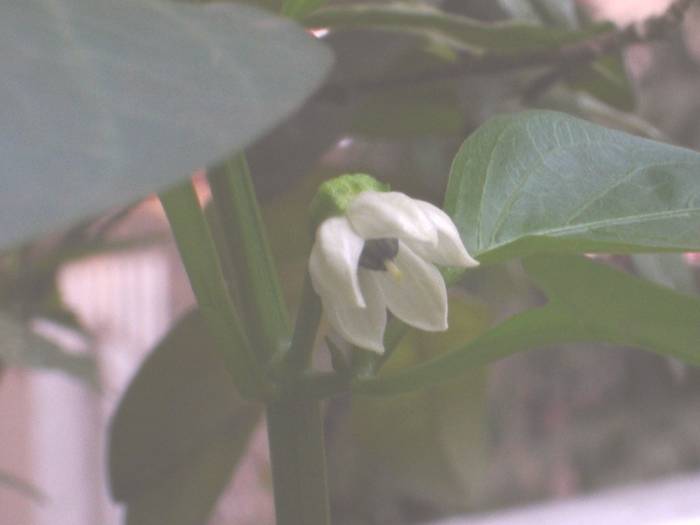
Forest and Kim Starr · CC BY 3.0 us
Pepper
Plant·Capsicum annuum
Full sun
Sun
Moist soil
Water
Well-drained soil
Drainage
Zones 9–11
Hardiness
Coverage · 123 fields
Growth and size10 fields
Height
100 cm · other sources: 200 cm“growing to 1 m (3ft 3in) by 1 m (3ft 3in)”Wikipedia“Some varieties can grow up to two meters tall (6.56 feet) using others to climb on.”
Height at age
—
empty
Spacing
45 cm (at least 30 cm)
AI estimate55 % agree
Habit
Mounding
AI estimate50 % agree
Root depth
Medium
AI estimate63 % agree
Lifespan
~3 years“Capsicum annuum is a short-lived evergreen perennial producing fruit for up to three years.”
Roots6 fields
Storage organ
None
AI estimate100 % agree
Spreads
No
AI estimate75 % agree
Lateral spread in cm
—
empty
Root depth in cm
—
empty
Mycorrhiza
—
empty
Light, water and soil9 fields
Sun
Full sun“Requires a very warm sunny position and a fertile well-drained soil.”PFAF“It cannot grow in the shade.”
Hours of sun
6–8 h
AI estimatenot measured yet
Drought tolerant
—
empty
Tolerates waterlogging
—
empty
Soil type
Sand, loam, clay · best: sand“Suitable for: light (sandy), medium (loamy) and heavy (clay) soils and prefers well-drained soil.”PFAFpartly“Prefers a light sandy soil that is slightly acid.”
pH
4.3–8.3 · best 5.5–6.8“Tolerates a pH in the range 4.3 to 8.3.”PFAF“Suitable pH: mildly acid, neutral and basic (mildly alkaline) soils and can grow in very acid and very alkaline soils.”
Drainage
Well drained“Suitable for: light (sandy), medium (loamy) and heavy (clay) soils and prefers well-drained soil.”
Compacted soil
Copes badly
AI estimatenot measured yet
Climate5 fields
Hardiness
Zone 9–11
AI estimatenot measured yet
Killing frost
0 °C
AI estimatenot measured yet
Growing temperature
8–35 °C · optimal 17–30 °C“Temperature absolute min: 8 · Temperature absolute max: 35 · Temperature optimal min: 17 · Temperature optimal max: 30”
Chill hours
0 h
AI estimatenot measured yet
Native range
AG, AI, BB, BO, BQ, BR, BS, BZ, CO, CR, CU, CW, DM, DO, EC, GD, GP, GT, GY, HN, HT, JM, KN, KY, LC, MQ, MS, MX, NI, PA, PE, PR, SR, SV, SX, TC, TT, US, VC, VE, VG, VI
Care (becomes tasks in Manage)8 fields
Starting indoors
February · lasts 60 days“Seed - sow late winter to early spring in a warm greenhouse.”
Planting out
After the last frost“plant them out after the last expected frosts”
Planting out appears 2 times with different timing.
Protection
After the last frost · frost“give them the protection of a cloche or frame at least until they are established and growing away well.”
Hardening off
After the previous stage · 60 days after · lasts 14 days
AI estimatenot measured yet
Planting out
After the last frost · Above 15 °C · 14 days after
Planting out appears 2 times with different timing.
AI estimatenot measured yet
Watering
June · lasts 90 days
AI estimatenot measured yet
Feeding
After the previous stage · lasts 60 days · a balanced fertiliser
AI estimatenot measured yet
Support
After the previous stage · lasts 90 days
AI estimatenot measured yet
Through the year5 fields
Harvest
August · lasts 120 days“Peppers are usually harvested in late summer to autumn, depending on the variety and climate.”
Leafing out
After the last frost
AI estimatenot measured yet
Dying back
After the first frost
AI estimatenot measured yet
Edible parts and pollination6 fields
The fruit
Raw or cooked“Pungent-fruited peppers may cause painful irritation when used in excess, or after accidental contact with the eyes.”PFAF“Fruit - raw or cooked.”
The leaves
Steamed as a potherb or added to soups and stews“Young leaves are said to be edible but some caution is advised.”PFAF“They are steamed as a potherb or added to soups and stews.”
The seeds
Dried, ground into a powder and used as a pepper“Seed - dried, ground into a powder and used as a pepper.”
Ecology6 fields
Attracts
Wildlife, bees, wasps“It is noted for attracting wildlife.”PFAF“Yes, Pepper plants produce flowers that can attract pollinators such as bees, although they are not particularly known for producing high amounts of nectar compared to other plants.”Wikipedia“Members are self pollinators, but cross pollination often occurs when plants are grown in large quantities, via bees, wasps, and ants.”
Pests
Whiteflies, aphids, weevil (anthonomus eugenii), tobacco budworms, thrips“Some can harbor viruses deadly to the species, these include whiteflies and aphids.”Wikipedia“Another pest which is quite vicious is a weevil (Anthonomus eugenii Cano) which the larva of this pest affects the plants during the flowering and fruiting stages of its life, and can reduce its production rate by up to 90%.”Wikipedia“Other pests that can cause damage to the plants are the tobacco budworms and thrips.”
Diseases
Phytophthora blight, anthracnose, phytophthora root and basal rot“Diseases include phytophthora blight, anthracnose, phytophthora root and basal rot.”
Takes up
—
empty
Fixes nitrogen
No
AI estimatenot measured yet
Mycorrhiza
Yes
AI estimatenot measured yet
Propagation and names4 fields
Difficulty
2 / 5
AI estimatenot measured yet
Seed
none
AI estimatenot measured yet
Not sorted yet64 fields
Fields the parser stores that this page has no row for yet. They show up here automatically, so nothing is hidden.
forage.DK.local_name
Peberfrugt
AI estimatenot measured yet
forage.DK.warnings_da
Saften kan give blærer på huden.
AI estimatenot measured yet
forage.DK.warnings_en
The sap can cause blisters on the skin.
AI estimatenot measured yet
forage.DK.prep_cautions
Pungent-fruited peppers may cause painful irritation when used in excess, or after accidental contact with the eyes., The sap of the plant can cause the skin to blister., Avoid in patients taking monoamine oxidase inhibitor antidepressants and antihypertensive drugs“Pungent-fruited peppers may cause painful irritation when used in excess, or after accidental contact with the eyes.”PFAF“The sap of the plant can cause the skin to blister.”PFAF“Avoid in patients taking monoamine oxidase inhibitor antidepressants and antihypertensive drugs”
forage.DK.edibility_basis
inferred
AI estimatenot measured yet
forage.DK.foraging_months.notes
Harvested late summer to autumn, depending on variety and climate.“Peppers are usually harvested in late summer to autumn, depending on the variety and climate.”
forage.DK.foraging_months.months
7, 8, 9
AI estimatenot measured yet
forage.DK.foraging_months.year_round
false
AI estimatenot measured yet
forage.DK.habitat_affinity
disturbed_ground
AI estimatenot measured yet
forage.US.local_name
pepper
AI estimatenot measured yet
forage.US.edible_parts
[{"part":"fruit","caution":"Pungent-fruited peppers may cause painful irritation when used in excess, or after accidental contact with the eyes.","preparation":"raw or cooked"},{"part":"leaves","caution":"Young leaves…“Pungent-fruited peppers may cause painful irritation when used in excess, or after accidental contact with the eyes.”PFAF“Young leaves are said to be edible but some caution is advised.”PFAF“Fruit - raw or cooked.”PFAF“They are steamed as a potherb or added to soups and stews.”PFAF“Flowers - raw or cooked.”PFAF“Seed - dried, ground into a powder and used as a pepper.”
forage.US.prep_cautions
Pungent-fruited peppers may cause painful irritation when used in excess, or after accidental contact with the eyes., The sap of the plant can cause the skin to blister., Avoid in patients taking monoamine oxidase inhibitor antidepressants and antihypertensive drugs“Pungent-fruited peppers may cause painful irritation when used in excess, or after accidental contact with the eyes.”PFAF“The sap of the plant can cause the skin to blister.”PFAF“Avoid in patients taking monoamine oxidase inhibitor antidepressants and antihypertensive drugs”
forage.US.edibility_basis
inferred
AI estimatenot measured yet
forage.US.foraging_months.notes
Harvested late summer to autumn, depending on variety and climate.“Peppers are usually harvested in late summer to autumn, depending on the variety and climate.”
forage.US.foraging_months.months
7, 8, 9, 10
AI estimatenot measured yet
forage.US.foraging_months.year_round
false
AI estimatenot measured yet
forage.US.habitat_affinity
disturbed_ground
AI estimatenot measured yet
forage.TROPICAL.local_name
chili pepper
AI estimatenot measured yet
forage.TROPICAL.edible_parts
[{"part":"fruit","caution":"Pungent-fruited peppers may cause painful irritation when used in excess, or after accidental contact with the eyes.","preparation":"raw or cooked"},{"part":"leaves","caution":"Young leaves…“Pungent-fruited peppers may cause painful irritation when used in excess, or after accidental contact with the eyes.”PFAF“Young leaves are said to be edible but some caution is advised.”PFAF“Fruit - raw or cooked.”PFAF“They are steamed as a potherb or added to soups and stews.”PFAF“Flowers - raw or cooked.”PFAF“Seed - dried, ground into a powder and used as a pepper.”
forage.TROPICAL.prep_cautions
Pungent-fruited peppers may cause painful irritation when used in excess, or after accidental contact with the eyes., The sap of the plant can cause the skin to blister., Avoid in patients taking monoamine oxidase inhibitor antidepressants and antihypertensive drugs“Pungent-fruited peppers may cause painful irritation when used in excess, or after accidental contact with the eyes.”PFAF“The sap of the plant can cause the skin to blister.”PFAF“Avoid in patients taking monoamine oxidase inhibitor antidepressants and antihypertensive drugs”
forage.TROPICAL.edibility_basis
inferred
AI estimatenot measured yet
forage.TROPICAL.foraging_months.notes
Harvested late summer to autumn, depending on variety and climate.“Peppers are usually harvested in late summer to autumn, depending on the variety and climate.”
forage.TROPICAL.foraging_months.months
8, 9, 10, 11
AI estimatenot measured yet
forage.TROPICAL.foraging_months.year_round
true
AI estimatenot measured yet
forage.TROPICAL.habitat_affinity
disturbed_ground
AI estimatenot measured yet
ornamental.basis
documented
AI estimatenot measured yet
ornamental.fragrance.source
none
AI estimate100 % agree
ornamental.fragrance.intensity
strong“The strong smell of the pepper plants can help deter some pests and might confuse them, making them useful in companion planting arrangements.”
ornamental.confidence
high
AI estimatenot measured yet
ornamental.fall_interest
true
AI estimatenot measured yet
ornamental.flower_colour
white, purple, green“Bloom Color: White.”Wikipedia“Being a flowering plant with variations there are different shapes of flowers and fruits produced on individuals typically having star or bell shaped flowers coming in a range of colors including purple, white, and green.”
ornamental.evidence_quote
Capsicum plants typically have small, white flowers and green foliage. As annuals, they do not exhibit autumn foliage color or winter structure.
AI estimatenot measured yet
ornamental.foliage_colour
green“while generally green, depending on the cultivar the leaves can turn dark purple or black as the plant ages.”
Wikipediapartly
ornamental.foliage_texture
medium
AI estimatenot measured yet
ornamental.winter_structure
none“It is in leaf all year, in flower from July to September, and the seeds ripen from August to October.”
PFAFpartly
ornamental.autumn_foliage_colour
none
AI estimatenot measured yet
care_regime
routine
AI estimatenot measured yet
propagation.self_seeding
none
AI estimate20 % agree
propagation.establishment_years
1“though the plants are grown as annuals in temperate zones”
PFAFpartly
spatial_profile.canopy_density
medium
AI estimatenot measured yet
forage_proposals.DK.edibility_tier.tier
edible
AI estimatenot measured yet
forage_proposals.DK.edibility_tier.confidence
high
AI estimatenot measured yet
forage_proposals.DK.edibility_tier.evidence_quote
Capsicum species, commonly known as peppers, are widely cultivated and consumed globally for their fruits, which are used as vegetables, spices, and medicinal plants.
AI estimatenot measured yet
forage_proposals.US.edibility_tier.tier
edible
AI estimatenot measured yet
forage_proposals.US.edibility_tier.confidence
high
AI estimatenot measured yet
forage_proposals.US.edibility_tier.evidence_quote
The fruits of Capsicum plants are a staple in many cuisines, eaten raw, cooked, or dried and ground into spices.
AI estimatenot measured yet
forage_proposals.TROPICAL.edibility_tier.tier
edible
AI estimatenot measured yet
forage_proposals.TROPICAL.edibility_tier.confidence
high
AI estimatenot measured yet
forage_proposals.TROPICAL.edibility_tier.evidence_quote
In tropical regions, Capsicum species are a common food source, with fruits consumed fresh or processed.
AI estimatenot measured yet
function_profile.biomass_return.confidence
medium
AI estimatenot measured yet
function_profile.nutrient_flows.consumes
[{"basis":"documented","demand":"high","nutrient":"nitrogen","confidence":"high"},{"basis":"documented","demand":"high","nutrient":"phosphorus","confidence":"high"},{"basis":"documented","demand":"high","nutrient":"po…
AI estimatenot measured yet
function_profile.biotic_interactions
[{"taxa":["bees","wasps","ants"],"basis":"documented","valence":"beneficial","relation":"attracts","confidence":"medium","evidence_quote":"Members are self pollinators, but cross pollination often occurs when plants a…“Members are self pollinators, but cross pollination often occurs when plants are grown in large quantities, via bees, wasps, and ants.”PFAF“It is noted for attracting wildlife.”Wikipedia“Bird dispersal for seeds has proven to be beneficial for the peppers as they have the ability to spread large distances.”Wikipedia“Diseases include phytophthora blight, anthracnose, phytophthora root and basal rot.”Wikipedia“Another pest which is quite vicious is a weevil (Anthonomus eugenii Cano) which the larva of this pest affects the plants during the flowering and fruiting stages of its life, and can reduce its production rate by up to 90%.”Wikipedia“Other pests that can cause damage to the plants are the tobacco budworms and thrips.”Wikipediapartly“Some can harbor viruses deadly to the species, these include whiteflies and aphids.”PFAFpartly“Yes, Pepper plants produce flowers that can attract pollinators such as bees, although they are not particularly known for producing high amounts of nectar compared to other plants.”Wikipediapartly“However, birds are not affected by the presence of capsaicin and are able to eat the fruits and seeds.”
function_profile.aromatic_pest_effect.value
true“Yes – The strong smell of the pepper plants can help deter some pests and might confuse them, making them useful in companion planting arrangements.”
function_profile.aromatic_pest_effect.confidence
low
AI estimatenot measured yet
function_profile.structural_interfaces.requires_shelter.basis
documented
AI estimatenot measured yet
function_profile.structural_interfaces.requires_shelter.kinds
frost“If trying them outdoors, then plant them out after the last expected frosts and give them the protection of a cloche or frame at least until they are established and growing away well.”
function_profile.structural_interfaces.requires_shelter.stage
establishment
AI estimatenot measured yet
function_profile.structural_interfaces.requires_shelter.confidence
medium
AI estimatenot measured yet
function_profile.structural_interfaces.requires_shelter.evidence_quote
If trying them outdoors, then plant them out after the last expected frosts and give them the protection of a cloche or frame at least until they are established and growing away well.
AI estimatenot measured yet
climate_tolerance.photoperiod_response
day_neutral
AI estimatenot measured yet
soil_interactions.organic_matter_contribution
medium
AI estimatenot measured yet
component_metadata.growth_cycle
perennial“Capsicum annuum is a short-lived evergreen perennial producing fruit for up to three years.”
resource_interfaces.inputs
[{"resource":"light","quantity_description":"very warm sunny position"},{"resource":"water","quantity_description":"moist soil"},{"resource":"pollination","quantity_description":"cross pollination often occurs when pl…“Requires a very warm sunny position and a fertile well-drained soil.”PFAF“It prefers moist soil.”Wikipedia“Members are self pollinators, but cross pollination often occurs when plants are grown in large quantities, via bees, wasps, and ants.”
resource_interfaces.outputs
[{"resource":"fruit","quantity_description":"edible fruit providing food for humans and wildlife"},{"resource":"seeds","quantity_description":"food for some birds"},{"resource":"pollinator_services","quantity_descript…“Yes – The fruits (both sweet and spicy varieties) are edible and provide food for both humans and wildlife.”PFAF“The seeds can also serve as food for some birds.”PFAF“Yes, Pepper plants produce flowers that can attract pollinators such as bees, although they are not particularly known for producing high amounts of nectar compared to other plants.”PFAF“Yes – Pepper plants can provide some shelter for beneficial insects, particularly in their foliage.”