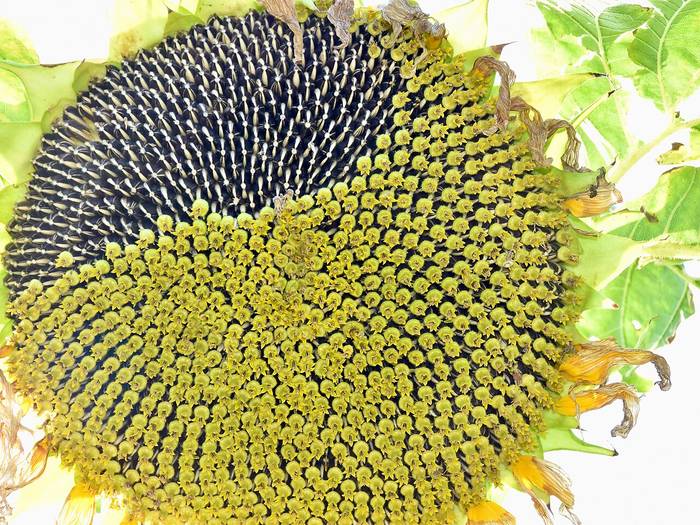
NasserHalaweh · CC BY 4.0
Common sunflower
Plant·Helianthus annuus
Part shade to full sun
Sun
Dry to moist soil
Water
Well-drained soil
Drainage
Zones 2–11
Hardiness
Coverage · 135 fields
Growth and size10 fields
Plant type
Plant
AI estimate100 % agree
Height
300 cm“Helianthus annuus is a ANNUAL growing to 3 m (9ft) by 0.3 m (1ft in) at a fast rate.”
Spread
30 cm“Helianthus annuus is a ANNUAL growing to 3 m (9ft) by 0.3 m (1ft in) at a fast rate.”
Height at age
—
empty
Spacing
45 cm (at least 30 cm)“In commercial planting, seeds are planted 45 cm (1+1⁄2 ft) apart and 2.5 cm (1 in) deep.”
Growth rate
Fast“Helianthus annuus is a ANNUAL growing to 3 m (9ft) by 0.3 m (1ft in) at a fast rate.”
Habit
Columnar“Wild plants are known for their multiple flower heads, whereas the domestic sunflower often possesses a single large flower head atop an unbranched stem.”
Wikipediapartly
Root depth
Taproot“The plant has a strong taproot that can penetrate the soil to depth of 3 metres, it also has a large lateral spread of surface roots.”
Forest garden layer
Herb layer
AI estimate90 % agree
Lifespan
~1 years
AI estimatenot measured yet
Roots6 fields
Root form
Taproot“The plant has a strong taproot that can penetrate the soil to depth of 3 metres, it also has a large lateral spread of surface roots.”
Storage organ
None“It does not multiply vegetatively: it has no rhizomes, runners, suckers or offspring bulbs or tubers.”
Spreads
No“It does not multiply vegetatively: it has no rhizomes, runners, suckers or offspring bulbs or tubers.”
Lateral spread in cm
—
empty
Root depth in cm
Deepest 300 cm“The plant has a strong taproot that can penetrate the soil to depth of 3 metres, it also has a large lateral spread of surface roots.”
Mycorrhiza
Arbuscular (AM)
AI estimatenot measured yet
Light, water and soil9 fields
Sun
Full sun, light shade, part shade · best: full sun“It can grow in semi-shade (light woodland) or no shade.”PFAFpartly“Especially when grown for its edible seed, the plant prefers a sunny position though it also tolerates light shade.”
Hours of sun
6–12 h
AI estimatenot measured yet
Water
Dry, moist · best: moist · Medium · 2–4 l/day“Sunflowers grow best in fertile, moist, well-drained soil with heavy mulch.”PFAF“It prefers dry or moist soil and can tolerate drought.”
Soil type
Sand, loam, clay“Suitable for: light (sandy), medium (loamy) and heavy (clay) soils and prefers well-drained soil.”
pH
4.5–8.7 · best 6–7.5“The sunflower tolerates an annual precipitation of 20 - 400cm, an average annual temperature in the range of 6 - 28°C and a pH in the range of 4.5 - 8.7.”PFAF“Suitable pH: mildly acid, neutral and basic (mildly alkaline) soils.”
Drainage
Well drained“Suitable for: light (sandy), medium (loamy) and heavy (clay) soils and prefers well-drained soil.”
Compacted soil
Copes badly
AI estimatenot measured yet
Climate5 fields
Hardiness
Zone 2–11
AI estimatenot measured yet
Killing frost
0 °C“Killing temp. early growth: 0”EcoCrop's figure is frost during early growth (spring frost on new shoots), not winter cold.
Growing temperature
5–45 °C · optimal 17–34 °C“Temperature absolute min: 5 · Temperature absolute max: 45 · Temperature optimal min: 17 · Temperature optimal max: 34”
Chill hours
0 h
AI estimatenot measured yet
Care (becomes tasks in Manage)8 fields
Sowing
After the last frost“In commercial planting, seeds are planted 45 cm (1+1⁄2 ft) apart and 2.5 cm (1 in) deep.”
Wikipediapartly
Protection
After the previous stage · slugs“The young growth is extremely attractive to slugs, plants can be totally destroyed by them”
PFAFpartly
Mulching
After the previous stage“Sunflowers grow best in fertile, moist, well-drained soil with heavy mulch.”
Wikipediapartly
Watering
July · lasts 92 days
Watering appears 2 times with different timing.
AI estimatenot measured yet
Watering
After the previous stage · lasts 120 days
Watering appears 2 times with different timing.
AI estimatenot measured yet
Feeding
After the previous stage · 30 days after · a balanced fertiliser
AI estimatenot measured yet
Support
After the previous stage · lasts 60 days
AI estimatenot measured yet
Protection
After the previous stage · lasts 30 days · birds
AI estimatenot measured yet
Through the year5 fields
Leafing out
After the last frost
AI estimatenot measured yet
Flowering
July · lasts 92 days“It is in flower from July to September, and the seeds ripen from September to October.”
Fruiting
September · lasts 61 days“It is in flower from July to September, and the seeds ripen from September to October.”
Dying back
After the first frost
AI estimatenot measured yet
Harvest
October · lasts 31 days
AI estimatenot measured yet
Edible parts and pollination7 fields
The seeds
Flower buds
Steamed and served like globe artichokes“Edible Parts: Flowers Oil Seed Stem”PFAF“Young flower buds - steamed and served like globe artichokes.”
Leaf petioles
Boiled and mixed in with other foodstuffs“Edible Parts: Flowers Oil Seed Stem”PFAF“The leaf petioles are boiled and mixed in with other foodstuffs.”
Oil
Used in salads, margarines, or in cooking“A high quality edible semi-drying oil is obtained from the seed.”PFAF“Used in salads, margarines, or in cooking.”
Pollination
Needs a partner · hermaphrodite“The species is hermaphrodite (has both male and female organs) and is pollinated by Bees, flies.”PFAF“The plant is not self-fertile.”
Pollinated by
Bees, flies“The species is hermaphrodite (has both male and female organs) and is pollinated by Bees, flies.”
Ecology5 fields
Attracts
Bees, flies, lacewings, parasitic wasps, butterflies, birds, wildlife“A good bee plant, providing large quantities of nectar.”PFAF“The species is hermaphrodite (has both male and female organs) and is pollinated by Bees, flies.”PFAF“The flowers attract beneficial insects such as lacewings and parasitic wasps.”PFAF“Attracts butterflies”PFAF“Attracts birds”PFAF“It is noted for attracting wildlife.”
Pests
Slugs, broomrapes“The young growth is extremely attractive to slugs, plants can be totally destroyed by them”Wikipedia“Another major threat to sunflower crops are broomrapes, a family of plants which parasitize the roots of various other plants, including sunflowers.”
Diseases
Fusarium, downy mildew“One of the major threats that sunflowers face today is Fusarium, a filamentous fungus that is found largely in soil and plants.”Wikipedia“Downy mildew is another disease to which sunflowers are susceptible.”
Takes up
Potassium, phosphorus, boron
AI estimatenot measured yet
Fixes nitrogen
No
AI estimatenot measured yet
Propagation and names4 fields
Methods
Seed“In commercial planting, seeds are planted 45 cm (1+1⁄2 ft) apart and 2.5 cm (1 in) deep.”
Seed
—
empty
Not sorted yet76 fields
Fields the parser stores that this page has no row for yet. They show up here automatically, so nothing is hidden.
forage.DK.local_name
Solsikke
AI estimatenot measured yet
forage.DK.warnings_da
Skallerne kan irritere halsen, så spyt dem ud.
AI estimatenot measured yet
forage.DK.warnings_en
The shells can irritate the throat, so spit them out.
AI estimatenot measured yet
forage.DK.prep_cautions
Moldy, rancid or badly discoloured seeds should be discarded., Shells are best removed or spat out rather than swallowed in quantity., The hairs and fragments from wild shells may irritate the throat or create a choking risk., Do not harvest food from contaminated industrial ground, mine waste, heavily polluted roadsides or sites treated with herbicides., The growing plant can accumulate nitrates, especially when fed on artificial fertilizers., The pollen or plant extracts may cause allergic reactions.“Moldy, rancid or badly discoloured seeds should be discarded.”PFAF“Shells are best removed or spat out rather than swallowed in quantity.”PFAF“The hairs and fragments from wild shells may irritate the throat or create a choking risk.”PFAF“Do not harvest food from contaminated industrial ground, mine waste, heavily polluted roadsides or sites treated with herbicides.”PFAF“The growing plant can accumulate nitrates, especially when fed on artificial fertilizers.”PFAF“The pollen or plant extracts may cause allergic reactions.”
forage.DK.edibility_basis
inferred
AI estimatenot measured yet
forage.DK.foraging_months.notes
Different parts are available at different times of the growing season.
AI estimatenot measured yet
forage.DK.foraging_months.year_round
false
AI estimatenot measured yet
forage.DK.habitat_affinity
disturbed_ground
AI estimatenot measured yet
forage.US.local_name
Sunflower
AI estimatenot measured yet
forage.US.edible_parts
[{"part":"seed","caution":"People with sunflower-seed allergies should avoid them.","preparation":"raw or cooked; roasted as a coffee substitute","season_months":[9,10]},{"part":"flower buds","preparation":"steamed an…“Edible Parts: Flowers Oil Seed Stem”PFAF“A high quality edible semi-drying oil is obtained from the seed.”PFAF“People with sunflower-seed allergies should avoid them.”PFAF“Young flower buds - steamed and served like globe artichokes.”PFAF“The leaf petioles are boiled and mixed in with other foodstuffs.”PFAF“Used in salads, margarines, or in cooking.”PFAF“the seeds ripen from September to October”PFAFpartly“Seed - raw or cooked.”
forage.US.prep_cautions
Moldy, rancid or badly discoloured seeds should be discarded., Shells are best removed or spat out rather than swallowed in quantity., The hairs and fragments from wild shells may irritate the throat or create a choking risk., Do not harvest food from contaminated industrial ground, mine waste, heavily polluted roadsides or sites treated with herbicides., The growing plant can accumulate nitrates, especially when fed on artificial fertilizers., The pollen or plant extracts may cause allergic reactions.“Moldy, rancid or badly discoloured seeds should be discarded.”PFAF“Shells are best removed or spat out rather than swallowed in quantity.”PFAF“The hairs and fragments from wild shells may irritate the throat or create a choking risk.”PFAF“Do not harvest food from contaminated industrial ground, mine waste, heavily polluted roadsides or sites treated with herbicides.”PFAF“The growing plant can accumulate nitrates, especially when fed on artificial fertilizers.”PFAF“The pollen or plant extracts may cause allergic reactions.”
forage.US.edibility_basis
inferred
AI estimatenot measured yet
forage.US.foraging_months.notes
Different parts are available at different times of the growing season.
AI estimatenot measured yet
forage.US.foraging_months.year_round
false
AI estimatenot measured yet
forage.US.habitat_affinity
verge, riverbank, disturbed_ground
AI estimatenot measured yet
forage.TROPICAL.local_name
Sunflower
AI estimatenot measured yet
forage.TROPICAL.edible_parts
[{"part":"seeds","caution":null,"preparation":"roasted","season_months":[9,10]},{"part":"petals","caution":null,"preparation":"raw","season_months":[7,8,9]},{"part":"young leaves","caution":null,"preparation":"cooked"…
AI estimatenot measured yet
forage.TROPICAL.edibility_basis
inferred
AI estimatenot measured yet
forage.TROPICAL.foraging_months.notes
In tropical climates, sunflowers can often be grown and harvested year-round, depending on local conditions and varieties.
AI estimatenot measured yet
forage.TROPICAL.foraging_months.months
7, 8, 9, 10
AI estimatenot measured yet
forage.TROPICAL.foraging_months.year_round
false
AI estimatenot measured yet
forage.TROPICAL.habitat_affinity
disturbed_ground
AI estimatenot measured yet
ornamental.basis
documented
AI estimatenot measured yet
ornamental.fragrance.source
none
AI estimate100 % agree
ornamental.confidence
high
AI estimatenot measured yet
ornamental.fall_interest
true
AI estimatenot measured yet
ornamental.flower_colour
yellow, red, orange“They are sexually sterile and may be yellow, red, orange, or other colors.”
ornamental.evidence_quote
Helianthus annuus, commonly known as the common sunflower, is an annual plant with a large flower head (capitulum). The flower heads are typically bright yellow, with green foliage. After flowering, the large seed heads remain, providing winter interest and food for birds. The plant does not exhibit significant autumn foliage color change.
AI estimatenot measured yet
ornamental.foliage_colour
green
AI estimate82 % agree
ornamental.foliage_texture
medium“Sunflower leaves are broad, coarsely toothed, rough and mostly alternate; those near the bottom are largest and commonly heart-shaped.”
Wikipediapartly
ornamental.winter_structure
seed_heads, architectural_skeleton
AI estimatenot measured yet
ornamental.autumn_foliage_colour
none
AI estimatenot measured yet
care_regime
light
AI estimatenot measured yet
propagation.self_seeding
moderate
AI estimate20 % agree
propagation.establishment_years
0
AI estimate40 % agree
spatial_profile.canopy_density
medium
AI estimatenot measured yet
sun_requirement.best
full_sun“Especially when grown for its edible seed, the plant prefers a sunny position though it also tolerates light shade.”
sun_requirement.best_for
fruit
AI estimatenot measured yet
forage_proposals.DK.edibility_tier.tier
edible“Sunflower seeds are widely eaten and generally safe.”
forage_proposals.DK.edibility_tier.confidence
high
AI estimatenot measured yet
forage_proposals.DK.edibility_tier.evidence_quote
The seeds are widely consumed, and young leaves and flower buds are also reported as edible. Petals can be used as a garnish.
AI estimatenot measured yet
forage_proposals.US.edibility_tier.tier
edible“Sunflower seeds are widely eaten and generally safe.”
forage_proposals.US.edibility_tier.confidence
high
AI estimatenot measured yet
forage_proposals.US.edibility_tier.evidence_quote
Sunflower seeds are a common food product. Young leaves and flower buds are also edible, and petals can be used as a garnish.
AI estimatenot measured yet
forage_proposals.TROPICAL.edibility_tier.tier
edible
AI estimatenot measured yet
forage_proposals.TROPICAL.edibility_tier.confidence
high
AI estimatenot measured yet
forage_proposals.TROPICAL.edibility_tier.evidence_quote
All parts listed are edible and commonly consumed in various forms globally.
AI estimatenot measured yet
function_profile.biomass_return.confidence
high“Sunflowers can be grown as a spring-sown green manure; they produce a good bulk of material.”
function_profile.nutrient_flows.consumes
[{"basis":"documented","demand":"heavy","nutrient":"nitrogen","confidence":"high"},{"basis":"documented","demand":"high","nutrient":"phosphorus","confidence":"high"},{"basis":"documented","demand":"high","nutrient":"p…“A very greedy and vigorous plant, it can inhibit the growth of nearby plants.”
PFAFpartly
function_profile.nutrient_flows.provides
[{"basis":"documented","nutrient":"potassium","mechanism":"biomass_return","confidence":"medium"},{"basis":"documented","nutrient":"phosphorus","mechanism":"biomass_return","confidence":"medium"},{"basis":"inferred","…“The dried stems make an excellent fuel, the ash is rich in potassium.”
PFAFpartly
function_profile.biotic_interactions
[{"taxa":["bees","flies"],"basis":"documented","valence":"beneficial","relation":"attracts","confidence":"high","evidence_quote":"The species is hermaphrodite (has both male and female organs) and is pollinated by Bee…“The species is hermaphrodite (has both male and female organs) and is pollinated by Bees, flies.”PFAF“Attracts butterflies”PFAF“The flowers attract beneficial insects such as lacewings and parasitic wasps.”PFAF“Attracts birds”PFAF“The young growth is extremely attractive to slugs, plants can be totally destroyed by them”Wikipedia“One of the major threats that sunflowers face today is Fusarium, a filamentous fungus that is found largely in soil and plants.”Wikipedia“Downy mildew is another disease to which sunflowers are susceptible.”Wikipedia“Another major threat to sunflower crops are broomrapes, a family of plants which parasitize the roots of various other plants, including sunflowers.”PFAF“It is noted for attracting wildlife.”
function_profile.aromatic_pest_effect.value
false
AI estimate80 % agree
function_profile.aromatic_pest_effect.confidence
high
AI estimatenot measured yet
function_profile.structural_interfaces.provides_shelter.basis
documented
AI estimatenot measured yet
function_profile.structural_interfaces.provides_shelter.kinds
shade, wind
AI estimatenot measured yet
function_profile.structural_interfaces.provides_shelter.confidence
medium
AI estimatenot measured yet
function_profile.structural_interfaces.provides_shelter.evidence_quote
The large leaves and height of sunflowers can provide some shade for understory plants, particularly in the afternoon.
AI estimatenot measured yet
function_profile.structural_interfaces.requires_shelter.basis
inferred
AI estimatenot measured yet
function_profile.structural_interfaces.requires_shelter.kinds
wind
AI estimatenot measured yet
function_profile.structural_interfaces.requires_shelter.stage
establishment
AI estimatenot measured yet
function_profile.structural_interfaces.requires_shelter.confidence
low
AI estimatenot measured yet
function_profile.structural_interfaces.requires_shelter.evidence_quote
Tall sunflower varieties can be prone to wind damage and may benefit from wind shelter or staking.
AI estimatenot measured yet
function_profile.structural_interfaces.provides_physical_support.form
stout_stem
AI estimatenot measured yet
function_profile.structural_interfaces.provides_physical_support.basis
documented
AI estimatenot measured yet
function_profile.structural_interfaces.provides_physical_support.confidence
high
AI estimatenot measured yet
function_profile.structural_interfaces.provides_physical_support.evidence_quote
The strong, upright stems of sunflowers can provide some physical support for climbing plants, though they are not typically used as primary trellises.
AI estimatenot measured yet
function_profile.structural_interfaces.requires_physical_support.basis
documented
AI estimatenot measured yet
function_profile.structural_interfaces.requires_physical_support.confidence
high
AI estimatenot measured yet
function_profile.structural_interfaces.requires_physical_support.evidence_quote
Tall varieties of sunflowers may require staking in windy conditions to prevent lodging.
AI estimatenot measured yet
climate_tolerance.photoperiod_response
day_neutral
AI estimatenot measured yet
soil_interactions.organic_matter_contribution
medium
AI estimatenot measured yet
component_metadata.growth_cycle
annual“Helianthus annuus is a ANNUAL growing to 3 m (9ft) by 0.3 m (1ft in) at a fast rate.”
resource_interfaces.inputs
[{"resource":"light","quantity_description":"a sunny position; tolerates light shade"},{"resource":"water","quantity_description":"dry or moist soil; tolerates drought"},{"resource":"pollination","quantity_description…“Especially when grown for its edible seed, the plant prefers a sunny position though it also tolerates light shade.”PFAF“It prefers dry or moist soil and can tolerate drought.”PFAF“The species is hermaphrodite (has both male and female organs) and is pollinated by Bees, flies.”
resource_interfaces.outputs
[{"resource":"nectar","quantity_description":"large quantities of nectar for bees"},{"resource":"seeds","quantity_description":"edible seed"},{"resource":"mulch_biomass","quantity_description":"a good bulk of material…“A good bee plant, providing large quantities of nectar.”PFAF“Sunflowers can be grown as a spring-sown green manure; they produce a good bulk of material.”PFAF“Attracts birds”PFAF“The species is hermaphrodite (has both male and female organs) and is pollinated by Bees, flies.”PFAFpartly“Edible Parts: Flowers Oil Seed Stem”