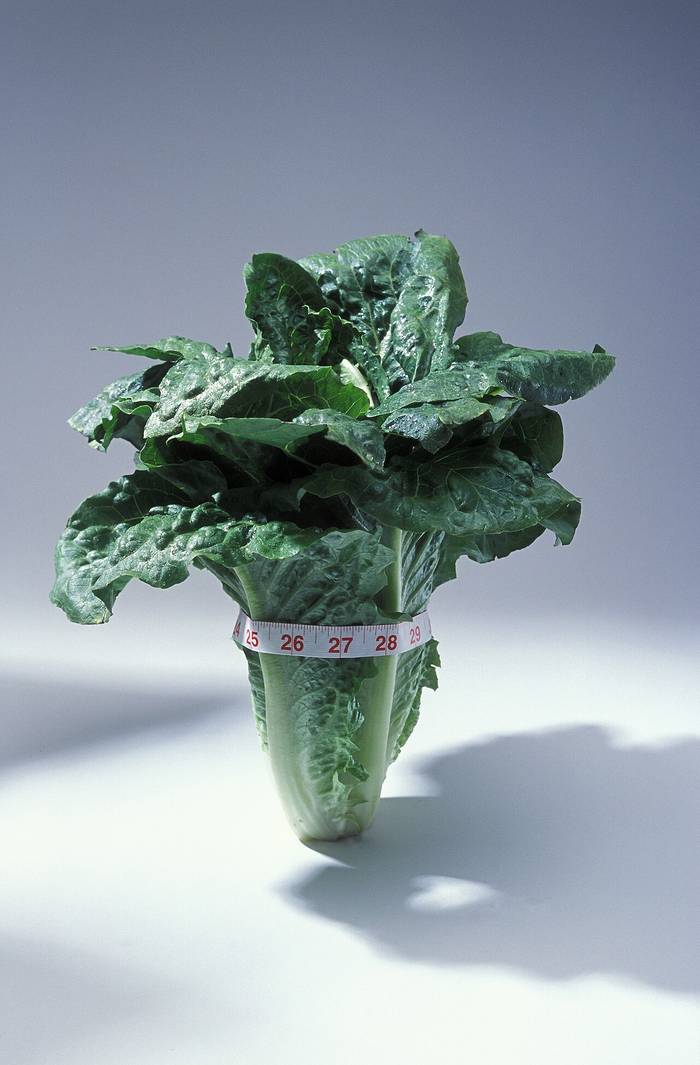
Cos lettuce
Plant·Lactuca sativa var. longifolia
Part shade to full sun
Sun
Moist soil
Water
Well-drained soil
Drainage
Not recorded
Hardiness
Coverage · 102 fields
Growth and size10 fields
Plant type
Plant“Lettuce (Lactuca sativa) is an annual plant of the family Asteraceae mostly grown as a leaf vegetable.”
Height
90 cm“Lactuca sativa longifolia is a ANNUAL/BIENNIAL growing to 0.9 m (3ft) by 0.3 m (1ft in).”
Spread
30 cm“Lactuca sativa longifolia is a ANNUAL/BIENNIAL growing to 0.9 m (3ft) by 0.3 m (1ft in).”
Height at age
—
empty
Spacing
20 cm“Heading varieties of lettuces are commonly started in flats, then transplanted to individual spots, usually 20 to 36 cm (7.9 to 14.2 in) apart, in the garden after developing several leaves.”
Growth rate
—
empty
Habit
—
empty
Root depth
Taproot“Lettuce plants have a root system that includes a main taproot and smaller secondary roots.”
Forest garden layer
Herb layer
AI estimate90 % agree
Lifespan
~1 years
AI estimatenot measured yet
Roots6 fields
Root form
Taproot“Lettuce plants have a root system that includes a main taproot and smaller secondary roots.”
Storage organ
None“It does not multiply vegetatively: it has no rhizomes, runners, suckers or offspring bulbs or tubers.”
Spreads
No“It does not multiply vegetatively: it has no rhizomes, runners, suckers or offspring bulbs or tubers.”
Lateral spread in cm
—
empty
Root depth in cm
—
empty
Mycorrhiza
—
empty
Light, water and soil9 fields
Sun
Full sun, light shade, part shade · best: full sun“Lettuce grows best in full sun in loose, nitrogen-rich soils with a pH of between 6.0 and 6.8.”PFAF“It can grow in semi-shade (light woodland) or no shade.”
Hours of sun
6–8 h
AI estimatenot measured yet
Drought tolerant
No“Plants strongly dislike dry conditions, quickly running to seed in such a situation.”
Tolerates waterlogging
—
empty
Soil type
Compacted soil
Copes badly
AI estimatenot measured yet
Climate5 fields
Hardiness
—
empty
Killing frost
—
empty
Growing temperature
5–30 °C · optimal 12–21 °C“with most varieties growing poorly above 24 °C (75 °F)”Wikipediapartly“as low as 7 °C (45 °F) being tolerated”Wikipediapartly“cool temperatures prompt better performance, with 16 to 18 °C (61 to 64 °F) being preferred”
Wikipediapartly
Chill hours
0 h
AI estimatenot measured yet
Native range
—
empty
Care (becomes tasks in Manage)10 fields
Sowing
January · lasts 59 days“More certain winter crops can be obtained by sowing in a frame in September/October and again in January/February.”
Sowing appears 2 times with different timing.
Sowing
August · lasts 60 days“make another sowing in August/September for a winter/spring crop”
Sowing appears 2 times with different timing.
PFAFpartly
Protection
After the previous stage · slugs“They require quite a lot of attention to protect them from pests such as slugs, aphids and birds.”
PFAFpartly
Protection
After the previous stage · birds“They require quite a lot of attention to protect them from pests such as slugs, aphids and birds.”
PFAFpartly
Protection
After the first frost · frost“some varieties of lettuce can be overwintered even in relatively cold climates under a layer of straw”
Wikipediapartly
Planting out
After the previous stage“Heading varieties of lettuces are commonly started in flats, then transplanted to individual spots, usually 20 to 36 cm (7.9 to 14.2 in) apart, in the garden after developing several leaves”
Wikipediapartly
Watering
April · lasts 180 days
AI estimatenot measured yet
Weeding
April · lasts 180 days
AI estimatenot measured yet
Mulching
After the previous stage · 14 days after · lasts 150 days
AI estimatenot measured yet
Feeding
After the previous stage · 21 days after · lasts 90 days · balanced liquid feed
AI estimatenot measured yet
Through the year3 fields
Harvest
After the previous stage · 65 days after · lasts 65 days“lettuce generally lives 65–130 days from planting to harvesting”
Edible parts and pollination4 fields
The leaves
Raw, or cooked as a potherb or in soups“Leaves - raw or cooked.”PFAF“A mild slightly sweet flavour with a crisp texture, lettuce is a very commonly used salad leaf and can also be cooked as a potherb or be added to soups etc.”
The seeds
Sprouted, used in salads or sandwiches · August–September“Seed - sprouted and used in salads or sandwiches.”PFAFpartly“It is in flower from July to August, and the seeds ripen from August to September.”
Pollination
Self-fertile · hermaphrodite“The species is hermaphrodite (has both male and female organs) and is pollinated by Flies.”PFAF“The plant is self-fertile.”
Pollinated by
Flies“The species is hermaphrodite (has both male and female organs) and is pollinated by Flies.”
Ecology6 fields
Attracts
Flies, insects“The species is hermaphrodite (has both male and female organs) and is pollinated by Flies.”Wikipedia“Many insects are attracted to lettuce”
Pests
Cutworms, wireworms, nematodes, tarnished plant bugs, aphids, leafhoppers, thrips, leafminers, flea beetles, caterpillars, slugs, snails, ghost moth larvae, delia platura larvae, rabbits, groundhogs, birds“cutworms, which cut seedlings off at the soil line”Wikipedia“wireworms and nematodes, which cause yellow, stunted plants”Wikipedia“tarnished plant bugs and aphids, which cause yellow, distorted leaves”Wikipedia“leafhoppers, which cause stunted growth and pale leaves”Wikipedia“thrips, which turn leaves gray-green or silver”Wikipedia“leafminers, which create tunnels within the leaves”Wikipedia“flea beetles, which cut small holes in leaves”Wikipedia“caterpillars, slugs and snails, which cut large holes in leaves”Wikipedia“the larvae of the ghost moth and Delia platura is a common pest of lettuce plants”Wikipedia“Mammals, including rabbits and groundhogs, also eat the plants.”PFAF“They require quite a lot of attention to protect them from pests such as slugs, aphids and birds.”
Diseases
Big vein, mosaic virus, aster yellows, powdery mildew, downy mildew, bottom rot, lettuce drop, gray mold, fungal diseases“big vein, which causes yellow, distorted leaves”Wikipedia“mosaic virus, which is spread by aphids and causes stunted plant growth and deformed leaves”Wikipedia“Aster yellows are a disease-causing bacteria carried by leafhoppers”Wikipedia“Fungal diseases include powdery mildew and downy mildew”Wikipedia“bottom rot, lettuce drop and gray mold”PFAF“In wet weather they are likely to develop fungal diseases.”
Takes up
—
empty
Fixes nitrogen
No
AI estimatenot measured yet
Mycorrhiza
No
AI estimatenot measured yet
Propagation and names4 fields
Methods
Seed“Seed - sow a small quantity of seed in situ every 2 or 3 weeks from March (with protection in cooler areas) to June”
Difficulty
1 / 5
AI estimatenot measured yet
Seed
none
AI estimatenot measured yet
Not sorted yet45 fields
Fields the parser stores that this page has no row for yet. They show up here automatically, so nothing is hidden.
forage.DK.prep_cautions
Thick ribs on the older outer leaves carry a milky fluid that makes them bitter, Leaves turn bitter when the plant runs to seed in hot, dry weather, Lettuce can be contaminated with pathogenic E. coli from cattle manure or from irrigation water near cattle pastures and feedlots“The thick ribs, especially on the older outer leaves, have a milky fluid that gives the romaine its typically bitter herb taste.”PFAF“If the weather is hot and dry the plants tend to run very quickly to seed, developing a bitter flavour as they do so.”Wikipedia“Lettuce becomes contaminated with the bacterium as the result of cattle manure being used to fertilize crop fields, or the proximity of cattle pastures and feedlots to water sources used to irrigate crops.”
forage.DK.edibility_basis
inferred
AI estimatenot measured yet
forage.US.edible_parts
[{"part":"leaves","preparation":"raw, or cooked as a potherb or in soups"},{"part":"seed","preparation":"sprouted, used in salads or sandwiches","season_months":[8,9]}]“Leaves - raw or cooked.”PFAF“Seed - sprouted and used in salads or sandwiches.”PFAF“A mild slightly sweet flavour with a crisp texture, lettuce is a very commonly used salad leaf and can also be cooked as a potherb or be added to soups etc.”PFAFpartly“It is in flower from July to August, and the seeds ripen from August to September.”
forage.US.prep_cautions
Thick ribs on the older outer leaves carry a milky fluid that makes them bitter, Leaves turn bitter when the plant runs to seed in hot, dry weather, Lettuce can be contaminated with pathogenic E. coli from cattle manure or from irrigation water near cattle pastures and feedlots“The thick ribs, especially on the older outer leaves, have a milky fluid that gives the romaine its typically bitter herb taste.”PFAF“If the weather is hot and dry the plants tend to run very quickly to seed, developing a bitter flavour as they do so.”Wikipedia“Lettuce becomes contaminated with the bacterium as the result of cattle manure being used to fertilize crop fields, or the proximity of cattle pastures and feedlots to water sources used to irrigate crops.”
forage.US.edibility_basis
inferred
AI estimatenot measured yet
ornamental.basis
documented
AI estimatenot measured yet
ornamental.fragrance.source
none
AI estimate100 % agree
ornamental.confidence
high
AI estimatenot measured yet
ornamental.fall_interest
false
AI estimatenot measured yet
ornamental.flower_colour
yellow“Once plants move past the edible stage, they develop flower stalks up to 1 m (3 ft 3 in) high with small yellow blossoms.”
ornamental.evidence_quote
Lettuce flowers are typically small and yellow, appearing on a tall stalk. The foliage is green and does not exhibit autumn color change. It is an annual plant, so it does not have winter structure.
AI estimatenot measured yet
ornamental.foliage_colour
dark_green“Romaine or cos lettuce (Lactuca sativa L. var. longifolia) is a variety of lettuce that grows in a tall head of sturdy dark green leaves with firm ribs down their centers.”
ornamental.foliage_texture
medium
AI estimatenot measured yet
ornamental.winter_structure
none
AI estimatenot measured yet
ornamental.autumn_foliage_colour
none
AI estimatenot measured yet
care_regime
routine
AI estimatenot measured yet
propagation.self_seeding
moderate
AI estimate20 % agree
sun_requirement.best
full_sun“Lettuce grows best in full sun in loose, nitrogen-rich soils with a pH of between 6.0 and 6.8.”
forage_proposals.DK.edibility_tier.confidence
medium
AI estimatenot measured yet
forage_proposals.DK.edibility_tier.evidence_quote
Leaves - raw or cooked.
AI estimatenot measured yet
forage_proposals.US.edibility_tier.confidence
medium
AI estimatenot measured yet
forage_proposals.US.edibility_tier.evidence_quote
Leaves - raw or cooked.
AI estimatenot measured yet
function_profile.biomass_return.confidence
low
AI estimatenot measured yet
function_profile.nutrient_flows.consumes
[{"basis":"documented","demand":"high","nutrient":"nitrogen","confidence":"high"},{"basis":"documented","demand":"moderate","nutrient":"phosphorus","confidence":"high"},{"basis":"documented","demand":"moderate","nutri…“Lettuce grows best in full sun in loose, nitrogen-rich soils with a pH of between 6.0 and 6.8.”
Wikipediapartly
function_profile.biotic_interactions
[{"taxa":["flies"],"basis":"documented","valence":"beneficial","relation":"attracts","confidence":"high","evidence_quote":"The species is hermaphrodite (has both male and female organs) and is pollinated by Flies.","o…“The species is hermaphrodite (has both male and female organs) and is pollinated by Flies.”PFAF“They require quite a lot of attention to protect them from pests such as slugs, aphids and birds.”PFAF“In wet weather they are likely to develop fungal diseases.”Wikipediapartly“Commercially sold romaine lettuce has occasionally been the subject of product warnings by both U.S. and Canadian health authorities warning that consumer supplies can become contaminated with or host pathogenic E. coli bacteria.”
function_profile.aromatic_pest_effect.value
false
AI estimate80 % agree
function_profile.aromatic_pest_effect.confidence
high
AI estimatenot measured yet
function_profile.structural_interfaces.provides_shelter.basis
inferred
AI estimatenot measured yet
function_profile.structural_interfaces.provides_shelter.confidence
medium
AI estimatenot measured yet
function_profile.structural_interfaces.requires_shelter.basis
documented
AI estimatenot measured yet
function_profile.structural_interfaces.requires_shelter.kinds
shade“Early and late sowings are best in a sunny position, but summer crops are best given a position with some shade in order to slow down the plants tendency to go to seed and to prevent the leaves becoming bitter.”
function_profile.structural_interfaces.requires_shelter.confidence
medium
AI estimatenot measured yet
function_profile.structural_interfaces.requires_shelter.evidence_quote
Early and late sowings are best in a sunny position, but summer crops are best given a position with some shade in order to slow down the plants tendency to go to seed and to prevent the leaves becoming bitter.
AI estimatenot measured yet
function_profile.structural_interfaces.provides_physical_support.basis
taxonomic
AI estimatenot measured yet
function_profile.structural_interfaces.provides_physical_support.confidence
high
AI estimatenot measured yet
function_profile.structural_interfaces.requires_physical_support.basis
taxonomic
AI estimatenot measured yet
function_profile.structural_interfaces.requires_physical_support.confidence
high
AI estimatenot measured yet
climate_tolerance.photoperiod_response
long_day
AI estimatenot measured yet
soil_interactions.organic_matter_contribution
low
AI estimatenot measured yet
component_metadata.growth_cycle
annual“Lettuce (Lactuca sativa) is an annual plant of the family Asteraceae mostly grown as a leaf vegetable.”
resource_interfaces.inputs
[{"resource":"light","quantity_description":"sunny position for early and late sowings; some shade for summer crops"},{"resource":"shade","quantity_description":"grows in semi-shade or no shade"},{"resource":"water","…“Early and late sowings are best in a sunny position, but summer crops are best given a position with some shade in order to slow down the plants tendency to go to seed and to prevent the leaves becoming bitter.”PFAF“It can grow in semi-shade (light woodland) or no shade.”PFAF“The species is hermaphrodite (has both male and female organs) and is pollinated by Flies.”PFAFpartly“It prefers moist soil.”
resource_interfaces.outputs
[{"resource":"seeds","quantity_description":"seeds ripen August to September"}]“the seeds ripen from August to September”