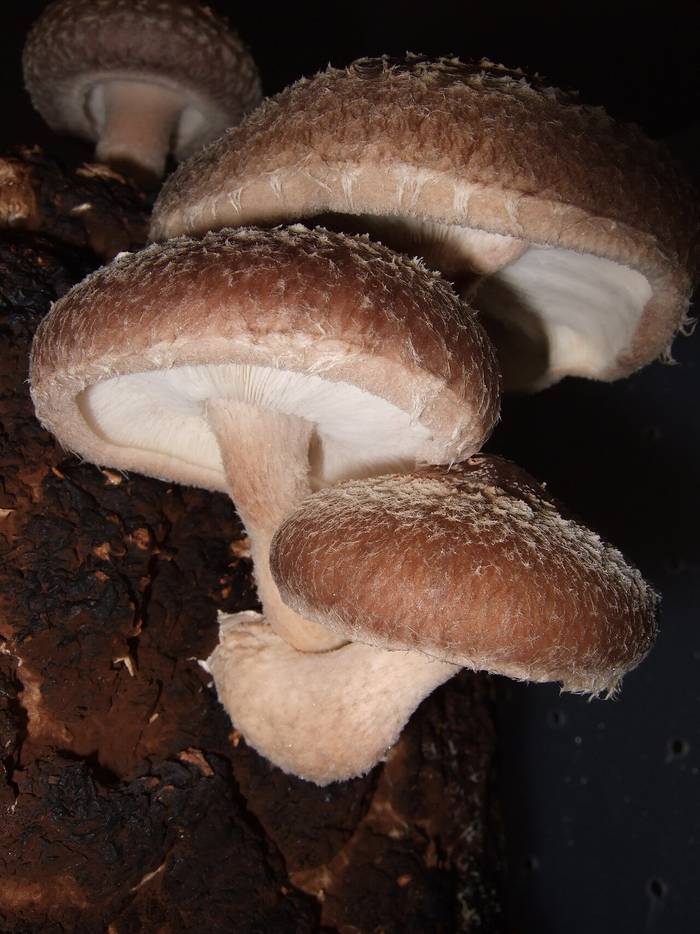
frankenstoen from Portland, Oregon · CC BY 2.0
Shiitake
Fungi·Lentinula edodes
Not recorded
Sun
Not recorded
Water
Not recorded
Drainage
Not recorded
Hardiness
Coverage · 105 fields
No obvious inconsistencies found.
Growth and size10 fields
Plant type
Fungus“is an edible mushroom native to East Asia and mainland Southeast Asia, which is cultivated and consumed around the globe.”
Height
10 cm
AI estimate75 % agree
Spread
10 cm
AI estimate58 % agree
Height at age
—
empty
Spacing
30 cm (at least 15 cm)
AI estimate55 % agree
Growth rate
—
empty
Habit
—
empty
Root depth
Shallow
AI estimate63 % agree
Forest garden layer
Fungal layer
AI estimate90 % agree
Lifespan
—
empty
Roots6 fields
Root form
—
empty
Storage organ
—
empty
Spreads
—
empty
Lateral spread in cm
—
empty
Root depth in cm
—
empty
Mycorrhiza
—
empty
Light, water and soil9 fields
Sun
—
empty
Hours of sun
—
empty
Water
—
empty
Drought tolerant
—
empty
Tolerates waterlogging
—
empty
Soil type
—
empty
pH
—
empty
Drainage
Not applicable
AI estimatenot measured yet
Compacted soil
Copes badly
AI estimatenot measured yet
Climate5 fields
Hardiness
—
empty
Killing frost
—
empty
Growing temperature
—
empty
Chill hours
—
empty
Native range
—
empty
Care (becomes tasks in Manage)3 fields
Sowing
March · lasts 60 days
AI estimatenot measured yet
Watering
After the previous stage · -7 days after · lasts 30 days
AI estimatenot measured yet
Protection
Above 0 °C · lasts 180 days · frost
AI estimatenot measured yet
Through the year4 fields
Leafing out
Above 10 °C · After rain · lasts 7 days
AI estimatenot measured yet
Fruiting
Above 10 °C · After rain · 7 days after · lasts 14 days
AI estimatenot measured yet
Harvest
After the previous stage · 7 days after · lasts 7 days
AI estimatenot measured yet
Dormant
Above 25 °C · lasts 180 days
AI estimatenot measured yet
Edible parts and pollination3 fields
Fruiting body
Soups, braises and stir-fried dishes“Rarely, consumption of raw or slightly cooked shiitake mushrooms may cause an allergic reaction called "shiitake dermatitis"”Wikipedia“In Chinese cuisine, they are used in many dishes, including soups, braises, and stir-fried vegetable dishes such as Buddha's delight.”
Pollination
—
empty
Pollinated by
—
empty
Ecology6 fields
Attracts
—
empty
Pests
Fungus gnats, mites
AI estimatenot measured yet
Diseases
Green mold (trichoderma spp.)
AI estimatenot measured yet
Takes up
—
empty
Fixes nitrogen
No
AI estimatenot measured yet
Mycorrhiza
No
AI estimatenot measured yet
Propagation and names4 fields
Methods
Cut logs placed beside trees already growing shiitake or carrying spores, artificial substrate or hardwood logs such as oak“The Japanese cultivated the mushroom by cutting shii trees with axes and placing the logs by trees that were already growing shiitake or contained shiitake spores.”Wikipedia“Commercially, shiitake mushrooms are typically grown in conditions similar to their natural environment on either artificial substrate or hardwood logs, such as oak.”
Difficulty
3 / 5
AI estimatenot measured yet
Seed
not_applicable
AI estimatenot measured yet
Not sorted yet55 fields
Fields the parser stores that this page has no row for yet. They show up here automatically, so nothing is hidden.
forage.DK.local_name
Shiitake
AI estimatenot measured yet
forage.DK.prep_cautions
Thorough cooking may eliminate the allergenicity.“Thorough cooking may eliminate the allergenicity.”
forage.DK.edibility_basis
inferred
AI estimatenot measured yet
forage.DK.foraging_months.notes
Primarily autumn, but can fruit in late summer under ideal conditions.
AI estimatenot measured yet
forage.DK.foraging_months.months
8, 9, 10
AI estimatenot measured yet
forage.DK.foraging_months.year_round
false
AI estimatenot measured yet
forage.DK.habitat_affinity
woodland“Shiitake grow in groups on the decaying wood of deciduous trees, particularly shii and other chinquapins, chestnut, oak, maple, beech, sweetgum, poplar, hornbeam, ironwood, and mulberry.”
Wikipediapartly
forage.US.local_name
Shiitake
AI estimatenot measured yet
forage.US.edible_parts
[{"part":"fruiting body","caution":"Raw or slightly cooked shiitake may cause an allergic reaction called shiitake dermatitis.","preparation":"soups, braises and stir-fried dishes"}]“Rarely, consumption of raw or slightly cooked shiitake mushrooms may cause an allergic reaction called "shiitake dermatitis"”Wikipedia“In Chinese cuisine, they are used in many dishes, including soups, braises, and stir-fried vegetable dishes such as Buddha's delight.”
forage.US.prep_cautions
Thorough cooking may eliminate the allergenicity.“Thorough cooking may eliminate the allergenicity.”
forage.US.edibility_basis
inferred
AI estimatenot measured yet
forage.US.foraging_months.notes
Primarily autumn, but can fruit in late summer under ideal conditions.
AI estimatenot measured yet
forage.US.foraging_months.months
8, 9, 10
AI estimatenot measured yet
forage.US.foraging_months.year_round
false
AI estimatenot measured yet
forage.US.habitat_affinity
woodland“Shiitake grow in groups on the decaying wood of deciduous trees, particularly shii and other chinquapins, chestnut, oak, maple, beech, sweetgum, poplar, hornbeam, ironwood, and mulberry.”
Wikipediapartly
forage.TROPICAL.local_name
Shiitake
AI estimatenot measured yet
forage.TROPICAL.edible_parts
[{"part":"fruiting body","caution":"Raw or slightly cooked shiitake may cause an allergic reaction called shiitake dermatitis.","preparation":"soups, braises and stir-fried dishes"}]“Rarely, consumption of raw or slightly cooked shiitake mushrooms may cause an allergic reaction called "shiitake dermatitis"”Wikipedia“In Chinese cuisine, they are used in many dishes, including soups, braises, and stir-fried vegetable dishes such as Buddha's delight.”
forage.TROPICAL.prep_cautions
Thorough cooking may eliminate the allergenicity.“Thorough cooking may eliminate the allergenicity.”
forage.TROPICAL.edibility_basis
inferred
AI estimatenot measured yet
forage.TROPICAL.foraging_months.notes
Cultivated year-round in controlled tropical environments; wild foraging less common.
AI estimatenot measured yet
forage.TROPICAL.foraging_months.year_round
true
AI estimatenot measured yet
forage.TROPICAL.habitat_affinity
tropical_forest“Shiitake grow in groups on the decaying wood of deciduous trees, particularly shii and other chinquapins, chestnut, oak, maple, beech, sweetgum, poplar, hornbeam, ironwood, and mulberry.”
Wikipediapartly
ornamental.basis
taxonomic
AI estimatenot measured yet
ornamental.confidence
high
AI estimatenot measured yet
ornamental.flower_colour
none
AI estimate67 % agree
ornamental.foliage_colour
none
AI estimate82 % agree
ornamental.winter_structure
none
AI estimatenot measured yet
ornamental.autumn_foliage_colour
none
AI estimatenot measured yet
care_regime
none
AI estimatenot measured yet
cultivation.substrate
hardwood logs, artificial substrate“Commercially, shiitake mushrooms are typically grown in conditions similar to their natural environment on either artificial substrate or hardwood logs, such as oak.”
cultivation.fruiting_temp_c.max
20
AI estimatenot measured yet
cultivation.fruiting_temp_c.min
10
AI estimatenot measured yet
cultivation.fruiting_trigger
temperature_drop
AI estimatenot measured yet
cultivation.incubation_temp_c.max
25
AI estimatenot measured yet
cultivation.incubation_temp_c.min
20
AI estimatenot measured yet
propagation.self_seeding
moderate
AI estimate20 % agree
propagation.division_season
not_applicable
AI estimatenot measured yet
propagation.establishment_years
1
AI estimate40 % agree
nutrition_mode
saprotroph“Shiitake grow in groups on the decaying wood of deciduous trees, particularly shii and other chinquapins, chestnut, oak, maple, beech, sweetgum, poplar, hornbeam, ironwood, and mulberry.”
Wikipediapartly
forage_proposals.DK.edibility_tier.tier
choice
AI estimatenot measured yet
forage_proposals.DK.edibility_tier.confidence
high
AI estimatenot measured yet
forage_proposals.DK.edibility_tier.evidence_quote
Shiitake mushrooms are widely cultivated and highly prized for their culinary value and umami flavor, considered a choice edible.
AI estimatenot measured yet
forage_proposals.US.edibility_tier.tier
choice
AI estimatenot measured yet
forage_proposals.US.edibility_tier.confidence
high
AI estimatenot measured yet
forage_proposals.US.edibility_tier.evidence_quote
Shiitake mushrooms are widely cultivated and highly prized for their culinary value and umami flavor, considered a choice edible.
AI estimatenot measured yet
forage_proposals.TROPICAL.edibility_tier.tier
choice
AI estimatenot measured yet
forage_proposals.TROPICAL.edibility_tier.confidence
high
AI estimatenot measured yet
forage_proposals.TROPICAL.edibility_tier.evidence_quote
Shiitake mushrooms are widely cultivated and highly prized for their culinary value and umami flavor, considered a choice edible.
AI estimatenot measured yet
function_profile.biomass_return.confidence
high
AI estimatenot measured yet
function_profile.biotic_interactions
[{"taxa":["fungus gnats","mites"],"basis":"documented","valence":"harmful","relation":"hosts","confidence":"high","organism_group":"pest_insect","ecological_function":"herbivory"},{"taxa":["green mold (Trichoderma spp…
AI estimatenot measured yet
function_profile.aromatic_pest_effect.value
false
AI estimate80 % agree
function_profile.aromatic_pest_effect.confidence
low
AI estimatenot measured yet
soil_interactions.organic_matter_contribution
high
AI estimatenot measured yet
resource_interfaces.inputs
[{"resource":"organic_matter","quantity_description":"decaying wood of deciduous trees such as oak, beech, chestnut and maple; commercially, artificial substrate or hardwood logs"},{"resource":"water","quantity_descri…“Shiitake grow in groups on the decaying wood of deciduous trees, particularly shii and other chinquapins, chestnut, oak, maple, beech, sweetgum, poplar, hornbeam, ironwood, and mulberry.”Wikipedia“Its natural distribution includes warm and moist climates in Southeast Asia.”
resource_interfaces.outputs
[{"resource":"spores","quantity_description":"spores in colonised logs used to inoculate new logs"},{"resource":"fruit","quantity_description":"edible fruiting bodies (mushrooms)"}]“is an edible mushroom native to East Asia and mainland Southeast Asia, which is cultivated and consumed around the globe.”Wikipediapartly“The Japanese cultivated the mushroom by cutting shii trees with axes and placing the logs by trees that were already growing shiitake or contained shiitake spores.”