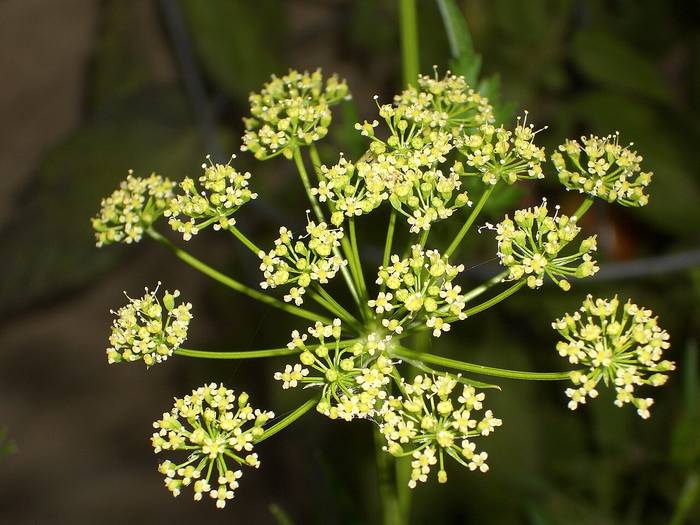
H. Zell · CC BY-SA 3.0
Parsley
Plant·Petroselinum crispum
Part shade to full sun
Sun
Moist soil
Water
Well-drained soil
Drainage
Zones 4–9
Hardiness
Coverage · 118 fields
- Parser flag (hardiness_zone_implausible): Hardiness zones 2-11 are too broad for a biennial herb like parsley, which is typically grown as an annual in colder zones and struggles in extreme heat. The killing temperature of 0C also contradicts zone 2.
- Sowing appears 2 times with different timing.
- Mulching appears 2 times with different timing.
Growth and size10 fields
Plant type
Plant
AI estimate100 % agree
Height
60 cm · other sources: 75 cm“Petroselinum crispum is a BIENNIAL growing to 0.6 m (2ft) by 0.3 m (1ft in) at a medium rate.”Wikipedia“In the second year, it grows a flowering stem to 75 cm (30 in) tall”
Spread
30 cm“Petroselinum crispum is a BIENNIAL growing to 0.6 m (2ft) by 0.3 m (1ft in) at a medium rate.”
Height at age
—
empty
Spacing
10 cm (at least 15 cm)“Typically, plants grown for the leaf crop are spaced 10 cm (3.9 in) apart”
Growth rate
Medium“Petroselinum crispum is a BIENNIAL growing to 0.6 m (2ft) by 0.3 m (1ft in) at a medium rate.”
Forest garden layer
Herb layer
AI estimate90 % agree
Lifespan
~2 years
AI estimatenot measured yet
Roots6 fields
Storage organ
None“It does not multiply vegetatively: it has no rhizomes, runners, suckers or offspring bulbs or tubers.”
Spreads
No“It does not multiply vegetatively: it has no rhizomes, runners, suckers or offspring bulbs or tubers.”
Lateral spread in cm
—
empty
Root depth in cm
—
empty
Mycorrhiza
Arbuscular (AM)
AI estimatenot measured yet
Light, water and soil9 fields
Sun
Full sun, light shade, part shade · best: full sun“It can grow in semi-shade (light woodland) or no shade.”
Hours of sun
4–6 h
AI estimatenot measured yet
Water
Moist · best: moist · Medium · 2–4 l/day“Parsley grows best in moist, well-drained soil, with full sun.”PFAF“It prefers moist soil.”
Drought tolerant
—
empty
Tolerates waterlogging
—
empty
Soil type
Sand, loam, clay“Suitable for: light (sandy), medium (loamy) and heavy (clay) soils and prefers well-drained soil.”
Compacted soil
Copes badly
AI estimatenot measured yet
Climate5 fields
Hardiness
Zone 4–9“Petroselinum crispum, commonly known as parsley, is generally suited to USDA Hardiness Zones 4 through 9.”
Killing frost
0 °C“Killing temp. early growth: 0”EcoCrop's figure is frost during early growth (spring frost on new shoots), not winter cold.
Growing temperature
7–28 °C · optimal 11–20 °C“Temperature absolute min: 7 · Temperature absolute max: 28 · Temperature optimal min: 11 · Temperature optimal max: 20”
Chill hours
0 h
AI estimatenot measured yet
Care (becomes tasks in Manage)9 fields
Sowing
After the last frost“Typically, plants grown for the leaf crop are spaced 10 cm (3.9 in) apart, while those grown as a root crop are spaced 20 cm (7.9 in) apart to allow for the root development.”
Sowing appears 2 times with different timing.
Wikipediapartly
Sowing
July“the third is also made in situ outdoors, this time in mid to late summer”
Sowing appears 2 times with different timing.
PFAFpartly
Protection
After the first frost · frost“By moving some plants into a protected area such as a greenhouse in the winter, or by putting a frame around them, leaves can usually be made available all winter.”
Mulching
After the first frost“In Zones 6–9, parsley can overwinter outdoors and return in the spring, especially with a bit of mulch for protection.”
Mulching appears 2 times with different timing.
PFAFpartly
Watering
June · lasts 90 days
AI estimatenot measured yet
Feeding
May · lasts 30 days · a balanced liquid feed
AI estimatenot measured yet
Mulching
April · lasts 30 days
Mulching appears 2 times with different timing.
AI estimatenot measured yet
Through the year6 fields
Harvest
After the previous stage · lasts 180 days“The leaves should be harvested regularly in order to encourage fresh growth and get maximum yields.”
Edible parts and pollination4 fields
Root (Hamburg parsley)
Used as a snack or a vegetable in many soups, stews, and casseroles“Root parsley is very common in Central, Eastern, and Southern European cuisines, where it is used as a snack or a vegetable in many soups, stews, and casseroles, and as ingredient for broth.”
Pollination
Self-fertile · hermaphrodite“The species is hermaphrodite (has both male and female organs) and is pollinated by Insects.”PFAF“The plant is self-fertile.”
Pollinated by
Insects“The species is hermaphrodite (has both male and female organs) and is pollinated by Insects.”
Ecology5 fields
Attracts
Pests
—
empty
Diseases
Fungal diseases“However the curly leaves tend to hold on to surface water and so they are more likely to contract fungal diseases in the winter.”
Takes up
Potassium, manganese, calcium
AI estimatenot measured yet
Fixes nitrogen
No
AI estimatenot measured yet
Propagation and names4 fields
Difficulty
2 / 5
AI estimatenot measured yet
Seed
none
AI estimatenot measured yet
Not sorted yet60 fields
Fields the parser stores that this page has no row for yet. They show up here automatically, so nothing is hidden.
forage.DK.local_name
Persille
AI estimatenot measured yet
forage.DK.warnings_da
Frøene er giftige., Bør ikke spises under graviditet.
AI estimatenot measured yet
forage.DK.warnings_en
The seeds are poisonous., Don't eat during pregnancy.
AI estimatenot measured yet
forage.DK.prep_cautions
Great care should be exercised if harvesting the plant from the wild., Avoid during pregnancy as parsley fruit associated with abortions., Avoid with kidney disease., Avoid with oedema as may cause sodium and water retention., However, seeds are toxic (containing high quantities of the compound apiol) and therefore their use should be avoided.“Great care should be exercised if harvesting the plant from the wild.”PFAF“Avoid during pregnancy as parsley fruit associated with abortions.”PFAF“Avoid with kidney disease.”PFAF“Avoid with oedema as may cause sodium and water retention.”Wikipedia“However, seeds are toxic (containing high quantities of the compound apiol) and therefore their use should be avoided.”
forage.DK.edibility_basis
inferred
AI estimatenot measured yet
forage.DK.foraging_months.notes
Can be harvested year-round in mild climates or if protected.
AI estimatenot measured yet
forage.DK.foraging_months.months
4, 5, 6, 7, 8, 9, 10
AI estimatenot measured yet
forage.DK.foraging_months.year_round
false
AI estimatenot measured yet
forage.DK.habitat_affinity
disturbed_ground, verge“Grassy waste places on walls and rocks, especially on limestone and near the coast.”
PFAFpartly
forage.US.local_name
Parsley
AI estimatenot measured yet
forage.US.edible_parts
[{"part":"leaves","caution":null,"preparation":"raw or cooked"}]“Leaves - raw or cooked.”
forage.US.prep_cautions
Great care should be exercised if harvesting the plant from the wild., However, seeds are toxic (containing high quantities of the compound apiol) and therefore their use should be avoided.“Great care should be exercised if harvesting the plant from the wild.”Wikipedia“However, seeds are toxic (containing high quantities of the compound apiol) and therefore their use should be avoided.”
forage.US.edibility_basis
inferred
AI estimatenot measured yet
forage.US.foraging_months.notes
Can be harvested year-round in mild climates or if protected.
AI estimatenot measured yet
forage.US.foraging_months.months
4, 5, 6, 7, 8, 9, 10
AI estimatenot measured yet
forage.US.foraging_months.year_round
false
AI estimatenot measured yet
forage.US.habitat_affinity
disturbed_ground, verge
AI estimatenot measured yet
forage.TROPICAL.local_name
Perejil
AI estimatenot measured yet
forage.TROPICAL.edible_parts
[{"part":"leaves","caution":null,"preparation":"raw or cooked"}]“Leaves - raw or cooked.”
forage.TROPICAL.prep_cautions
Great care should be exercised if harvesting the plant from the wild.“Great care should be exercised if harvesting the plant from the wild.”
forage.TROPICAL.edibility_basis
inferred
AI estimatenot measured yet
forage.TROPICAL.foraging_months.notes
Grows year-round in tropical climates.
AI estimatenot measured yet
forage.TROPICAL.foraging_months.year_round
true
AI estimatenot measured yet
forage.TROPICAL.habitat_affinity
disturbed_ground
AI estimatenot measured yet
ornamental.basis
documented
AI estimatenot measured yet
ornamental.fragrance.intensity
moderate
AI estimatenot measured yet
ornamental.confidence
high
AI estimatenot measured yet
ornamental.flower_colour
yellow, green“numerous 2 mm diameter yellow to yellowish-green flowers”
ornamental.evidence_quote
Parsley has delicate, finely cut green leaves and produces small white flowers. The foliage has a distinct, moderate aroma. It does not exhibit significant autumn foliage color change and typically dies back in winter, offering no notable winter structure.
AI estimatenot measured yet
ornamental.foliage_colour
green“Garden parsley is a bright green, biennial plant in temperate climates”
ornamental.foliage_texture
fine
AI estimatenot measured yet
ornamental.winter_structure
none
AI estimatenot measured yet
ornamental.autumn_foliage_colour
none
AI estimatenot measured yet
care_regime
routine
AI estimatenot measured yet
propagation.self_seeding
moderate
AI estimate20 % agree
propagation.division_season
none
AI estimatenot measured yet
propagation.establishment_years
1
AI estimate40 % agree
sun_requirement.best
full_sun“Parsley grows best in moist, well-drained soil, with full sun.”
forage_proposals.DK.edibility_tier.tier
edible
AI estimatenot measured yet
forage_proposals.DK.edibility_tier.confidence
high
AI estimatenot measured yet
forage_proposals.DK.edibility_tier.evidence_quote
Parsley (Petroselinum crispum) is widely cultivated and consumed as a culinary herb, with its leaves and stems used in various dishes.
AI estimatenot measured yet
forage_proposals.US.edibility_tier.tier
edible
AI estimatenot measured yet
forage_proposals.US.edibility_tier.confidence
high
AI estimatenot measured yet
forage_proposals.US.edibility_tier.evidence_quote
Parsley (Petroselinum crispum) is a common culinary herb, with leaves and stems used fresh or dried in many cuisines.
AI estimatenot measured yet
forage_proposals.TROPICAL.edibility_tier.tier
edible
AI estimatenot measured yet
forage_proposals.TROPICAL.edibility_tier.confidence
high
AI estimatenot measured yet
forage_proposals.TROPICAL.edibility_tier.evidence_quote
In tropical regions, parsley is grown as a common herb and its leaves are used extensively in cooking.
AI estimatenot measured yet
function_profile.biomass_return.confidence
medium
AI estimatenot measured yet
function_profile.nutrient_flows.consumes
[{"basis":"documented","demand":"moderate","nutrient":"nitrogen","confidence":"high"},{"basis":"documented","demand":"moderate","nutrient":"phosphorus","confidence":"high"},{"basis":"documented","demand":"moderate","n…
AI estimatenot measured yet
function_profile.nutrient_flows.provides
[{"basis":"inferred","nutrient":"potassium","mechanism":"biomass_return","confidence":"low"},{"basis":"inferred","nutrient":"manganese","mechanism":"biomass_return","confidence":"low"},{"basis":"inferred","nutrient":"…
AI estimatenot measured yet
function_profile.biotic_interactions
[{"taxa":["bees","nectar-feeding insects"],"basis":"documented","valence":"beneficial","relation":"attracts","confidence":"high","evidence_quote":"Bees and other nectar-feeding insects also visit the flowers.","organi…“Bees and other nectar-feeding insects also visit the flowers.”PFAF“It is noted for attracting wildlife.”Wikipedia“Some swallowtail butterflies use parsley as a host plant for their larvae”PFAF“A good companion plant, especially for growing near roses, tomatoes, carrots, chives and asparagus, giving them all added vigour and protection against certain pests, especially carrot root fly and rose beetles.”PFAF“However the curly leaves tend to hold on to surface water and so they are more likely to contract fungal diseases in the winter.”
function_profile.aromatic_pest_effect.value
true“A good companion plant, repelling insects from nearby plants.”
PFAFpartly
function_profile.aromatic_pest_effect.confidence
medium
AI estimatenot measured yet
climate_tolerance.photoperiod_response
long_day
AI estimatenot measured yet
soil_interactions.organic_matter_contribution
medium
AI estimatenot measured yet
component_metadata.growth_cycle
biennial“Petroselinum crispum is a BIENNIAL growing to 0.6 m (2ft) by 0.3 m (1ft in) at a medium rate.”
resource_interfaces.inputs
[{"resource":"light","quantity_description":"full sun to partial shade"},{"resource":"water","quantity_description":"moist soil"},{"resource":"pollination","quantity_description":"insect pollination"}]“It grows best in full sun to partial shade with moist, well-drained soil.”PFAF“It prefers moist soil.”PFAF“The species is hermaphrodite (has both male and female organs) and is pollinated by Insects.”
resource_interfaces.outputs
[{"resource":"nectar","quantity_description":"flowers visited by bees and other nectar-feeding insects"},{"resource":"habitat","quantity_description":"host plant for swallowtail butterfly larvae"},{"resource":"aromati…“Some swallowtail butterflies use parsley as a host plant for their larvae”PFAF“The leaves yields about 1% essential oil, whilst about 6% is obtained from the seed.”PFAF“It is in flower from June to August, and the seeds ripen from July to September.”PFAFpartly“A good bee plant.”
biotic_relationships.repels
carrot root fly, rose beetles“A good companion plant, especially for growing near roses, tomatoes, carrots, chives and asparagus, giving them all added vigour and protection against certain pests, especially carrot root fly and rose beetles.”