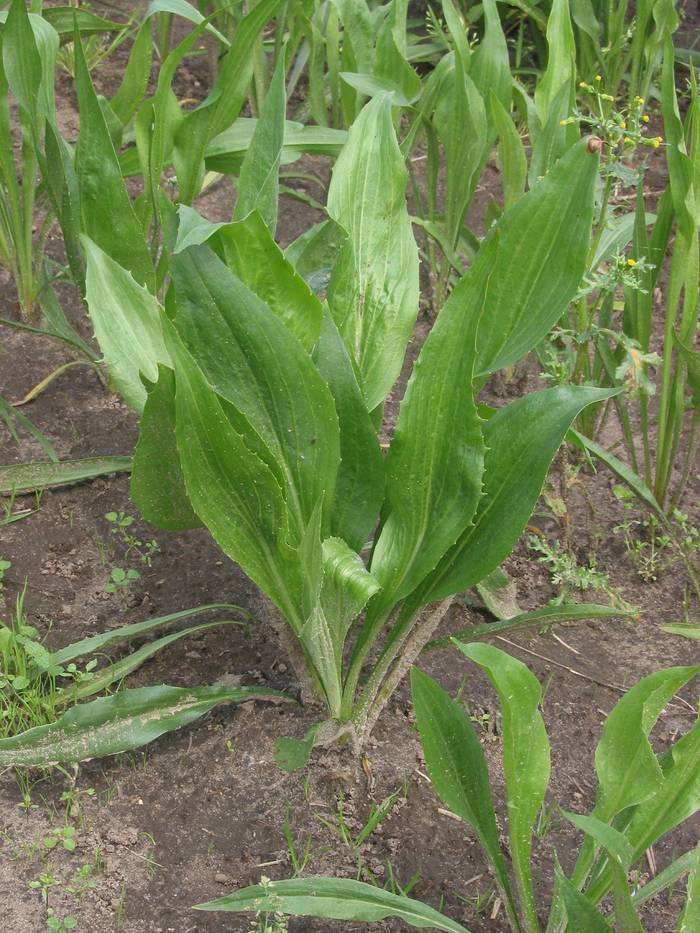
Rasbak · CC BY-SA 3.0
Black salsify
Plant·Scorzonera hispanica
Part shade to full sun
Sun
Moist soil
Water
Well-drained soil
Drainage
Zones 5–9
Hardiness
Coverage · 115 fields
- Parser flag (climate_tolerance_low_confidence): Climate tolerance values are LLM-extracted (no authoritative EcoCrop match found). EcoCrop covers ~2,568 food-crop taxa; ornamental/native/medicinal species rely on LLM extraction.
- Sowing appears 3 times with different timing.
Growth and size10 fields
Plant type
Plant“is a perennial species of plant in the sunflower family (Asteraceae)”
Wikipediapartly
Height
100 cm · other sources: 60 cm“Scorzonera hispanica is a PERENNIAL growing to 1 m (3ft 3in).”Wikipedia“After a vegetative phase in the first year, the plant flowers in its second year and can reach a height of 60 cm with a stem diameter of 5 cm.”
Spread
30 cm
AI estimate58 % agree
Height at age
—
empty
Spacing
50 cm (at least 30 cm)“The seeds are sown directly into shallow furrows at a depth of 1.5 – 2 cm with 30–50 cm in between them.”
Growth rate
—
empty
Habit
Vase-shaped
AI estimate50 % agree
Root depth
Taproot“The root pattern is a tap root similar to a carrot going directly down [1-2].”
Forest garden layer
Herb layer
AI estimate90 % agree
Lifespan
~5 years
AI estimatenot measured yet
Roots6 fields
Storage organ
None“It does not multiply vegetatively: it has no rhizomes, runners, suckers or offspring bulbs or tubers.”
Spreads
No“It does not multiply vegetatively: it has no rhizomes, runners, suckers or offspring bulbs or tubers.”
Lateral spread in cm
—
empty
Root depth in cm
—
empty
Mycorrhiza
—
empty
Light, water and soil9 fields
Sun
Full sun, light shade, part shade · best: full sun“It can grow in semi-shade (light woodland) or no shade.”PFAFpartly“Succeeds in any soil in sun or light shade.”
Hours of sun
6–8 h
AI estimatenot measured yet
Drought tolerant
—
empty
Tolerates waterlogging
—
empty
Soil type
Sand, loam, clay · best: sand“Suitable for: light (sandy), medium (loamy) and heavy (clay) soils and prefers well-drained soil.”Wikipediapartly“The roots develop best in very light textured, sandy soil.”
pH
5.5–8.5 · best 5.8–6.5“Ideal pH values are between 5.8 – 6.5 and liming is recommended for more acidic soils.”PFAF“Suitable pH: mildly acid, neutral and basic (mildly alkaline) soils.”
Drainage
Well drained“Suitable for: light (sandy), medium (loamy) and heavy (clay) soils and prefers well-drained soil.”
Compacted soil
Copes badly
AI estimatenot measured yet
Climate5 fields
Hardiness
Zone 5–9
AI estimatenot measured yet
Killing frost
-20 °C
AI estimatenot measured yet
Growing temperature
5–30 °C · optimal 15–25 °C
AI estimatenot measured yet
Chill hours
0 h
AI estimatenot measured yet
Native range
AD, AL, AT, BA, CZ, DE, ES, FR, GG, GI, GR, HR, HU, IT, JE, LI, MA, MC, ME, MK, NL, PL, PT, RO, RS, SI, SK, SM, TR, VA, XK
Care (becomes tasks in Manage)6 fields
Sowing
April“Scorzonera is sown in early spring, preferably at the end of April.”Wikipedia“The seeds are sown directly into shallow furrows at a depth of 1.5 – 2 cm with 30–50 cm in between them.”
Sowing appears 3 times with different timing.
Sowing
August“The seed can also be sown in situ in August.”
Sowing appears 3 times with different timing.
Dividing
After the last frost · After the first frost“Division in autumn or as growth commences in spring.”
Sowing
After the last frost · 14 days after · lasts 30 days
Sowing appears 3 times with different timing.
AI estimatenot measured yet
Watering
June · lasts 90 days
AI estimatenot measured yet
Mulching
May · lasts 30 days
AI estimatenot measured yet
Through the year6 fields
Flowering
June · lasts 122 days“It is in flower from June to September, and the seeds ripen from July to September.”
PFAFpartly
Fruiting
July · lasts 92 days“It is in flower from June to September, and the seeds ripen from July to September.”
Leafing out
After the last frost“The tender young shoots are usually eaten in early spring.”
PFAFpartly
Harvest
November · lasts 151 days“Harvesting takes place from November to March, with the optimum time for high quality being end of December.”
Dying back
After the first frost · lasts 30 days
AI estimatenot measured yet
Dormant
After the first frost · lasts 150 days
AI estimatenot measured yet
Edible parts and pollination8 fields
The roots
The leaves
Raw; tender young shoots in early spring · March–April“Leaves - raw. The tender young shoots are usually eaten in early spring.”
Flower buds
Raw, added to salads · June–September“Flower buds - raw. Added to salads.”PFAFpartly“It is in flower from June to September, and the seeds ripen from July to September.”
The flowers
Raw; petals added to salads · June–September“The petals have their own distinctive flavour and can also be added to salads.”PFAFpartly“It is in flower from June to September, and the seeds ripen from July to September.”
The young shoots
Flowering shoots eaten like asparagus“Flowering shoots are consumed similarly to asparagus and the flowers can be added to salads, together with brown seedlings or the long clumps of grass-like green leaves.”
Pollination
Self-fertile · hermaphrodite“The species is hermaphrodite (has both male and female organs) and is pollinated by Insects.”
Pollinated by
Insects“The species is hermaphrodite (has both male and female organs) and is pollinated by Insects.”
Ecology6 fields
Pests
Carrot rust fly (psila rosae), wireworms (selatosomus destructor and ctenicera pruinina), root knot nematode (meloidogyne incognita, m. javanica, m. hapla and m. arenaria)“Carrot rust fly (Psila rosae): The larvae or maggots of the carrot rust fly eat the plant roots and entrench themselves in the roots.”Wikipedia“Wireworms (Selatosomus destructor and Ctenicera pruinina): The wireworms are the larvae of click beetles, which remain in the larval stage for between 2–5 years.”Wikipedia“Root knot nematode (Meloidogyne incognita, M. javanica, M. hapla and M. arenaria): Can cause great damage to the roots of salsify.”
Diseases
Bacterial soft rot (bacillus carotovorus jones), white blister (albugo spp.)“Bacterial soft rot (Bacillus carotovorus Jones): The bacteria eat the root core.”Wikipedia“White blister (Albugo spp.): a leaf disease that favours wet weather.”
Takes up
Potassium, calcium, magnesium
AI estimatenot measured yet
Fixes nitrogen
No
AI estimatenot measured yet
Mycorrhiza
Yes
AI estimatenot measured yet
Propagation and names4 fields
Methods
Seed, division“Seed - sow spring in situ.”PFAF“Division in autumn or as growth commences in spring.”
Difficulty
2 / 5
AI estimatenot measured yet
Seed
not_required
AI estimatenot measured yet
Not sorted yet55 fields
Fields the parser stores that this page has no row for yet. They show up here automatically, so nothing is hidden.
forage.DK.local_name
Svartrod
AI estimatenot measured yet
forage.DK.prep_cautions
The thick black skin is usually considered inedible and can be removed before or after boiling., The root contains a sticky latex, so peeling after boiling for 20 to 25 minutes is often more convenient., If peeled before boiling, put the root straight into water with vinegar or lemon juice to prevent discolouring.“The thick black skin of the salsify root is usually considered inedible and can be removed either prior to or after boiling.”Wikipedia“Since the root contains an extremely sticky latex, it is often more convenient to peel it after boiling the root for 20 to 25 minutes (or less).”Wikipedia“If the skin is removed prior to boiling, the peeled root should be immediately immersed in water mixed with vinegar or lemon juice, in order to prevent discolouring.”
forage.DK.edibility_basis
inferred
AI estimatenot measured yet
forage.DK.foraging_months.notes
Roots are best harvested in autumn and winter; young leaves can be harvested throughout the growing season.“It is in flower from June to September, and the seeds ripen from July to September.”
PFAFpartly
forage.DK.foraging_months.months
1, 2, 3, 11, 12“Harvesting takes place from November to March, with the optimum time for high quality being end of December.”
forage.DK.foraging_months.year_round
true
AI estimatenot measured yet
forage.DK.habitat_affinity
disturbed_ground, verge“Cultivated ground, rocks and bushy places.”
PFAFpartly
forage.US.local_name
Scorzonera
AI estimatenot measured yet
forage.US.edible_parts
[{"part":"root","caution":"Inulin can cause flatulence in some people.","preparation":"cooked","season_months":[11,12,1,2,3]},{"part":"root","caution":null,"preparation":"roasted as a coffee substitute"},{"part":"leav…“Inulin can cause flatulence in some people[K].”PFAF“Root - cooked. A sweet agreeable flavour.”PFAF“The roasted root is used as a coffee substitute.”PFAF“Leaves - raw. The tender young shoots are usually eaten in early spring.”PFAF“Flower buds - raw. Added to salads.”PFAF“The petals have their own distinctive flavour and can also be added to salads.”Wikipedia“Flowering shoots are consumed similarly to asparagus and the flowers can be added to salads, together with brown seedlings or the long clumps of grass-like green leaves.”Wikipedia“Harvesting takes place from November to March, with the optimum time for high quality being end of December.”PFAFpartly“It is in flower from June to September, and the seeds ripen from July to September.”
forage.US.prep_cautions
The thick black skin is usually considered inedible and can be removed before or after boiling., The root contains a sticky latex, so peeling after boiling for 20 to 25 minutes is often more convenient., If peeled before boiling, put the root straight into water with vinegar or lemon juice to prevent discolouring.“The thick black skin of the salsify root is usually considered inedible and can be removed either prior to or after boiling.”Wikipedia“Since the root contains an extremely sticky latex, it is often more convenient to peel it after boiling the root for 20 to 25 minutes (or less).”Wikipedia“If the skin is removed prior to boiling, the peeled root should be immediately immersed in water mixed with vinegar or lemon juice, in order to prevent discolouring.”
forage.US.edibility_basis
inferred
AI estimatenot measured yet
forage.US.foraging_months.notes
Roots are best harvested in autumn and winter; young leaves can be harvested throughout the growing season.“It is in flower from June to September, and the seeds ripen from July to September.”
PFAFpartly
forage.US.foraging_months.months
1, 2, 3, 11, 12“Harvesting takes place from November to March, with the optimum time for high quality being end of December.”
forage.US.foraging_months.year_round
true
AI estimatenot measured yet
forage.US.habitat_affinity
disturbed_ground, verge“Cultivated ground, rocks and bushy places.”
PFAFpartly
forage.TROPICAL.edible_parts
[{"part":"root","caution":null,"preparation":"cooked","season_months":[10,11,12,1,2,3,4]},{"part":"leaves","caution":null,"preparation":"raw","season_months":[4,5,6,7,8,9]}]
AI estimatenot measured yet
forage.TROPICAL.prep_cautions
wash thoroughly to remove soil, peel roots before cooking
AI estimatenot measured yet
forage.TROPICAL.edibility_basis
inferred
AI estimatenot measured yet
forage.TROPICAL.foraging_months.notes
Roots are best harvested in cooler, drier periods; young leaves can be harvested throughout the growing season.
AI estimatenot measured yet
forage.TROPICAL.foraging_months.months
1, 2, 3, 4, 5, 6, 7, 8, 9, 10, 11, 12
AI estimatenot measured yet
forage.TROPICAL.foraging_months.year_round
true
AI estimatenot measured yet
forage.TROPICAL.habitat_affinity
disturbed_ground
AI estimatenot measured yet
ornamental.basis
documented
AI estimatenot measured yet
ornamental.confidence
high
AI estimatenot measured yet
ornamental.fall_interest
false
AI estimatenot measured yet
ornamental.flower_colour
yellow“The flower-head is terminal and consists of yellow ray florets.”
ornamental.evidence_quote
Scorzonera hispanica, commonly known as black salsify or Spanish salsify, produces yellow, dandelion-like flowers. Its foliage is green and it does not typically exhibit significant autumn colour.
AI estimatenot measured yet
ornamental.foliage_colour
green
AI estimate82 % agree
ornamental.foliage_texture
medium
AI estimatenot measured yet
ornamental.winter_structure
none
AI estimatenot measured yet
ornamental.autumn_foliage_colour
none
AI estimatenot measured yet
care_regime
light
AI estimatenot measured yet
propagation.self_seeding
light
AI estimate20 % agree
propagation.division_season
Division in autumn or as growth commences in spring.“Division in autumn or as growth commences in spring.”
propagation.establishment_years
1
AI estimate40 % agree
spatial_profile.canopy_density
medium
AI estimatenot measured yet
forage_proposals.DK.edibility_tier.tier
edible
AI estimatenot measured yet
forage_proposals.DK.edibility_tier.confidence
high
AI estimatenot measured yet
forage_proposals.DK.edibility_tier.evidence_quote
Scorzonera hispanica, commonly known as black salsify, is widely cultivated and consumed for its edible roots and young shoots. The roots are often prepared like parsnips or carrots, and the young shoots can be used in salads or cooked.
AI estimatenot measured yet
forage_proposals.US.edibility_tier.tier
edible
AI estimatenot measured yet
forage_proposals.US.edibility_tier.confidence
high
AI estimatenot measured yet
forage_proposals.US.edibility_tier.evidence_quote
Scorzonera hispanica, also known as Spanish salsify, is a well-known edible plant in the US, primarily grown for its taproots which are used as a vegetable. The young leaves and flower stalks are also consumed.
AI estimatenot measured yet
forage_proposals.TROPICAL.edibility_tier.confidence
low
AI estimatenot measured yet
function_profile.biomass_return.confidence
medium
AI estimatenot measured yet
function_profile.nutrient_flows.consumes
[{"basis":"documented","demand":"moderate","nutrient":"nitrogen","confidence":"high"},{"basis":"documented","demand":"moderate","nutrient":"phosphorus","confidence":"high"},{"basis":"documented","demand":"moderate","n…
AI estimatenot measured yet
function_profile.nutrient_flows.provides
[{"basis":"inferred","nutrient":"potassium","mechanism":"mineral_extraction","confidence":"low"},{"basis":"inferred","nutrient":"calcium","mechanism":"mineral_extraction","confidence":"low"},{"basis":"inferred","nutri…
AI estimatenot measured yet
function_profile.biotic_interactions
[{"taxa":["insects"],"basis":"documented","valence":"beneficial","relation":"attracts","confidence":"medium","evidence_quote":"The hermaphroditic flowers are insect-pollinated.","organism_group":"pollinator","ecologic…“The hermaphroditic flowers are insect-pollinated.”Wikipedia“Carrot rust fly (Psila rosae): The larvae or maggots of the carrot rust fly eat the plant roots and entrench themselves in the roots.”Wikipedia“Wireworms (Selatosomus destructor and Ctenicera pruinina): The wireworms are the larvae of click beetles, which remain in the larval stage for between 2–5 years.”Wikipedia“Root knot nematode (Meloidogyne incognita, M. javanica, M. hapla and M. arenaria): Can cause great damage to the roots of salsify.”Wikipedia“Bacterial soft rot (Bacillus carotovorus Jones): The bacteria eat the root core.”Wikipedia“White blister (Albugo spp.): a leaf disease that favours wet weather.”PFAF“The growing plant is said to repel carrot root fly from carrots growing nearby.”
function_profile.aromatic_pest_effect.value
false
AI estimate80 % agree
function_profile.aromatic_pest_effect.confidence
high
AI estimatenot measured yet
climate_tolerance.photoperiod_response
long_day
AI estimatenot measured yet
soil_interactions.organic_matter_contribution
medium
AI estimatenot measured yet
component_metadata.growth_cycle
perennial“Scorzonera hispanica is a PERENNIAL growing to 1 m (3ft 3in).”
resource_interfaces.inputs
[{"resource":"light","quantity_description":"full sun or light shade"},{"resource":"water","quantity_description":"moist soil"},{"resource":"pollination","quantity_description":"insect-pollinated"}]“Succeeds in any soil in sun or light shade.”PFAF“It prefers moist soil.”Wikipedia“The hermaphroditic flowers are insect-pollinated.”
resource_interfaces.outputs
[{"resource":"seeds","quantity_description":"seeds ripen July to September"}]“It is in flower from June to September, and the seeds ripen from July to September.”
biotic_relationships.repels
carrot root fly“The growing plant is said to repel carrot root fly from carrots growing nearby.”