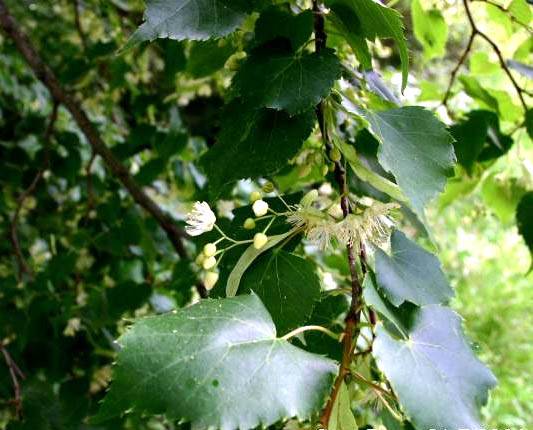
JoJan · CC BY-SA 3.0
small-leaved lime
Tree·Tilia cordata
Part shade to full sun
Sun
Moist soil
Water
Not recorded
Drainage
Zones 3–7
Hardiness
Coverage · 119 fields
No obvious inconsistencies found.
Growth and size11 fields
Plant type
Deciduous tree“Tilia cordata, the small-leaved lime or small-leaved linden, is a species of tree in the family Malvaceae, native to much of Europe.”PFAF“Tilia cordata is a deciduous Tree growing to 30 m (98ft) by 12 m (39ft) at a medium rate.”
Height
3,000 cm · the source gives 3,000–4,000 cm“Both species can reach 30-40 m in height with straight trunks up to around 1 m in diameter which are largely free of suckers and epicormic growth, unlike their hybrid Tilia x europaea (common lime).”PFAF“Tilia cordata is a deciduous Tree growing to 30 m (98ft) by 12 m (39ft) at a medium rate.”
Spread
1,200 cm“Tilia cordata is a deciduous Tree growing to 30 m (98ft) by 12 m (39ft) at a medium rate.”
Height at age
—
empty
Size after planting
3 yrs: 5 m tall, 1 m crown · 12 yrs: 6 m tall, 3 m crown · 17 yrs: 8 m tall, 4 m crown · 35 yrs: 12 m tall, 7 m crown · 73 yrs: 17 m tall, 10 m crown“Berlin tree register: 56656 trees of this species measured with years since planting, height and crown diameter; median crown 10.0 m and height 17.0 m at 60–100 years after planting (15531 trees).”Median of 56,656 measured trees in Berlin. Years count from planting nursery stock, so a small tree reaches each size later.
Spacing
1,000 cm (at least 800 cm)
AI estimate55 % agree
Growth rate
Medium“Tilia cordata is a deciduous Tree growing to 30 m (98ft) by 12 m (39ft) at a medium rate.”
Habit
Vase-shaped
AI estimate50 % agree
Root depth
Deep
AI estimate63 % agree
Forest garden layer
Canopy
AI estimate90 % agree
Lifespan
~1,000 years“They are long-lived, able to survive more than 1 000 years even if coppiced.”
Roots6 fields
Root form
—
empty
Storage organ
None
AI estimate100 % agree
Lateral spread in cm
—
empty
Root depth in cm
—
empty
Mycorrhiza
—
empty
Light, water and soil9 fields
Sun
Full sun, light shade, part shade · best: full sun“Succeeds in sun or semi-shade.”PFAF“It can grow in semi-shade (light woodland) or no shade.”
Hours of sun
6–8 h
AI estimatenot measured yet
Drought tolerant
—
empty
Tolerates waterlogging
Yes“The tree prefers moist, well drained soil, but can survive flooding; it is not highly drought tolerant.”
Soil type
Sand, loam, clay · best: loam“Prefers a good moist loamy alkaline to neutral soil but it also succeeds on slightly acid soils.”Wikipedia“The trees favour good, loamy sites, but can also be found on sandy, infertile soils, and are not thought to be drought resistant.”PFAF“Suitable for: light (sandy), medium (loamy) and heavy (clay) soils and prefers well-drained soil.”
pH
5–8“Tilia cordata survives best in a soil pH range of 5.0 to 8.0.”PFAF“Suitable pH: mildly acid, neutral and basic (mildly alkaline) soils.”
Drainage
Moist, well drained“The tree prefers moist, well drained soil, but can survive flooding; it is not highly drought tolerant.”
Compacted soil
Copes fairly well
AI estimatenot measured yet
Climate5 fields
Killing frost
-34 °C“Dormant shoots of Tilia cordata can resist winter frost temperatures as low as −34 °C (−29 °F).”
Growing temperature
5–28 °C · optimal 12–22 °C“Temperature absolute min: 5 · Temperature absolute max: 28 · Temperature optimal min: 12 · Temperature optimal max: 22”
Chill hours
1,000 h
AI estimatenot measured yet
Native range
AD, AL, AM, AT, AZ, BA, BE, BG, BY, CH, CZ, DE, DK, EE, ES, FI, FR, GB, GE, GG, GI, GR, HR, HU, IR, IT, JE, KZ, LI, LT, LU, LV, MC, MD, ME, MK, NL, NO, PL, RO, RS, RU, SE, SI, SK, SM, TR, UA, VA, XK
Care (becomes tasks in Manage)2 fields
Pruning
November · lasts 30 days · dead, diseased, or crossing branches
AI estimatenot measured yet
Mulching
March · lasts 14 days
AI estimatenot measured yet
Through the year6 fields
Leafing out
After the last frost · lasts 30 days“Neither species is much affected by spring nor autumn frosts, as flushing is relatively late and buds set early.”
JRC forest tree atlaspartly
Fruiting
October · lasts 31 days“It is in flower from June to July, and the seeds ripen in October.”
Harvest
After the last frost · lasts 150 days“The leaves can be available from spring until early autumn from the young growths at the base of the tree”
Dying back
After the first frost · lasts 30 days“however leaf scorch is not a long-term problem as the leaves are lost in the autumn.”
Dormant
After the first frost · 30 days after · lasts 150 days
AI estimatenot measured yet
Edible parts and pollination6 fields
The leaves
Raw, as a salad or sandwich filling · March–September“Young leaves - raw. They make an excellent salad or sandwich filling, they are mild tasting and somewhat mucilaginous[K].”PFAF“The leaves can be available from spring until early autumn from the young growths at the base of the tree[K].”
The flowers
The sap
Drink, or concentrated into a syrup · March–May“Sap - harvested in the spring, it is sweet and can be used as a drink or concentrated into a syrup.”
Flowers and immature fruit
Ground to a paste as a chocolate substitute“A very acceptable chocolate substitute can be made from a paste of the ground-up flowers and immature fruit.”PFAF“Trials on marketing the product failed because the paste is very apt to decompose.”
Pollination
Self-fertile · hermaphrodite“The species is hermaphrodite (has both male and female organs) and is pollinated by Bees.”JRC forest tree atlas“The white or pale flowers, which are insect-pollinated, are fragrant and occur in clusters of 4 to 5.”
Pollinated by
Bees, insects“The species is hermaphrodite (has both male and female organs) and is pollinated by Bees.”JRC forest tree atlas“The white or pale flowers, which are insect-pollinated, are fragrant and occur in clusters of 4 to 5.”
Ecology6 fields
Attracts
Bees, wildlife“A very valuable bee plant, producing an abundance of nectar.”PFAF“It is noted for attracting wildlife.”
Pests
Aphids, japanese beetles, lace bugs, linden jewel beetles, gypsy moth (lymantria dispar), stigmella tiliae (leaf-miner), mimas tiliae (lime hawk-moth), bank voles, cattle“The leaves are very attractive to leaf aphis and these aphis produce an abundance of sweet secretions which drip off the leaves to the ground below and also attract sooty mould fungus.”Wikipedia“Pests include Japanese beetles, aphids, lace bugs, linden jewel beetles, and various species of moths, such as Lymantria dispar dispar (Gypsy moth).”JRC forest tree atlas“Invertebrates to which limes play host include Stigmella tiliae, a leaf-miner; the lime hawk-moth, Mimas tiliae; and Eriophyes tiliae, the lime nail gall.”JRC forest tree atlas“Natural regeneration of limes rarely persists long, as it is very palatable to small browsing mammals, such as bank voles.”JRC forest tree atlas“Mature trees may have their bark stripped by browsing cattle.”
Diseases
Phytophthora plurivora, phytophthora cactorum, phytophthora citricola, sooty mould fungus (on aphid honeydew)“T. cordata is sensitive to Phytophthora plurivora.”JRC forest tree atlas“Bleeding stem cankers caused by Phytophthora cactorum and Phytophthora citricola have been recorded on limes.”JRC forest tree atlas“Aphids can be a problem, but to a much lesser extent with T. cordata and T. platyphyllos than with common lime: in severe infestations the honeydew dripping onto lower leaves allows sooty moulds to grow, blocking light from reaching the leaf surface.”
Takes up
—
empty
Fixes nitrogen
No
AI estimatenot measured yet
Mycorrhiza
Yes
AI estimatenot measured yet
Propagation and names4 fields
Methods
Seed, layering, sucker removal“Seed - much of the seed produced in Britain is not viable, cut a few seedcases open to see if there is a seed inside.”PFAF“Layering in spring just before the leaves unfurl.”PFAF“Suckers, when formed, can be removed with as much root as possible during the dormant season and replanted immediately.”
Difficulty
3 / 5
AI estimatenot measured yet
Seed
5 months at high temperatures (10°c at night, up to 30°c by day), then 5 months cold stratification“One way of shortening this time is to stratify the seed for 5 months at high temperatures (10°c at night, up to 30°c by day) and then 5 months cold stratification.”
Not sorted yet64 fields
Fields the parser stores that this page has no row for yet. They show up here automatically, so nothing is hidden.
forage.DK.local_name
Skov-lind
AI estimatenot measured yet
forage.DK.warnings_da
Brug kun unge blomster, for gamle kan virke bedøvende.
AI estimatenot measured yet
forage.DK.warnings_en
Use only young flowers, as old ones can have a narcotic effect.
AI estimatenot measured yet
forage.DK.prep_cautions
Use young flowers only; old flowers may cause symptoms of narcotic intoxication.“If the flowers used for making tea are too old, they may produce symptoms of narcotic intoxication.”
forage.DK.edibility_basis
inferred
AI estimatenot measured yet
forage.DK.foraging_months.notes
Young leaves in spring, flowers in early summer.
AI estimatenot measured yet
forage.DK.foraging_months.months
3, 4, 5, 6, 7, 8, 9“The leaves can be available from spring until early autumn from the young growths at the base of the tree[K].”
forage.DK.foraging_months.year_round
false
AI estimatenot measured yet
forage.DK.habitat_affinity
woodland“Woods on most fertile soils, especially limestone, it is commonly found on wooded limestone cliffs.”
forage.US.local_name
Littleleaf linden
AI estimatenot measured yet
forage.US.edible_parts
[{"part":"leaves","caution":"Best when young and tender.","preparation":"raw or cooked","season_months":[4,5,6]},{"part":"flowers","caution":null,"preparation":"raw or cooked, tea","season_months":[6,7]}]
AI estimatenot measured yet
forage.US.edibility_basis
inferred
AI estimatenot measured yet
forage.US.foraging_months.notes
Young leaves in spring, flowers in early summer.
AI estimatenot measured yet
forage.US.foraging_months.months
4, 5, 6, 7
AI estimatenot measured yet
forage.US.foraging_months.year_round
false
AI estimatenot measured yet
forage.US.habitat_affinity
woodland, hedgerow, verge
AI estimatenot measured yet
forage.TROPICAL.edibility_basis
inferred
AI estimatenot measured yet
forage.TROPICAL.foraging_months.year_round
false
AI estimatenot measured yet
ornamental.basis
documented
AI estimatenot measured yet
ornamental.confidence
high
AI estimatenot measured yet
ornamental.fall_interest
true
AI estimatenot measured yet
ornamental.evidence_quote
Tilia cordata produces fragrant, creamy-yellow flowers in summer, followed by dark green leaves that turn yellow-green in autumn. The tree has an attractive architectural form in winter.
AI estimatenot measured yet
ornamental.foliage_colour
dark_green“a dark green shiny upper surface with the underside paler”
ornamental.foliage_texture
medium
AI estimatenot measured yet
ornamental.winter_structure
architectural_skeleton
AI estimatenot measured yet
ornamental.autumn_foliage_colour
yellow_green
AI estimatenot measured yet
care_regime
none
AI estimatenot measured yet
propagation.self_seeding
light
AI estimate20 % agree
propagation.division_season
dormant season“Suckers, when formed, can be removed with as much root as possible during the dormant season and replanted immediately.”
propagation.establishment_years
3
AI estimate40 % agree
size_at_age.v
1
AI estimatenot measured yet
size_at_age.basis
years_after_planting
AI estimatenot measured yet
forage_proposals.DK.edibility_tier.tier
edible
AI estimatenot measured yet
forage_proposals.DK.edibility_tier.confidence
high
AI estimatenot measured yet
forage_proposals.DK.edibility_tier.evidence_quote
The young leaves and flower buds can be eaten raw or cooked. The flowers are used to make a pleasant tea.
AI estimatenot measured yet
forage_proposals.US.edibility_tier.tier
edible
AI estimatenot measured yet
forage_proposals.US.edibility_tier.confidence
high
AI estimatenot measured yet
forage_proposals.US.edibility_tier.evidence_quote
Young leaves are edible raw in salads or cooked as a potherb. The fragrant flowers are used for tea.
AI estimatenot measured yet
forage_proposals.TROPICAL.edibility_tier.confidence
low
AI estimatenot measured yet
function_profile.biomass_return.confidence
high
AI estimatenot measured yet
function_profile.nutrient_flows.consumes
[{"basis":"inferred","demand":"moderate","nutrient":"nitrogen","confidence":"high"},{"basis":"inferred","demand":"moderate","nutrient":"potassium","confidence":"high"},{"basis":"inferred","demand":"moderate","nutrient…
AI estimatenot measured yet
function_profile.nutrient_flows.provides
[{"basis":"inferred","nutrient":"calcium","mechanism":"mineral_extraction","confidence":"medium"},{"basis":"inferred","nutrient":"potassium","mechanism":"mineral_extraction","confidence":"medium"},{"basis":"inferred",…
AI estimatenot measured yet
function_profile.biotic_interactions
[{"taxa":["bees"],"basis":"documented","valence":"beneficial","relation":"attracts","confidence":"high","evidence_quote":"A very valuable bee plant, producing an abundance of nectar.","organism_group":"pollinator","ec…“A very valuable bee plant, producing an abundance of nectar.”PFAF“The leaves are very attractive to leaf aphis and these aphis produce an abundance of sweet secretions which drip off the leaves to the ground below and also attract sooty mould fungus.”Wikipedia“Pests include Japanese beetles, aphids, lace bugs, linden jewel beetles, and various species of moths, such as Lymantria dispar dispar (Gypsy moth).”JRC forest tree atlas“Aphids can be a problem, but to a much lesser extent with T. cordata and T. platyphyllos than with common lime: in severe infestations the honeydew dripping onto lower leaves allows sooty moulds to grow, blocking light from reaching the leaf surface.”JRC forest tree atlas“T. cordata is sensitive to Phytophthora plurivora.”JRC forest tree atlas“Bleeding stem cankers caused by Phytophthora cactorum and Phytophthora citricola have been recorded on limes.”JRC forest tree atlas“Natural regeneration of limes rarely persists long, as it is very palatable to small browsing mammals, such as bank voles.”JRC forest tree atlas“Mature trees may have their bark stripped by browsing cattle.”
function_profile.aromatic_pest_effect.value
false
AI estimate80 % agree
function_profile.aromatic_pest_effect.confidence
low
AI estimatenot measured yet
function_profile.structural_interfaces.provides_shelter.basis
documented“Mature trees cast a dense shade.”
function_profile.structural_interfaces.provides_shelter.kinds
shade“Mature trees cast a dense shade.”
function_profile.structural_interfaces.provides_shelter.confidence
high“Mature trees cast a dense shade.”
function_profile.structural_interfaces.provides_shelter.evidence_quote
Mature trees cast a dense shade.“Mature trees cast a dense shade.”
function_profile.structural_interfaces.requires_shelter.basis
taxonomic
AI estimatenot measured yet
function_profile.structural_interfaces.requires_shelter.confidence
high
AI estimatenot measured yet
function_profile.structural_interfaces.provides_physical_support.form
trunk
AI estimatenot measured yet
function_profile.structural_interfaces.provides_physical_support.basis
taxonomic
AI estimatenot measured yet
function_profile.structural_interfaces.provides_physical_support.confidence
high
AI estimatenot measured yet
function_profile.structural_interfaces.requires_physical_support.basis
taxonomic
AI estimatenot measured yet
function_profile.structural_interfaces.requires_physical_support.confidence
high
AI estimatenot measured yet
climate_tolerance.photoperiod_response
day_neutral
AI estimatenot measured yet
soil_interactions.organic_matter_contribution
high
AI estimatenot measured yet
component_metadata.growth_cycle
perennial
AI estimate100 % agree
resource_interfaces.inputs
[{"resource":"light","quantity_description":"sun or semi-shade"},{"resource":"water","quantity_description":"moist soil"},{"resource":"shade","quantity_description":"tolerant of shade; young plants tolerate side shade…“Succeeds in sun or semi-shade.”PFAF“It prefers moist soil.”PFAF“The species is hermaphrodite (has both male and female organs) and is pollinated by Bees.”PFAF“Tilia cordata is a deciduous Tree growing to 30 m (98ft) by 12 m (39ft) at a medium rate.”JRC forest tree atlaspartly“T. cordata and T. platyphyllos are both tolerant of shade and tend to grow in close proximity to other species in dense woodlands.”
resource_interfaces.outputs
[{"resource":"shade","quantity_description":"dense shade from mature trees"},{"resource":"leaf_litter","quantity_description":"leaves lost in autumn"},{"resource":"organic_matter","quantity_description":"sugars from a…“Mature trees cast a dense shade.”Wikipedia“The tree is fairly disease-resistant, though a common problem is leaf scorch where planted on dry soils, however leaf scorch is not a long-term problem as the leaves are lost in the autumn.”JRC forest tree atlas“Whilst neither T. cordata nor T. platyphyllos is as susceptible to aphid infestation as Tilia x europaea, it has been said that the soils underneath lime trees may receive up to 1 kg per square metre of sugars from honeydew.”PFAF“A very valuable bee plant, producing an abundance of nectar.”PFAF“A valuable species for wildlife, there are 31 species of insects associated with this tree.”JRC forest tree atlas“Seeds are first produced around 30 to 40 years of age, and every 2-3 years trees produce a reasonable crop of seeds.”PFAF“Wood - soft, white, easily carved.”Wikipediapartly“The small yellow-green hermaphrodite flowers are produced in clusters of five to eleven in early summer with a leafy yellow-green subtending bract, and have a rich, heavy scent”