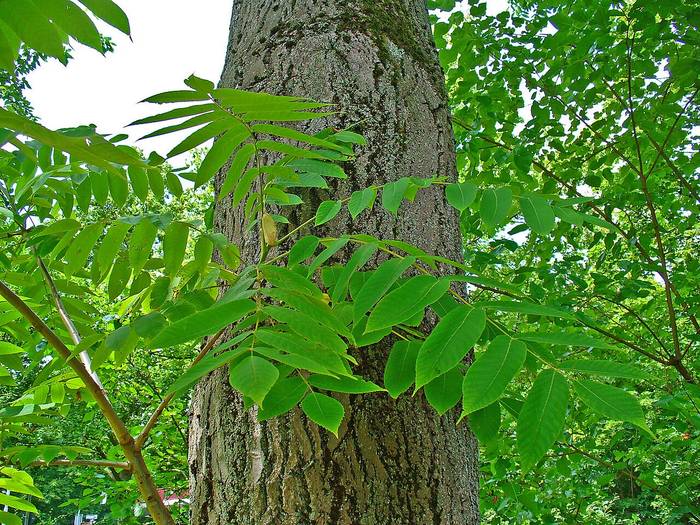
butternut
butternut (Juglans cinerea) is a tree. It grows best in full sun and has moderate water needs.
About butternut
Butternut is a perennial, deciduous tree that grows 30 m tall.[1][2] It grows slowly.[1][2] It needs another plant of its kind to pollinate it, so plant at least two.[1] It can live for around 75 years.[2]
Mammals eat the fruit and spread the seeds.[2]
How to plant butternut
Butternut does best in full sun.[1][2] The soil should be well drained.[2] It does best at a pH of 5–7.[1] In a forest garden it belongs in the canopy.[1]
Plant trees 12 m apart, at least 9 m. It struggles in compacted soil, so keep the soil loose. It is well established after about 3 years. It can be propagated from seed or by grafting.[2]
A year with butternut
Spring. It has small, inconspicuous flowers in March and April.[2] Mulch around it in April and May. Spread well-rotted compost or wood chips on the soil around the plant. It comes into leaf in May.[2]
Summer. Water during dry spells in July–September.
Autumn. Harvest falls in October and November.[2] The nuts can be eaten.[1][2] The sap can be eaten too.[1][2] Recorded from the source text, not a safety check. Confirm with a trusted guide before eating anything.
Winter. It rests through the winter.[2] It needs around 800 hours of winter cold to crop well. Prune it in January and February. Cut out dead, damaged, or crossing branches. Take a little off to tidy the shape. Less than you think. Leave healthy branches that contribute to the tree's structure alone.
Pests and diseases
Butternut can be attacked by common grackle (destroys immature fruit).[2] Diseases include butternut canker (ophiognomonia clavigignenti-juglandacearum) and bunch disease (mycoplasma-like organism).[2]
Companions and wildlife
butternutSources
- Plants For A Future — Juglans cinerea · CC BY 4.0, Plants For A Future
- Wikipedia — Juglans cinerea · CC BY-SA 4.0
Added to the wiki 8 July 2026
Plan your garden with perma
Open app