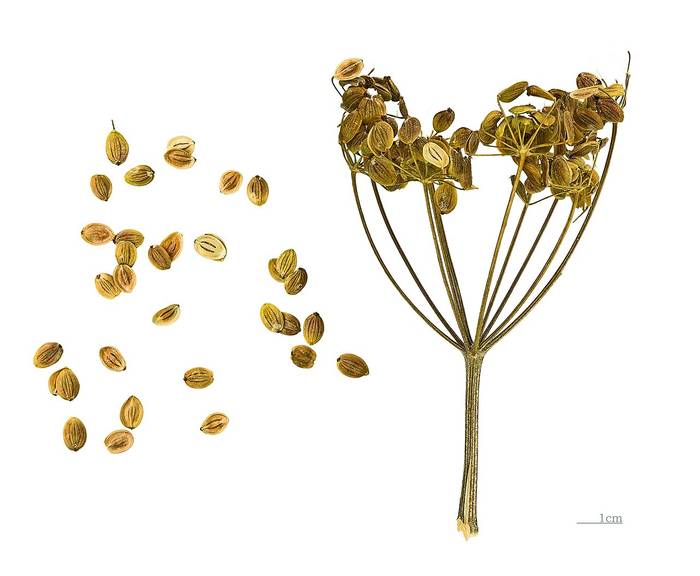
Parsnip
Parsnip (Pastinaca sativa) is a plant. It grows best in part shade to full sun and has moderate water needs. It grows well with onion.
About Parsnip
Parsnip is a biennial plant that grows 1 m tall.[1][2] It is self-fertile, so you only need one.[1]
The flowers attract pollinators.[1]
How to plant parsnip
Parsnip does best in full sun, but also copes with part shade.[1] It grows in sandy soil, loam and clay, as long as the soil is well drained.[1][2] It does best at a pH of 6–6.8.[1] In a forest garden it belongs in the herb layer.
Plant plants 15 cm apart, at least 10 cm. It struggles in compacted soil, so keep the soil loose. It can be propagated from seed.[1]
A year with Parsnip
Spring. Sow seed in April and May.[2] Keep the ground around it weed-free in April.[2]
Summer. It has yellow flowers in June and July.[1][2] Mulch around it in June–September. Spread compost or straw on the soil around the plant. Feed it in June. Use balanced fertiliser. Water during dry spells in July–September.
Autumn. Protect it from frost and cold in September.[2] Harvest falls in November and December.[1][2] The roots can be eaten.[1] The young leaves can be eaten too.[1] The young shoots can be eaten too.[1] The seeds can be eaten too.[1] The sap can cause skin reactions, especially in sunlight. Sap in the eyes can cause blindness. Recorded from the source text, not a safety check. Confirm with a trusted guide before eating anything.
Pests and diseases
Parsnip can be attacked by carrot fly, celery fly and parsnip moth.[2] Diseases include parsnip canker, black rot (mycocentrospora acerina), watery soft rot (sclerotinia minor, s. sclerotiorum), violet root rot (helicobasidium purpureum), powdery mildew (erysiphe heraclei) and viruses.[2]
Companions and wildlife
ParsnipSources
- Plants For A Future — Pastinaca sativa · CC BY 4.0
- Wikipedia — Parsnip · CC BY-SA 4.0
- CLO-PLA (clonal growth) · Klimešová et al. 2017
Added to the wiki 8 July 2026
Plan your garden with perma
Open app