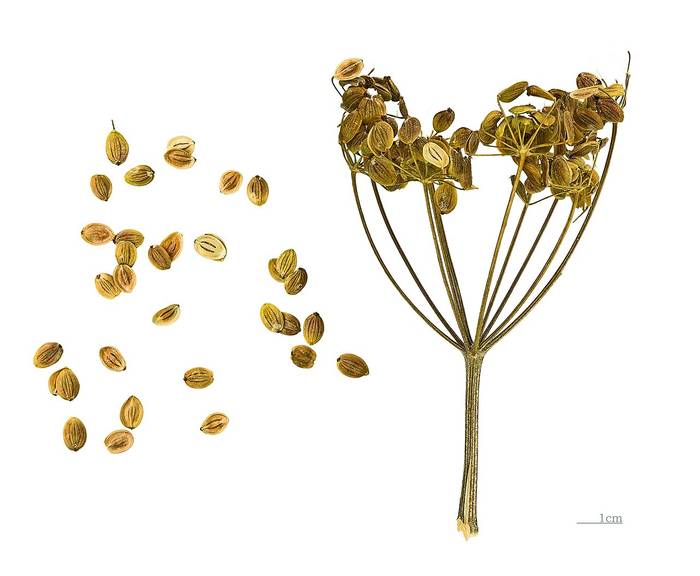
Didier Descouens · CC BY-SA 4.0
Parsnip
Plant·Pastinaca sativa
Part shade to full sun
Sun
Dry to moist soil
Water
Well-drained soil
Drainage
Zones 3–9
Hardiness
Coverage · 109 fields
Growth and size10 fields
Plant type
Plant
AI estimate100 % agree
Height
100 cm · other sources: 150 cm“Pastinaca sativa is a BIENNIAL growing to 1 m (3ft 3in) by 0.3 m (1ft).”Wikipedia“The floral stem develops in the second year and can grow to more than 150 cm (60 in) tall.”
Height at age
—
empty
Spacing
15 cm (at least 10 cm)
AI estimate55 % agree
Growth rate
—
empty
Habit
Columnar
AI estimate50 % agree
Root depth
Taproot“Its long taproot has light cream colored skin and flesh, and, left in the ground to mature, becomes sweeter in flavor after winter frosts.”
Forest garden layer
Herb layer
AI estimate90 % agree
Lifespan
~2 years
AI estimatenot measured yet
Roots6 fields
Root form
Taproot“Its long taproot has light cream colored skin and flesh, and, left in the ground to mature, becomes sweeter in flavor after winter frosts.”
Storage organ
None“It does not multiply vegetatively: it has no rhizomes, runners, suckers or offspring bulbs or tubers.”
Spreads
No“It does not multiply vegetatively: it has no rhizomes, runners, suckers or offspring bulbs or tubers.”
Lateral spread in cm
—
empty
Root depth in cm
—
empty
Mycorrhiza
Arbuscular (AM)
AI estimatenot measured yet
Light, water and soil9 fields
Sun
Full sun, light shade, part shade · best: full sun“It can grow in semi-shade (light woodland) or no shade.”PFAFpartly“Requires an open situation.”
Hours of sun
6–12 h
AI estimatenot measured yet
Water
Dry, moist · best: moist · Medium · 2–4 l/day“It prefers moist soil.”Wikipediapartly“The wild parsnip from which the modern cultivated varieties were derived is a plant of dry, rough grassland and waste places, particularly on chalk and limestone soils.”
Drought tolerant
—
empty
Tolerates waterlogging
—
empty
Soil type
Sand, loam, clay“Suitable for: light (sandy), medium (loamy) and heavy (clay) soils and prefers well-drained soil.”Wikipedia“Sandy and loamy soils are preferable to silt, clay, and stony ground; the latter produces short, forked roots.”
Drainage
Well drained“Suitable for: light (sandy), medium (loamy) and heavy (clay) soils and prefers well-drained soil.”
Compacted soil
Copes badly
AI estimatenot measured yet
Climate5 fields
Hardiness
Zone 3–9
AI estimatenot measured yet
Killing frost
-1 °C“Killing temp. early growth: -1”EcoCrop's figure is frost during early growth (spring frost on new shoots), not winter cold.
Growing temperature
5–25 °C · optimal 15–21 °C“Temperature absolute min: 5 · Temperature absolute max: 25 · Temperature optimal min: 15 · Temperature optimal max: 21”
Chill hours
0 h
AI estimatenot measured yet
Native range
AD, AL, AM, AT, AZ, BA, BE, BG, BY, CH, CZ, DE, EE, ES, FR, GB, GE, GG, GI, GR, HR, HU, IT, JE, LB, LI, LT, LU, LV, MC, MD, ME, MK, MN, NL, PL, RO, RS, RU, SI, SK, SM, SY, TR, UA, VA, XK
Care (becomes tasks in Manage)7 fields
Sowing
After the last frost · lasts 60 days“Seeds are usually planted in early spring, as soon as the ground can be worked to a fine tilth, in the position where the plants are to grow.”
Sowing appears 2 times with different timing.
Wikipediapartly
Protection
After the first frost · frost“The rows can be covered with straw to enable the crop to be lifted during frosty weather.”
Sowing
April · lasts 30 days
Sowing appears 2 times with different timing.
AI estimatenot measured yet
Watering
July · lasts 60 days
AI estimatenot measured yet
Mulching
June · lasts 90 days
AI estimatenot measured yet
Feeding
After the previous stage · 60 days after · lasts 30 days · balanced fertiliser
AI estimatenot measured yet
Through the year6 fields
Leafing out
After the last frost · lasts 14 days
AI estimatenot measured yet
Flowering
July · lasts 62 days“It is in flower from July to August, and the seeds ripen from August to September.”
Fruiting
August · lasts 61 days“It is in flower from July to August, and the seeds ripen from August to September.”
Harvest
After the first frost · lasts 90 days“Harvesting begins in late fall after the first frost and continues through winter.”
Dormant
After the first frost · lasts 150 days
AI estimatenot measured yet
Dying back
After the first frost · lasts 30 days
AI estimatenot measured yet
Edible parts and pollination5 fields
The roots
Raw or cooked; baked, in soups, cakes, pies and puddings · November–February“Root - raw or cooked.”PFAFpartly“It is best harvested after there have been some autumn frosts because it will have developed a sweeter flavour.”
Young leaves and shoots
Pollination
Self-fertile · hermaphrodite“The species is hermaphrodite (has both male and female organs) and is pollinated by Insects.”PFAF“The plant is self-fertile.”
Pollinated by
Insects“The species is hermaphrodite (has both male and female organs) and is pollinated by Insects.”
Ecology5 fields
Attracts
Hover flies, predatory wasps“The flowers are very attractive to hover flies and predatory wasps.”
Pests
Carrot fly, celery fly, parsnip moth“The crop can be attacked by larvae of the carrot fly (Chamaepsila rosae).”Wikipedia“Parsnip leaves are sometimes tunnelled by the larvae of the celery fly (Euleia heraclei).”Wikipedia“The larvae of the parsnip moth (Depressaria radiella), native to Europe and accidentally introduced to North America in the mid-1800s, construct their webs on the umbels, feeding on flowers and partially developed seeds.”
Diseases
Parsnip canker, black rot (mycocentrospora acerina), watery soft rot (sclerotinia minor, s. sclerotiorum), violet root rot (helicobasidium purpureum), powdery mildew (erysiphe heraclei), viruses“Parsnip canker is a serious disease of this crop.”Wikipedia“In Europe, Mycocentrospora acerina has been found to cause a black rot that kills the plant early.”Wikipedia“Watery soft rot, caused by Sclerotinia minor and S. sclerotiorum, causes the taproot to become soft and watery.”Wikipedia“Violet root rot caused by the fungus Helicobasidium purpureum sometimes affects the roots, covering them with a purplish mat to which soil particles adhere.”Wikipedia“Erysiphe heraclei causes a powdery mildew that can cause significant crop loss.”Wikipedia“Several viruses are known to infect the plant, including seed-borne strawberry latent ringspot virus, parsnip yellow fleck virus, parsnip leaf curl virus, parsnip mosaic potyvirus, and potyvirus celery mosaic virus.”
Takes up
Potassium, calcium
AI estimatenot measured yet
Fixes nitrogen
No
AI estimatenot measured yet
Propagation and names4 fields
Difficulty
2 / 5
AI estimatenot measured yet
Seed
cold stratification improves germination
AI estimatenot measured yet
Not sorted yet52 fields
Fields the parser stores that this page has no row for yet. They show up here automatically, so nothing is hidden.
forage.DK.local_name
Pastinak
AI estimatenot measured yet
forage.DK.warnings_da
Saften kan give hudreaktioner, især i sollys., Saften i øjnene kan give blindhed.
AI estimatenot measured yet
forage.DK.warnings_en
The sap can cause skin reactions, especially in sunlight., Sap in the eyes can cause blindness.
AI estimatenot measured yet
forage.DK.prep_cautions
Risk can be reduced by wearing long pants and sleeves to avoid exposure, and avoiding sunlight after any suspected exposure., If eyes are exposed to the sap it can cause blindness., The problem is most likely to occur on a sunny day when gathering foliage or pulling up old plants that have gone to seed.“Risk can be reduced by wearing long pants and sleeves to avoid exposure, and avoiding sunlight after any suspected exposure.”Wikipedia“If eyes are exposed to the sap it can cause blindness.”Wikipedia“The problem is most likely to occur on a sunny day when gathering foliage or pulling up old plants that have gone to seed.”
forage.DK.edibility_basis
inferred
AI estimatenot measured yet
forage.DK.foraging_months.notes
Roots are best after a frost. Young leaves can be harvested in spring and summer.
AI estimatenot measured yet
forage.DK.foraging_months.months
9, 10, 11, 12, 1, 2, 3, 4“Harvesting begins in late fall after the first frost and continues through winter.”
Wikipediapartly
forage.DK.foraging_months.year_round
false
AI estimatenot measured yet
forage.DK.habitat_affinity
verge, disturbed_ground“Roadsides and grassy waste places, especially on chalk and limestone.”
forage.US.local_name
Parsnip
AI estimatenot measured yet
forage.US.edible_parts
[{"part":"root","caution":null,"preparation":"usually cooked, but can also be eaten raw"}]“Parsnips are grown for their fleshy, edible, cream-colored taproots.”Wikipedia“Parsnips are usually cooked but can also be eaten raw.”
forage.US.prep_cautions
All parts contain furanocoumarins that can sensitize skin to sunlight; contact with the eyes can potentially blind.“for all its parts contain furanocoumarins that can sensitize mammalian tissue to sunlight”
forage.US.edibility_basis
inferred
AI estimatenot measured yet
forage.US.foraging_months.notes
Roots are best after a frost. Young leaves can be harvested in spring and summer.
AI estimatenot measured yet
forage.US.foraging_months.months
9, 10, 11, 12, 1, 2, 3, 4
AI estimatenot measured yet
forage.US.foraging_months.year_round
false
AI estimatenot measured yet
forage.US.habitat_affinity
verge, disturbed_ground“The plant can form dense stands which outcompete native species and is especially common in abandoned yards, farmland, and along roadsides and other disturbed environments.”
forage.TROPICAL.edibility_basis
inferred
AI estimatenot measured yet
forage.TROPICAL.foraging_months.notes
Not typically found or foraged in tropical regions.
AI estimatenot measured yet
forage.TROPICAL.foraging_months.year_round
false
AI estimatenot measured yet
ornamental.basis
documented
AI estimatenot measured yet
ornamental.fragrance.source
foliage“The parsnip is a biennial plant with a rosette of roughly hairy leaves that have a pungent odor when crushed.”
ornamental.confidence
high
AI estimatenot measured yet
ornamental.flower_colour
yellow“The yellow flowers are in a loose, compound umbel measuring 10 to 20 cm (4 to 8 in) in diameter.”
ornamental.evidence_quote
Pastinaca sativa, commonly known as parsnip, produces yellow flowers in umbels. The foliage is green and does not typically display significant autumn color change. After flowering, it forms prominent seed heads.
AI estimatenot measured yet
ornamental.foliage_colour
green“In its first growing season, the plant has a rosette of pinnate, mid-green leaves.”
ornamental.foliage_texture
medium
AI estimatenot measured yet
ornamental.winter_structure
seed_heads
AI estimatenot measured yet
ornamental.autumn_foliage_colour
none
AI estimatenot measured yet
care_regime
routine
AI estimatenot measured yet
propagation.self_seeding
moderate
AI estimate20 % agree
propagation.division_season
not applicable
AI estimatenot measured yet
propagation.establishment_years
1“Parsnips are biennials, but are normally grown as annuals.”
Wikipediapartly
spatial_profile.canopy_density
light
AI estimatenot measured yet
forage_proposals.DK.edibility_tier.tier
edible
AI estimatenot measured yet
forage_proposals.DK.edibility_tier.confidence
high
AI estimatenot measured yet
forage_proposals.DK.edibility_tier.evidence_quote
The root of Pastinaca sativa is widely consumed as a vegetable, especially after being sweetened by frost.
AI estimatenot measured yet
forage_proposals.US.edibility_tier.tier
edible
AI estimatenot measured yet
forage_proposals.US.edibility_tier.confidence
high
AI estimatenot measured yet
forage_proposals.US.edibility_tier.evidence_quote
Pastinaca sativa roots are a common culinary vegetable, often harvested after cold weather improves their flavor.
AI estimatenot measured yet
forage_proposals.TROPICAL.edibility_tier.confidence
low
AI estimatenot measured yet
function_profile.biomass_return.confidence
medium
AI estimatenot measured yet
function_profile.nutrient_flows.consumes
[{"basis":"documented","demand":"moderate","nutrient":"nitrogen","confidence":"high"},{"basis":"documented","demand":"moderate","nutrient":"phosphorus","confidence":"high"},{"basis":"documented","demand":"moderate","n…
AI estimatenot measured yet
function_profile.nutrient_flows.provides
[{"basis":"inferred","nutrient":"potassium","mechanism":"mineral_extraction","confidence":"low"},{"basis":"inferred","nutrient":"calcium","mechanism":"mineral_extraction","confidence":"low"}]
AI estimatenot measured yet
function_profile.biotic_interactions
[{"taxa":["carrot fly"],"basis":"documented","valence":"harmful","relation":"hosts","confidence":"high","evidence_quote":"The crop can be attacked by larvae of the carrot fly (Chamaepsila rosae).","organism_group":"pe…“The crop can be attacked by larvae of the carrot fly (Chamaepsila rosae).”Wikipedia“Parsnip leaves are sometimes tunnelled by the larvae of the celery fly (Euleia heraclei).”Wikipedia“The larvae of the parsnip moth (Depressaria radiella), native to Europe and accidentally introduced to North America in the mid-1800s, construct their webs on the umbels, feeding on flowers and partially developed seeds.”Wikipedia“Parsnip is used as a food plant by the larvae of some lepidopteran species, including the parsnip swallowtail (Papilio polyxenes), the common swift moth (Korscheltellus lupulina), the garden dart moth (Euxoa nigricans), and the ghost moth (Hepialus humuli).”PFAF“The species is hermaphrodite (has both male and female organs) and is pollinated by Insects.”PFAF“The flowers are very attractive to hover flies and predatory wasps.”Wikipedia“Parsnip canker is a serious disease of this crop.”Wikipedia“In Europe, Mycocentrospora acerina has been found to cause a black rot that kills the plant early.”Wikipedia“Watery soft rot, caused by Sclerotinia minor and S. sclerotiorum, causes the taproot to become soft and watery.”Wikipedia“Violet root rot caused by the fungus Helicobasidium purpureum sometimes affects the roots, covering them with a purplish mat to which soil particles adhere.”Wikipedia“Erysiphe heraclei causes a powdery mildew that can cause significant crop loss.”Wikipedia“Several viruses are known to infect the plant, including seed-borne strawberry latent ringspot virus, parsnip yellow fleck virus, parsnip leaf curl virus, parsnip mosaic potyvirus, and potyvirus celery mosaic virus.”
function_profile.aromatic_pest_effect.value
false
AI estimate80 % agree
function_profile.aromatic_pest_effect.confidence
low
AI estimatenot measured yet
climate_tolerance.photoperiod_response
long_day
AI estimatenot measured yet
soil_interactions.organic_matter_contribution
medium
AI estimatenot measured yet
component_metadata.growth_cycle
biennial“Pastinaca sativa is a BIENNIAL growing to 1 m (3ft 3in) by 0.3 m (1ft).”
resource_interfaces.inputs
[{"resource":"light","quantity_description":"open situation"},{"resource":"water","quantity_description":"moist soil"}]“Requires an open situation.”PFAF“It prefers moist soil.”
resource_interfaces.outputs
[{"resource":"seeds","quantity_description":"condiment seed"},{"resource":"pollinator_services","quantity_description":"flowers attractive to hover flies and predatory wasps"},{"resource":"aromatic_compounds","quantit…“The seed is used as a condiment.”PFAF“The flowers are very attractive to hover flies and predatory wasps.”Wikipedia“The parsnip is a biennial plant with a rosette of roughly hairy leaves that have a pungent odor when crushed.”