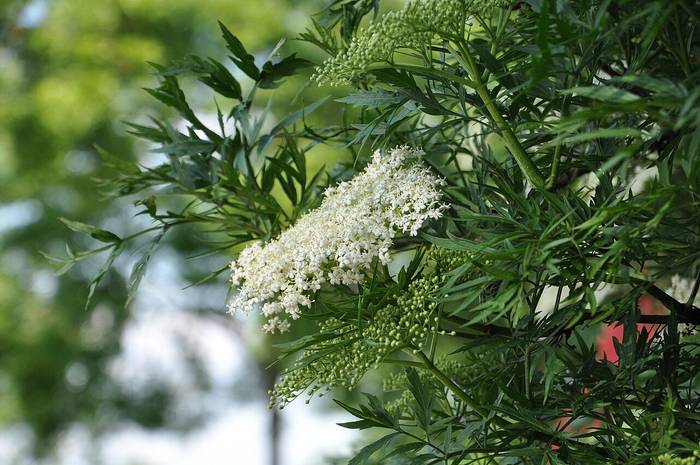
Cut-leaved elder
Cut-leaved elder (Sambucus nigra var. laciniata) is a shrub. It grows best in full sun and has moderate water needs.
About Cut-leaved elder
Cut-leaved elder is a perennial, deciduous shrub that grows 6 m tall.[1] It grows fast.[1] It is self-fertile, so you only need one.[1] It can live for around 60 years.
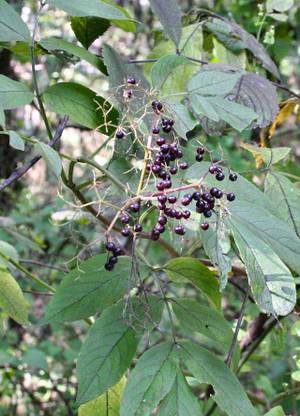
The flowers attract pollinators.[1] Birds eat the fruit and spread the seeds.
How to plant cut-leaved elder
It grows in sandy soil, loam and clay, as long as the soil is well drained.[1] It does best at a pH of 6–6.5.[1] In a forest garden it belongs in the shrub layer.[1]
Plant shrubs 3 m apart, at least 2 m. Expect the first harvest a year after planting.[2]
A year with Cut-leaved elder
Spring. Mulch around it in March. Spread well-rotted compost or wood chips on the soil around the plant. It has white and cream flowers in May–July.
Summer. Harvest falls in August and September.
Winter. It comes into leaf in January–April. Prune it in February–April.
Pests and diseases
Cut-leaved elder can be attacked by euproctis chrysorrhoea, choristoneura hebenstreitella and phlyctaenia coronata. Diseases include elder whitewash fungus, jelly ear fungus, cercospora depazeoides and viruses causing leaf roll or chlorotic patches.
Companions and wildlife
Cut-leaved elderThe family
Cut-leaved elder is a variety of Elder, in the genus Sambucus. Open a species to see what lies under it.

 Cut-leaved eldervar. laciniataThis page
Sources
- Plants For A Future — Sambucus nigra var. laciniata · CC BY 4.0, Plants For A Future
- extension.unh.edu
Added to the wiki 12 October 2026
Plan your garden with perma
Open app