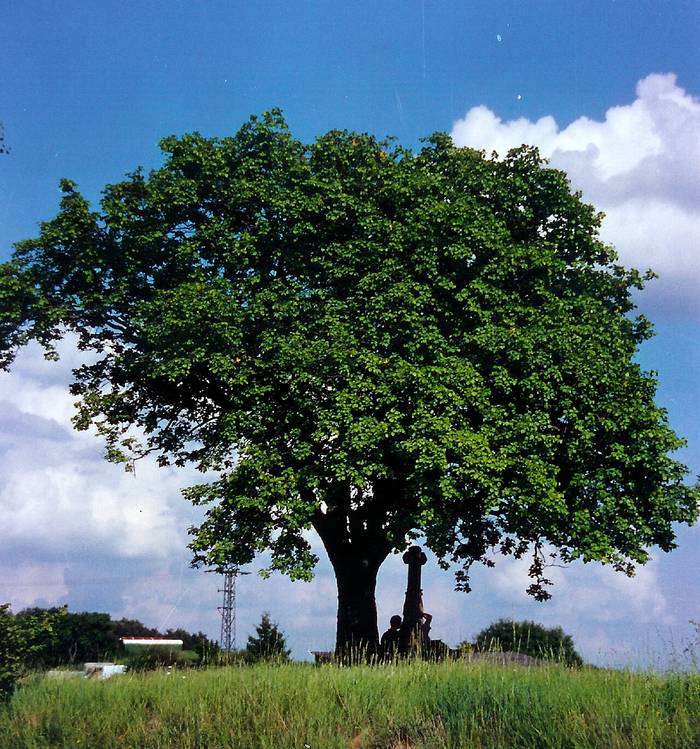
Jan-Herm Janßen · CC BY-SA 3.0
Wild service tree
Tree·Sorbus torminalis
Part shade to full sun
Sun
Dry to moist soil
Water
Not recorded
Drainage
Zones 5–8
Hardiness
Coverage · 110 fields
- Parser flag (climate_tolerance_low_confidence): Climate tolerance values are LLM-extracted (no authoritative EcoCrop match found). EcoCrop covers ~2,568 food-crop taxa; ornamental/native/medicinal species rely on LLM extraction.
- Only one country is recorded as native range (NO).
Growth and size10 fields
Plant type
Deciduous tree“Sorbus torminalis is a deciduous Tree growing to 20 m (65ft 7in) at a medium rate.”
Height
2,000 cm · other sources: 3,000 cm“Sorbus torminalis is a deciduous Tree growing to 20 m (65ft 7in) at a medium rate.”Wikipedia“Aria torminalis is a medium-sized deciduous tree growing to about 30 m (100 ft) tall, with a trunk up to 1.3 m in diameter.”
Spread
1,000 cm
AI estimate58 % agree
Height at age
—
empty
Spacing
1,000 cm (at least 800 cm)
AI estimate55 % agree
Growth rate
Medium“Sorbus torminalis is a deciduous Tree growing to 20 m (65ft 7in) at a medium rate.”
Habit
Spreading
AI estimate50 % agree
Root depth
Deep“Older trees of the wild service tree can reach a root-depth of 1-2 m, rendering it quite resistant to wind-throw.”
Forest garden layer
Canopy
AI estimate90 % agree
Lifespan
~300 years
AI estimatenot measured yet
Roots6 fields
Root form
Heart root“The root pattern is branching: a heart root, dividing from the crown into several primary roots going down and out [2-1].”
Storage organ
None
AI estimate100 % agree
Lateral spread in cm
—
empty
Root depth in cm
Deepest 200 cm“Older trees of the wild service tree can reach a root-depth of 1-2 m, rendering it quite resistant to wind-throw.”
Mycorrhiza
—
empty
Light, water and soil9 fields
Sun
Full sun, light shade, part shade · best: full sun“It can grow in semi-shade (light woodland) or no shade.”PFAFpartly“Succeeds in reasonably good soils so long as they are not too poor or acid, in an open sunny position.”PFAFpartly“Tolerates moderate shade but does not fruit so well in such a position[K].”
Hours of sun
6–12 h
AI estimatenot measured yet
Water
Dry, moist · best: moist · Medium“It prefers moist soil.”Wikipedia“The wild service tree favours deep fertile soils, but can tolerate a wide range of soil conditions, from chalky, superficial, dry soils to temporarily waterlogged soils, often found alongside the true service tree.”
Drought tolerant
Yes“It responds well to coppicing, is drought-tolerant once established, and can thrive in calcareous soils.”
Tolerates waterlogging
—
empty
Soil type
Sand, loam, clay · best: clay“Prefers clay soils.”PFAF“Suitable for: light (sandy), medium (loamy) and heavy (clay) soils, prefers well-drained soil and can grow in heavy clay soil.”
pH
3.5–8“Regarding soil characteristics it is a very tolerant species that can grow on both acid and basic soils (from clay to limestone), with a pH ranging from 3.5 to 8 and humus types from dismoder to carbonate mull.”PFAF“Suitable pH: mildly acid, neutral and basic (mildly alkaline) soils.”
Drainage
Well-drained soil; prefers moist soil“Suitable for: light (sandy), medium (loamy) and heavy (clay) soils, prefers well-drained soil and can grow in heavy clay soil.”
Compacted soil
Copes fairly well
AI estimatenot measured yet
Climate5 fields
Hardiness
Zone 5–8
AI estimatenot measured yet
Killing frost
-25 °C
AI estimatenot measured yet
Growing temperature
0–30 °C · optimal 10–17 °C“The optimum mean annual temperature is between 10 ° and 17 °C”
Chill hours
800 h
AI estimatenot measured yet
Through the year6 fields
Flowering
June · lasts 14 days“It is in flower in June, and the seeds ripen from September to October.”
Fruiting
September · lasts 61 days“It is in flower in June, and the seeds ripen from September to October.”
Harvest
August · lasts 92 days“The fruits are typically harvested in late summer to early autumn, from August to October (Northern Hemisphere), once fully ripe.”
Dying back
After the first frost · lasts 30 days“the autumn colour is yellow to red-brown.”
Wikipediapartly
Leafing out
After the last frost · Above 5 °C · 14 days after · lasts 7 days
AI estimatenot measured yet
Dormant
After the first frost · lasts 150 days
AI estimatenot measured yet
Edible parts and pollination4 fields
The fruit
Raw or cooked · August–October“Edible Parts: Fruit”Wikipedia“They are usually too astringent to eat until they are over-ripe and bletted.”PFAF“Fruit - raw or cooked.”PFAF“The fruits are typically harvested in late summer to early autumn, from August to October (Northern Hemisphere), once fully ripe.”
Pollination
Self-fertile · hermaphrodite“The species is hermaphrodite (has both male and female organs) and is pollinated by Insects.”
Pollinated by
Insects“The species is hermaphrodite (has both male and female organs) and is pollinated by Insects.”
Ecology6 fields
Attracts
Wildlife, bees, butterflies, birds“It is noted for attracting wildlife.”PFAF“Yes – Sorbus species produce clusters of small, white flowers that are rich in nectar and pollen, attracting bees, butterflies, and other pollinators.”Wikipedia“The fruits are eaten by many birds and a few mammals, making the tree ecologically important.”
Pests
Goat moth, scolytus mali, eriophyes torminalis, leaf aphids, apple aphid (aphis pomi)“The goat moth, a moth with the second largest larvae in the UK, deposits its eggs on the bark of the wild service tree.”Wikipedia“The phloeophagous (phloem feeding) black beetle, Scolytus mali, causes damage by chewing through bark to access the phloem.”Wikipedia“The wild service tree also supports a mite, Eriophyes torminalis Nalepa (1926), which feeds solely on the leaves of this species, making it monophagous.”JRC forest tree atlas“On the leaves of the wild service tree three damaging factors are frequently recorded: leaf scab (Venturia inaequalis), leaf aphids and gall mites (Eriophyes spp.).”JRC forest tree atlas“The tree is a wild host for the apple aphid (Aphis pomi).”
Diseases
Leaf scab (venturia inaequalis), honey fungus (armillaria spp.), fireblight“On the leaves of the wild service tree three damaging factors are frequently recorded: leaf scab (Venturia inaequalis), leaf aphids and gall mites (Eriophyes spp.).”JRC forest tree atlas“A serious threat to older stems is the honey fungus (Armillaria spp.), whose parasitic infestation can lead to lethal damage.”PFAF“Plants are susceptible to fireblight.”
Takes up
Calcium, potassium
AI estimatenot measured yet
Fixes nitrogen
No
AI estimatenot measured yet
Mycorrhiza
Yes
AI estimatenot measured yet
Propagation and names4 fields
Methods
Seed, suckers“Seed - best sown as soon as it is ripe in a cold frame.”CLO-PLA (clonal growth)“It spreads by suckers: new shoots from buds on its roots.”
Difficulty
3 / 5
AI estimatenot measured yet
Seed
2 weeks warm then 14-16 weeks cold stratification“Stored seed germinates better if given 2 weeks warm then 14 - 16 weeks cold stratification, so sow it as early in the year as possible.”
Not sorted yet60 fields
Fields the parser stores that this page has no row for yet. They show up here automatically, so nothing is hidden.
forage.DK.local_name
Tarm
AI estimatenot measured yet
forage.DK.warnings_da
Frøene er sandsynligvis giftige.
AI estimatenot measured yet
forage.DK.warnings_en
The seeds are probably poisonous.
AI estimatenot measured yet
forage.DK.prep_cautions
Seeds probably contain hydrogen cyanide., Bletting the fruit makes it suitable for eating raw.“The seeds probably contain hydrogen cyanide.”PFAF“The fruit can also be bletted if it is going to be eaten raw.”
forage.DK.edibility_basis
inferred
AI estimatenot measured yet
forage.DK.foraging_months.notes
Fruit must be bletted after picking to become palatable.
AI estimatenot measured yet
forage.DK.foraging_months.months
8, 9, 10“The fruits are typically harvested in late summer to early autumn, from August to October (Northern Hemisphere), once fully ripe.”
forage.DK.foraging_months.year_round
false
AI estimatenot measured yet
forage.DK.habitat_affinity
woodland, hedgerow“The wild service tree (Sorbus torminalis (L.) Crantz) is a fast-growing, light-demanding, clonally resprouting forest tree of disturbed forest patches and forest edges.”Wikipedia“It is relatively rare and in Britain is now usually confined to pockets of ancient woodland, although it can also be found growing in hedgerows.”
forage.US.edible_parts
[{"part":"fruit","caution":"astringent when unripe","preparation":"eaten raw when bletted, or cooked in jams/jellies","season_months":[9,10]}]
AI estimatenot measured yet
forage.US.prep_cautions
fruit is astringent until bletted
AI estimatenot measured yet
forage.US.edibility_basis
inferred
AI estimatenot measured yet
forage.US.foraging_months.notes
Fruit must be bletted after picking to become palatable.
AI estimatenot measured yet
forage.US.foraging_months.months
9, 10
AI estimatenot measured yet
forage.US.foraging_months.year_round
false
AI estimatenot measured yet
forage.US.habitat_affinity
woodland, hedgerow
AI estimatenot measured yet
forage.TROPICAL.edibility_basis
inferred
AI estimatenot measured yet
forage.TROPICAL.foraging_months.notes
Sorbus torminalis is not native to tropical regions and is unlikely to be found foraging there.
AI estimatenot measured yet
forage.TROPICAL.foraging_months.year_round
false
AI estimatenot measured yet
ornamental.basis
documented
AI estimatenot measured yet
ornamental.fragrance.source
flower“Scented white hermaphrodite flowers: they are insect pollinated.”
ornamental.fragrance.intensity
subtle
AI estimatenot measured yet
ornamental.confidence
high
AI estimatenot measured yet
ornamental.flower_colour
white“This species is monoecious hermaphrodite, flowers are white, insect pollinated, and arranged in corymbs of 20-30 flowers.”
ornamental.evidence_quote
The flowers are white, followed by small, brownish-red, speckled fruits. The leaves are green in summer, turning yellow-green, red, and bronze in autumn. The bark is often fissured and attractive, providing winter interest. The flowers have a subtle scent.
AI estimatenot measured yet
ornamental.foliage_colour
dark_green“The shiny dark green leaves are typically 10x cm and have five to nine spreading, acute lobes.”
ornamental.foliage_texture
medium
AI estimatenot measured yet
ornamental.winter_structure
ornamental_bark“The mature tree is usually single-stemmed with a distinctive ash-grey and scaly bark that often peels away in rectangular strips.”
ornamental.autumn_foliage_colour
yellow_green, red, bronze“the autumn colour is yellow to red-brown.”
Wikipediapartly
care_regime
none
AI estimatenot measured yet
propagation.self_seeding
light
AI estimate20 % agree
propagation.division_season
not applicable
AI estimatenot measured yet
propagation.establishment_years
3
AI estimate40 % agree
sun_requirement.best
full_sun“Tolerates moderate shade but does not fruit so well in such a position[K].”
PFAFpartly
sun_requirement.best_for
fruit“Tolerates moderate shade but does not fruit so well in such a position[K].”
forage_proposals.DK.edibility_tier.tier
edible
AI estimatenot measured yet
forage_proposals.DK.edibility_tier.confidence
high
AI estimatenot measured yet
forage_proposals.DK.edibility_tier.evidence_quote
The fruit of Sorbus torminalis, known as 'chequers', is edible after bletting. It can be eaten raw once softened, or used in preserves and baked goods.
AI estimatenot measured yet
forage_proposals.US.edibility_tier.tier
edible
AI estimatenot measured yet
forage_proposals.US.edibility_tier.confidence
high
AI estimatenot measured yet
forage_proposals.US.edibility_tier.evidence_quote
The fruit of Sorbus torminalis, known as 'chequers', is edible after bletting. It can be eaten raw once softened, or used in preserves and baked goods.
AI estimatenot measured yet
forage_proposals.TROPICAL.edibility_tier.confidence
low
AI estimatenot measured yet
function_profile.biomass_return.confidence
medium
AI estimatenot measured yet
function_profile.nutrient_flows.consumes
[{"basis":"inferred","demand":"moderate","nutrient":"nitrogen","confidence":"medium"},{"basis":"inferred","demand":"moderate","nutrient":"phosphorus","confidence":"medium"},{"basis":"inferred","demand":"moderate","nut…“Its Ellenberg values in Britain are L=4, F=5, R=6, N=5 and S=0, which means it grows in shady, moist woodland on neutral soils and with moderate fertility, and no tolerance for salt.”
Wikipediapartly
function_profile.nutrient_flows.provides
[{"basis":"inferred","nutrient":"calcium","mechanism":"biomass_return","confidence":"medium"},{"basis":"inferred","nutrient":"potassium","mechanism":"biomass_return","confidence":"medium"}]
AI estimatenot measured yet
function_profile.biotic_interactions
[{"taxa":["birds"],"basis":"documented","valence":"beneficial","relation":"shelters","confidence":"medium","evidence_quote":"The dense canopy provides bird shelter and roosting opportunities, while the fallen leaves c…“The dense canopy provides bird shelter and roosting opportunities, while the fallen leaves contribute to the detritus layer for invertebrates.”JRC forest tree atlas“The fruits are small pomes, 10-15 mm in diameter, spotted with green to russet or brown colour, and are dispersed by birds or frugivorous mammals.”PFAF“Yes – Sorbus species produce clusters of small, white flowers that are rich in nectar and pollen, attracting bees, butterflies, and other pollinators.”PFAF“The rough bark, leaf litter, and berry detritus provide overwintering sites for invertebrates and beneficial insects.”Wikipedia“The goat moth, a moth with the second largest larvae in the UK, deposits its eggs on the bark of the wild service tree.”Wikipedia“The phloeophagous (phloem feeding) black beetle, Scolytus mali, causes damage by chewing through bark to access the phloem.”Wikipedia“The wild service tree also supports a mite, Eriophyes torminalis Nalepa (1926), which feeds solely on the leaves of this species, making it monophagous.”JRC forest tree atlas“The tree is a wild host for the apple aphid (Aphis pomi).”JRC forest tree atlas“On the leaves of the wild service tree three damaging factors are frequently recorded: leaf scab (Venturia inaequalis), leaf aphids and gall mites (Eriophyes spp.).”JRC forest tree atlas“A serious threat to older stems is the honey fungus (Armillaria spp.), whose parasitic infestation can lead to lethal damage.”PFAF“Plants are susceptible to fireblight.”JRC forest tree atlaspartly“Young trees are especially susceptible to browsing by deer and other”
function_profile.aromatic_pest_effect.value
false“No – Sorbus species do not have a notable scent that acts as a pest confuser.”
function_profile.aromatic_pest_effect.confidence
high
AI estimatenot measured yet
function_profile.structural_interfaces.provides_shelter.basis
taxonomic
AI estimatenot measured yet
function_profile.structural_interfaces.provides_shelter.kinds
wind, shade
AI estimatenot measured yet
function_profile.structural_interfaces.provides_shelter.confidence
high
AI estimatenot measured yet
function_profile.structural_interfaces.provides_physical_support.form
trunk
AI estimatenot measured yet
function_profile.structural_interfaces.provides_physical_support.basis
taxonomic
AI estimatenot measured yet
function_profile.structural_interfaces.provides_physical_support.confidence
high
AI estimatenot measured yet
climate_tolerance.photoperiod_response
day_neutral
AI estimatenot measured yet
soil_interactions.organic_matter_contribution
medium“They can also contribute to soil improvement.”
PFAFpartly
component_metadata.growth_cycle
perennial
AI estimate100 % agree
resource_interfaces.inputs
[{"resource":"light","quantity_description":"open sunny position; shade-intolerant, needs free growth"},{"resource":"water","quantity_description":"optimum annual rainfall 700-1500 mm; prefers moist soil"},{"resource"…“The optimum mean annual temperature is between 10 ° and 17 °C; minimum annual rainfall is about 500 mm, while the optimum lies between 700 and 1 500 mm.”PFAF“The species is hermaphrodite (has both male and female organs) and is pollinated by Insects.”PFAFpartly“Succeeds in reasonably good soils so long as they are not too poor or acid, in an open sunny position.”
resource_interfaces.outputs
[{"resource":"shade","quantity_description":"shade tree providing canopy"},{"resource":"fruit","quantity_description":"small pomes 10-15 mm eaten by birds and mammals"},{"resource":"nectar","quantity_description":"clu…“Yes – Sorbus species produce clusters of small, white flowers that are rich in nectar and pollen, attracting bees, butterflies, and other pollinators.”PFAF“The dense canopy provides bird shelter and roosting opportunities, while the fallen leaves contribute to the detritus layer for invertebrates.”PFAF“The fallen leaves can serve as ground cover, benefiting the ecosystem.”PFAF“They can also contribute to soil improvement.”PFAFpartly“Sorbus species can be used as shade trees and benefit wildlife, providing food and habitat.”Wikipediapartly“The fruits are eaten by many birds and a few mammals, making the tree ecologically important.”PFAFpartly“The rough bark, leaf litter, and berry detritus provide overwintering sites for invertebrates and beneficial insects.”Wikipediapartly“The wood is fine-grained, very dense and has good bending strength.”