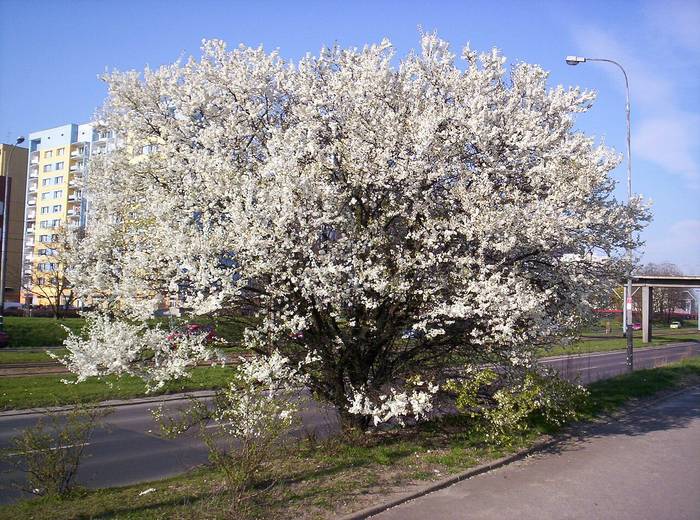
Mirabelle plum
Mirabelle plum (Prunus domestica subsp. syriaca) is a tree. It grows best in full sun and has moderate water needs.
About Mirabelle plum
Mirabelle plum is a perennial, deciduous tree that grows 12 m tall.[1] It is self-fertile, so you only need one.[1] It can live for around 20 years.
The flowers attract pollinators.[1]
How to plant mirabelle plum
It grows in sandy soil, loam and clay.[1] It does best at a pH of 6–6.5.[1] Give it a sheltered spot. In a forest garden it belongs in the lower tree layer.[1]
Plant trees 4.5 m apart, at least 3 m. Expect the first harvest 3 years after planting.[2]
A year with Mirabelle plum
Spring. It has white flowers in March–May. Feed it in March and April. Use a balanced granular fertiliser. Mulch around it in April and May. Spread well-rotted compost or manure on the soil around the plant.
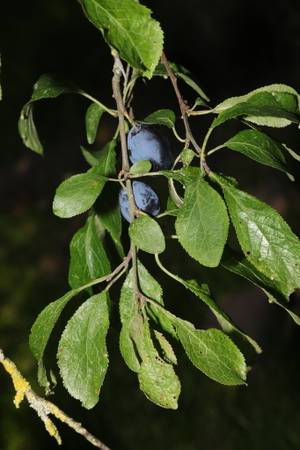
Summer. Water during dry spells in June–September. Harvest falls in July–January. The fruit can be eaten.[1] Recorded from the source text, not a safety check. Confirm with a trusted guide before eating anything. Prune it in July and August. Cut out dead, diseased, or crossing branches, and any vigorous upright shoots (watershoots). Take a little off to tidy the shape. Less than you think. Leave fruiting spurs alone.
Winter. Protect it from frost and cold in February–May.
Pests and diseases
Mirabelle plum can be attacked by plum curculio, oriental fruit moth, aphids and scale insects. Diseases include honey fungus.
Companions and wildlife
Mirabelle plumThe family
Mirabelle plum is a variety of European plum, in the genus Prunus. Open a species to see what lies under it.


 Mirabelle plumsubsp. syriacaThis page

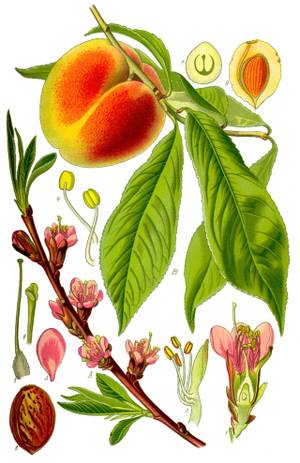


Sources
- Plants For A Future — Prunus domestica subsp. syriaca · CC BY 4.0, Plants For A Future
- yardandgarden.extension.iastate.edu
Added to the wiki 12 October 2026
Plan your garden with perma
Open app